


Backlash Over School Sports & Activities Cuts But Wyoming Lawmakers Promise To Fix


Wyoming’s new education funding model is leaving many schools short of money for sports and activities. Lawmakers say that is a bug, not a feature of the package, and are urging schools not to do anything drastic while they fix it. “So what I’m asking the school districts is, don’t cut programs immediately,” said House Recalibration Committee Chair Scott Heiner, R-Green River. “Use some of the reserves — because they have to spend down their reserves over the next three years anyway. And give us a chance to fix it in the next session.”
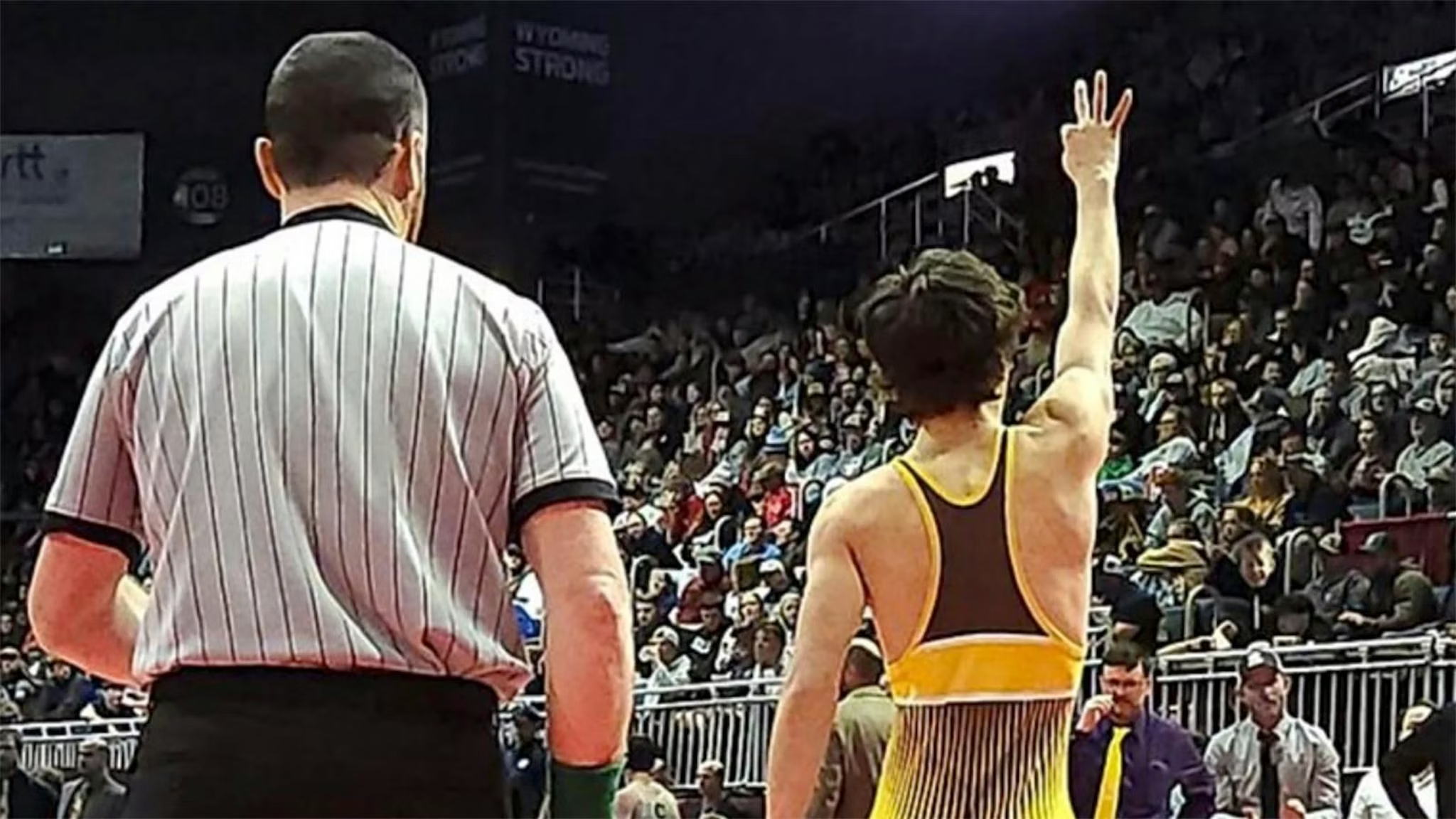
The Wyoming High School Activities Association amplified the topic with a statement from Commissioner Trevor Wilson. The WHSAA board discussed potential “exploratory” options including eliminating regional tournaments and consolation games, limiting teams qualifying for state events from eight to four, limiting the number of students participating in some events, reducing the number of contests in every sport, and potentially cutting programs. The statement also suggested reducing speech and debate events, centrally locating All-State music events, and implementing student participation fees. However, most districts indicated they will rely on cash carryover funds to support activities during the 2026–27 school year, though that is widely viewed as a one-year solution.
As a whole, Wyoming K-12 school districts are receiving an extra $114.1 million in the coming school year, an 8.6% increase. Teachers get an estimated 20.7% raise. But districts face rigid categories confining funding for educators into its own grant, limiting flexibility. Fremont County School District 1 Superintendent Mike Harris expects a $400,000 reduction for extracurriculars. “We’ll still be in the red and have to borrow from savings,” he said. He added that administrators have long been telling lawmakers their concerns, but now parents and students need to speak up.
Sheridan County School District No. 3 Superintendent Chase Christensen called the new model “one size fits none.” He said his non-classroom operations are taking roughly a $140,000 hit while inside the classroom funding silo there will be a surplus. “The inability to move some of that money around to fund things that were underfunded is causing some of the angst,” he said.
Lawmakers acknowledged the oversight. “Nobody caught that,” Heiner said. “Ninety-three legislators didn’t catch it. The governor’s office didn’t catch it. The school districts didn’t bring it to our attention.” Sen. Chris Rothfuss, D-Laramie, a key architect of the package, called it a “significant concern” that the select committee needs to revisit. He said the teacher silo was the “lynchpin” that made the package palatable, but spiking insurance costs and other factors have created shortfalls.
House Speaker Chip Neiman urged schools to find efficiencies before cutting programs, suggesting smaller schools could play against junior varsity teams of larger schools. He noted the state already infused an 8.3% increase for inflation into K-12. Heiner said the Recalibration Committee will address the issue at its June 24-25 meeting in Lander. “You know as well as I do, there’s many times when we pass legislation that we have to come back and fix it, tweak it a little bit because we missed something,” he said.
The latest news in your social feeds
Subscribe to our social media platforms to stay tuned