
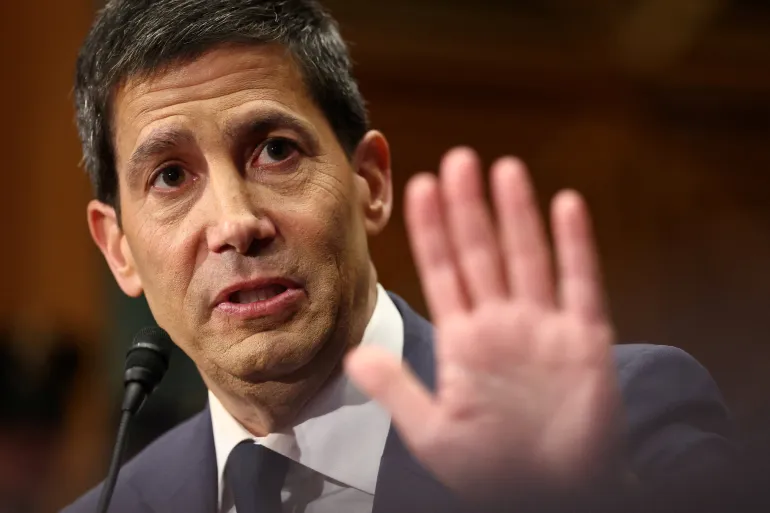

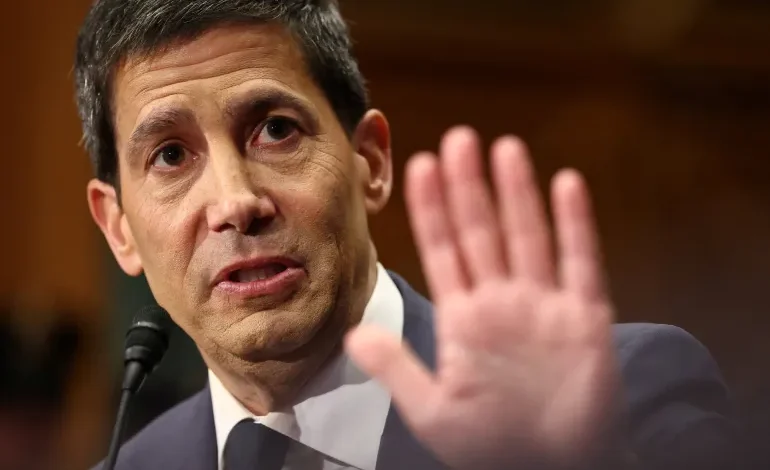

Kevin Warsh is heading back to the Federal Reserve after winning Senate confirmation, putting him one vote away from becoming the next chair of the US central bank at a moment when its political independence is under unusually intense pressure.
The United States Senate confirmed Warsh on Tuesday by a 51-45 vote. John Fetterman was the only Democrat to support the nomination, joining Republicans in backing Warsh for a 14-year term on the Fed’s Board of Governors.
A second Senate vote, expected as soon as Wednesday, would install him as chair for a four-year term, replacing Jerome Powell, whose current term expires on Friday.
The transition would give Donald Trump one of the most consequential appointments of his second term. The Fed sets borrowing costs across the economy, influencing everything from mortgages and business investment to inflation and employment.
But Warsh’s arrival is stirring concerns that the line between the White House and the central bank could become more blurred.
At his confirmation hearing, Elizabeth Warren accused Warsh of being a “sock puppet” for Trump, arguing that the president wants a Fed chair who will simply carry out his demand for lower interest rates. Warsh rejected that characterization.
Trump has made little secret of his expectations. In December, he said he would appoint only someone who agreed with him on rates.
In practice, the Fed chair cannot unilaterally dictate monetary policy. The chair holds one vote on the 12-member Federal Open Market Committee, which sets interest rates, and participates alongside 19 officials in broader policy discussions.
Still, the position carries enormous influence over both policy direction and market expectations.
Warsh has signaled that he wants significant changes at the institution. He has spoken of “regime change” at the Fed, including closer coordination with the United States Department of the Treasury and the Trump administration on issues beyond monetary policy. He has also argued for shrinking the Fed’s balance sheet, which he believes could create room for lower interest rates.
That agenda comes as the Trump administration has taken increasingly aggressive steps toward the central bank. It has attempted to remove Fed Governor Lisa Cook, supported a Department of Justice investigation into Powell’s management of a building renovation, and mounted broader legal and political pressure on the institution.
Although the Justice Department later dropped its investigation, the episode reinforced concerns that the White House is testing how far it can go in reshaping an institution traditionally insulated from day-to-day politics.
Powell, in an unusual move, has said he intends to remain on the Board of Governors after stepping down as chair.
He explained that decision by citing “the series of legal attacks on the Fed which threaten our ability to conduct monetary policy without considering political factors”.
Warsh will take office at a particularly difficult moment. Oil prices have risen sharply since the start of the US-Israel war on Iran, adding fresh inflation pressure and complicating expectations for future rate cuts. Markets are now assigning roughly a one-in-three chance that rates could increase by December.
The Fed’s benchmark interest rate currently stands in a target range of 3.5 percent to 3.75 percent.
If confirmed as chair, Warsh will preside over his first policy meeting on June 16-17.



The latest news in your social feeds
Subscribe to our social media platforms to stay tuned