




Wyoming AG Argues Trans Woman Can’t Get Sex On Birth Certificate Changed


The Wyoming Attorney General’s Office filed a brief Monday defending the state’s “What is a Woman Act” in the case of a transgender woman seeking a birth certificate sex marker change from “male” to “female.” Enacted in 2025, the law requires Wyoming agencies that collect sex-based data to do so according to each person’s biological sex at birth.
A Natrona County resident identified as “KR” challenged the law in 2025 after undergoing gender-related surgery, asking the Wyoming Department of Health to issue a birth certificate change reflecting female. Natrona County District Court Judge Joshua Eames ruled last October that not only does the department not have to make that change, it cannot under the wording of the new law. Eames ruled that a birth certificate’s purpose in Wyoming is to record “the facts of birth,” and amendment based on gender identity or surgery “runs headfirst into the Legislature’s mandate.”
KR appealed to the Wyoming Supreme Court, arguing in March that the law deprives transgender people of equal treatment and violates a right to privacy. “Successful navigation of modern life requires proof of identity,” KR’s brief stated, adding that presenting a birth certificate that does not match her identity “involuntarily discloses her transgender status and exposes her to an all-too-real risk of harassment, discrimination, and even violence.”
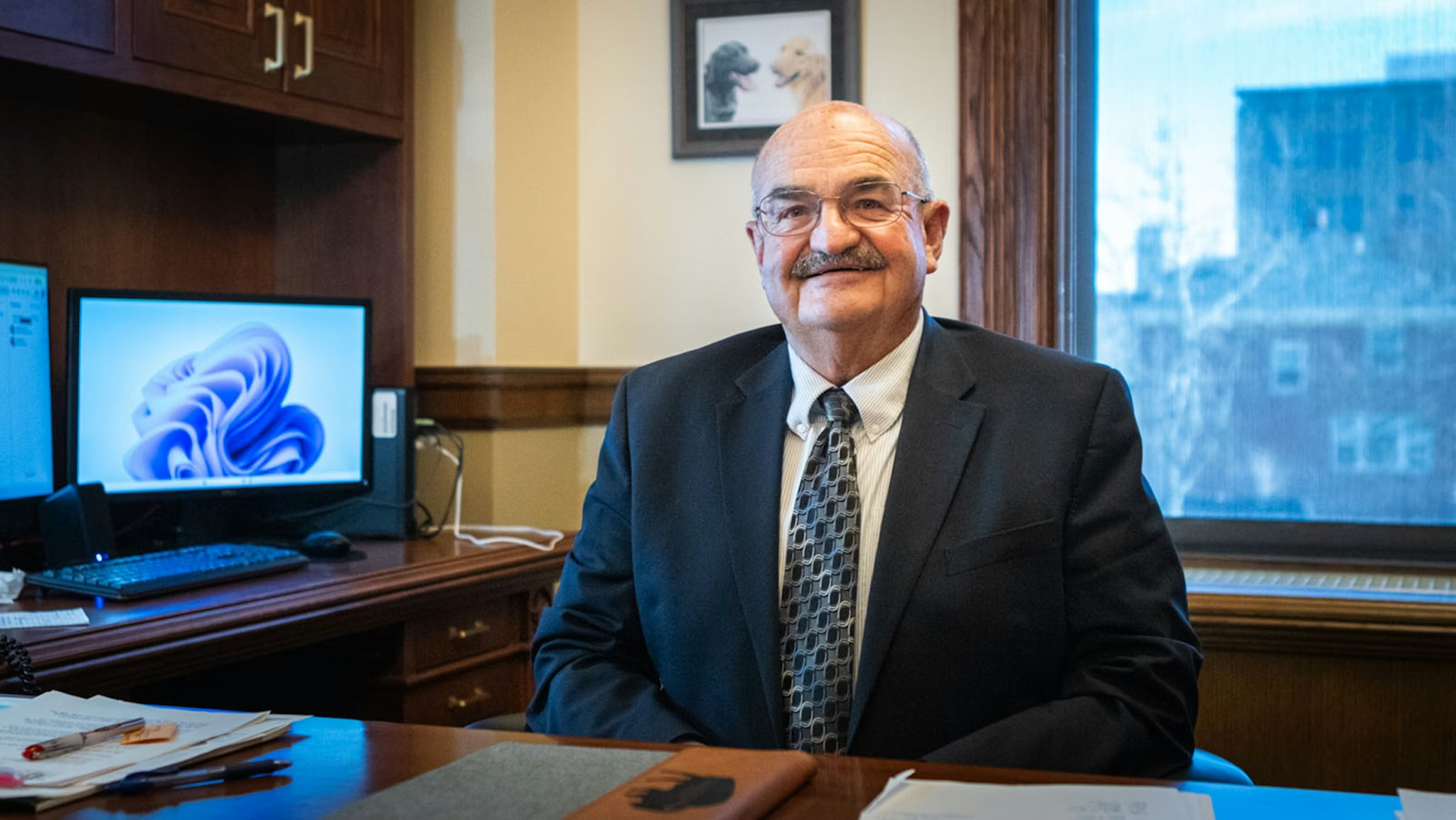
The Attorney General’s brief, signed by Attorney General Keith Kautz and his deputies, argues that Wyoming’s laws seek to protect the integrity and accuracy of vital records. “Birth certificates contain important personal data and information necessary for the government to carry out public health functions,” the brief states. The state argues that allowing such changes would “create ambiguity for other officials who rely on the certificate for the public purposes listed in the Act.” The brief also notes that gender identity can be fluid, unlike parentage questions that courts resolve for birth certificate changes.
KR had argued that the What is a Woman Act creates classifications based on sex or transgender status that deserve heightened court scrutiny. The state counters that the law affects “ordinary interests” and should receive more deference, noting that the class the law creates is “each person who is part of the collected data,” not specifically transgender people. The state invokes U.S. Supreme Court cases Bostock v. Georgia (which protected transgender status under federal employment non-discrimination laws) and United States v. Skrmetti (which declined to expand that finding to the Constitution’s Equal Protection clause). The state argues that KR could not get a birth certificate change regardless of whether she were transgender or cisgender, meaning the law does not target transgender people specifically.
KR’s March brief had noted that birth certificates can be changed in other contexts, such as letting a post-birth spouse replace an unknown birth parent, and argued that “there is no coherent explanation that the State can articulate of how providing transgender people with these amendments has harmed anyone else.” The brief also hinted that Wyoming’s other laws banning transgender women from women’s private spaces and single-sex school sports may not be constitutional, but argued that even if they are, “banning 100% of transgender people born in Wyoming from amending their birth certificates under any circumstances is not a rational means of achieving that goal.”


The latest news in your social feeds
Subscribe to our social media platforms to stay tuned