




Pentagon’s $29bn Iran War Estimate Leaves Bigger Questions



The United States Department of Defense now says the war with Iran has cost American taxpayers $29bn. The figure is large on its face, but in Washington the more important debate is whether it captures the real price of the conflict at all.
The updated estimate was disclosed on Tuesday by Pentagon comptroller Jules Hurst during a Senate hearing attended by Defense Secretary Pete Hegseth. It marks an increase from the $25bn figure the administration first shared in late April.
Hurst said the revision reflects “updated repair and replacement of equipment” and “also just general operational costs”.
The US and Israel launched their war against Iran on February 28. Although a ceasefire that took effect on April 8 has largely held, the financial meter has continued to run as the US maintains forces and replenishes equipment across the region.
The administration has released only a partial accounting. It has not provided a detailed assessment of damage to US military facilities in the Middle East, nor has it fully disclosed how deeply the campaign has drawn down key missile inventories.
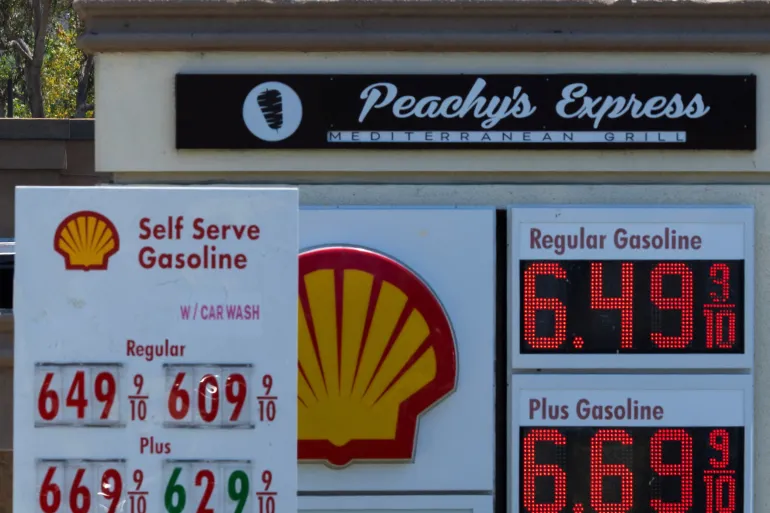
That omission matters because some of the war’s most significant costs are indirect. Rising oil prices, driven in part by disruptions in the Strait of Hormuz, have pushed up fuel, food and transport costs for American households.
Representative Ro Khanna estimated in April that the broader economic toll could reach $631bn, or roughly $5,000 per household. Linda Bilmes has projected that the eventual cost could climb to $1 trillion.
At the hearing, lawmakers also pressed Hegseth on whether the US has enough munitions to sustain the conflict and remain prepared for future crises.
“The munitions issue has been foolishly and unhelpfully overstated,” Hegseth said. “We know exactly what we have. We have plenty of what we need.”
That reassurance contrasts with a recent assessment by the Center for Strategic and International Studies, which found the war had consumed large quantities of some of the Pentagon’s most advanced and expensive missiles, including nearly half of its stockpile of Precision Strike Missile and substantial numbers of THAAD and Patriot missile system interceptors.
“Analysis of seven key munitions shows that the United States has enough missiles to continue fighting this war under any plausible scenario,” the report said. “The risk — which will persist for many years — lies in future wars.”
Hegseth offered little clarity about the administration’s next move after President Donald Trump rejected Iran’s latest ceasefire proposal and described the current pause in hostilities as “on life support” and “unbelievably weak”.
“We have a plan to escalate if necessary,” Hegseth said. “We have a plan to retrograde if necessary. We have a plan to shift assets.”
That ambiguity reflects the administration’s dilemma. Renewed fighting would carry military and political risks at a time when the war is proving unpopular and inflation is accelerating.
On Tuesday, the US Department of Labor reported that consumer prices rose 3.8 percent over the previous year, the sharpest annual increase since 2023. Gasoline prices climbed 5.4 percent in April alone.
The issue also hung over Trump’s visit to China, where trade and regional security were expected to dominate talks with Xi Jinping.
During the same hearing, Dan Caine emphasized that countering China remains the Pentagon’s top strategic priority.
He said the military is seeking “a range and mix of capabilities that create outsized dilemmas for Xi Jinping and others that are out there, to ensure that we maintain and sustain deterrence”.



The latest news in your social feeds
Subscribe to our social media platforms to stay tuned