





February 28, 2026, marked the beginning of the joint US-Israeli operation against Iran. Jerusalem called it Operation Lion’s Roar, Washington joined under a separate banner – Operation Epic Fury. The opening salvo killed Supreme Leader Ali Khamenei, took out top IRGC commanders, and, mirroring the 12-day war of June 2025, struck nuclear facilities at Natanz and Isfahan. The Trump administration explicitly stated regime change as one of the key objectives, together with diminishing Iranian nuclear and broader military capabilities. The retaliation came fast – missiles hit US bases across the Gulf, regional oil infrastructure was damaged, and the Strait of Hormuz was effectively shut, trapping roughly a fifth of global oil and LNG flows. The Iranian official death toll is 3,468 killed. In Lebanon, another theater of war, 2,679 people were killed, according to the Lebanese Health Ministry. Israel lost 23 people killed, including 15 IDF soldiers, in Lebanon. The US lost 15 service members, with 365 wounded, according to CENTCOM. All official figures are being disputed. A ceasefire on April 7, brokered by Pakistan, has been indefinitely prolonged, with both sides refusing concessions.

Europe watched this unfold from the bleachers. No consultation preceded the strikes. No NATO ally was briefed. The continent that had spent two decades trying to negotiate Iran back from the nuclear brink discovered, in a single weekend, that its diplomatic architecture had been bulldozed by an ally that no longer considered consultation a requirement.
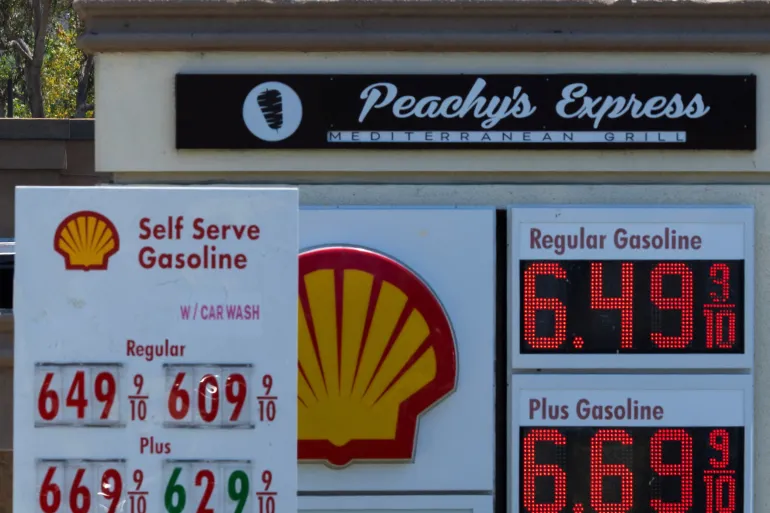
The Strait of Hormuz handles roughly 20 million barrels per day of oil and petroleum products – about a fifth of global consumption – plus around 20% of global LNG trade. When Iran shut it in early March, the effect was immediate and brutal. Dutch TTF natural gas futures, Europe’s benchmark, jumped 60% within days, hitting €50 per megawatt-hour. European gas prices spiked roughly 20% on the morning of March 2 alone. Oil punched past $100 a barrel and stayed there.
This was not 2022 all over again but close enough to frighten policymakers who had only just stabilized their economies. Europe entered the crisis with gas storage at roughly 30%, far lower than in recent years, with Germany reporting reserves as low as 21.6%. Qatar supplies approximately 15% of Europe’s LNG, and its Ras Laffan complex took extensive damage from Iranian strikes, forcing Asian buyers to compete more aggressively with Europe for spot cargoes.
The macroeconomic fallout has been swift. The European Commission estimates the conflict could shave 0.4 percentage points off EU growth in 2026 while lifting inflation by up to one percentage point. Germany – Europe’s largest economy – halved its 2026 growth forecast from 1% to 0.5%. German wholesale prices jumped to a three-year high of 6.3% in April, driven almost entirely by energy and raw material costs linked to the war. The annual inflation rate in the eurozone accelerated to 2.5% in March from 1.9% the previous month, powered by a 4.9% increase in energy prices. France’s economy ground to a halt in the first quarter, and Italy trimmed its growth outlook to as low as 0.5%.
Dr. Adam Hanieh, Professor and Director of the SOAS Middle East Institute at the University of London, the author of ‘Crude Capitalism: Oil, Corporate Power, and the Making of the World Market,’ sees the war as a compounding shock:
The war brings renewed energy and inflation shocks at a moment when major European economies are already struggling with weak growth. The war also exposes Europe’s dependence on US military power, even as the political foundations of the transatlantic alliance are being eroded through Trump’s belligerence. It will likely strengthen calls for higher defense spending and a more protectionist industrial policy, while also increasing the risk of social protest and political instability as the burden of rising costs falls on households. If the war drags on, food price inflation could become an especially sharp pressure point.
More on Dr. Hanieh’s analysis of the Iran war can be found in his Financial Times piece and the recent interview with Democracy Now.

The IMF has warned that about 25% to 30% of global oil and 20% of liquefied natural gas pass through the Strait of Hormuz, feeding demand in Asia and parts of Europe, and that the disruption represents the largest shock to the global oil market in history. For fuel-importing economies, the effect is that of a large, sudden tax on income. Europe is far less dependent on Gulf oil and LNG than China, Japan, or South Korea – but it is not insulated. Oil and LNG are global markets; any blockage triggers immediate price spikes that hit Europe regardless of its limited physical imports.
Dr. Alexander Roth, an Affiliate Fellow at Bruegel, a European think tank that specializes in economics, frames the crisis in structural terms:
As a consequence of the Iran war and the closure of the Strait of Hormuz, the EU finds itself in its second energy crisis within five years. The EU’s consumers and firms have been hit by surging global oil and European gas prices, while some oil-based products, such as diesel and jet fuel, have seen prices skyrocket. In the short term, the EU and its countries have to pay these prices and try to reduce demand, as further diversification of imports will be difficult and cannot replace all the lost supply amounts.
Many European governments have responded to this price shock with fiscal measures to cushion energy price increases, yet substantial funds are being spent on untargeted measures instead of helping vulnerable groups or supporting electrification investments.
To cut dependence on volatile fossil-fuel imports and accelerate the EU’s electrification, the European Commission has presented the AccelerateEU plan. Despite the challenging fossil fuel supply situation, the EU finds itself in a more favorable position to accelerate its transition away from fossil fuels compared to the last crisis five years ago. In general, clean technologies on the supply side, such as wind and solar power, and on the demand side, such as electric cars and heat pumps, have been further developed and have become cheaper.
Latest figures from Bruegel’s European Clean Tech Tracker show that consumers also seem to respond to these price movements, as sales of electric vehicles and heat pumps have continued to pick up. At the same time, the deployment of solar and wind power plants continues to grow.
The Bruegel think tank has tracked over €10 billion in national commitments to shield consumers and businesses, with roughly 80% consisting of broad fuel tax cuts and VAT reductions rather than targeted support. The European Commission has now presented the AccelerateEU plan to speed the transition away from fossil fuels.
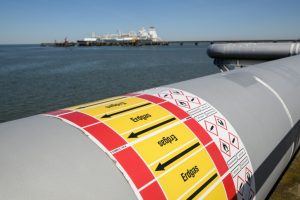
But the immediate picture is one of vulnerability. The EU’s new Middle East Temporary State Aid Framework (METSAF), adopted on April 29, allows governments to cover up to 70% of extra energy costs for agriculture, fisheries, transport, and energy-intensive industries. It is the fourth such framework since 2020. METSAF explicitly decouples compensation from decarburization requirements – effectively subsidizing fossil fuel consumption at the very moment the EU is supposed to be weaning itself off it. The bloc has spent an extra €27 billion on fossil fuel imports since the war began.
On the political front the war has exposed Europe’s inability to consolidate on the issue and act independently in the same time. The disjointed initial reactions told the full story.
Spain’s Prime Minister Pedro Sánchez immediately condemned the strikes and refused to allow US forces to use Spanish bases at Rota and Morón de la Frontera.
“One can be against a hateful regime, as is the case with the Iranian regime, and at the same time be against an unjustified, dangerous military intervention outside of international law,” Sánchez declared.
Foreign Minister José Manuel Albares was even more explicit:
This is a unilateral war. None of the NATO allies were consulted or informed. We don’t know what’s going on.
Italy blocked the US use of the Sigonella airbase in Sicily after discovering that American bombers had filed flight plans only after the aircraft were already airborne. France closed its airspace to aircraft transporting military supplies to Israel and barred the use of its bases for offensive operations. Switzerland, Austria, and Poland followed with their own restrictions.

The response from Washington was swift and punitive. Trump threatened Spain with a trade embargo, troop withdrawals, and suspension from NATO. He derided British Prime Minister Keir Starmer as “not Winston Churchill” and threatened tariffs on UK imports. The Pentagon floated the prospect of punishing NATO allies it deemed insufficiently supportive. Then, in early May, Trump announced he was withdrawing 5,000 of the 36,400 US troops stationed in Germany after Chancellor Friedrich Merz said publicly that Iran was “humiliating” the United States. The Pentagon scrapped a planned deployment of Tomahawk cruise missiles to Germany. Trump said he was also considering reducing forces in Italy and Spain.
Dr. Riccardo Alcaro, Research Coordinator and Head of the Global Actors Programme at Istituto Affari Internazionali (IAI), the author of ‘Europe and Iran’s Nuclear Crisis,’ describes a Europe trapped between impossible choices:
The Israeli-American aggression of Iran has precipitated precisely the kind of regional escalation that European governments had long tried to avert through diplomacy and containment. Iran’s decision to close the Strait of Hormuz, combined with targeted strikes on critical energy infrastructure, has translated into renewed inflationary pressures across European economies, compounding existing structural vulnerabilities and heightening the risk of stagnation or recession in several member states. The Iranian political system has not shown signs of imminent breakdown but rather the empowerment of the hard-line and combative faction inside the Revolutionary Guards. Tehran may even reconsider its nuclear posture and move closer to a military option as a deterrent. At the same time, Europe’s decision to refrain from participating in what it regards as an illegitimate and strategically counterproductive war – launched without any consultation – has reinforced Trump’s biases regarding European fecklessness and unreliability.
Viewed from any angle – strategic, security, energy, economic, or normative – the war against Iran has gravely harmed European interests. Europe is in an impossible position: it cannot join a war that is harming its interests and is excluded from the diplomatic process between the US and Iran. It may partner with the GCC countries, but these are divided about the extent to which Iran can be accommodated. Europe’s options now are therefore limited to damage limitation and building some goodwill in regional countries about possible contributions to a post-conflict arrangement, if it ever comes, from de-mining to economic and technical assistance to diplomatic support for a long-term ceasefire.
The divisions within Europe are as deep as the transatlantic rift. France’s Macron condemned Iranian retaliation while warning that military action conducted outside international law risked undermining global stability. He ordered the Charles de Gaulle aircraft carrier to the region to protect French interests but kept French bases off-limits for offensive operations. The UK under Starmer adopted what the Council on Foreign Relations called a “carefully balanced transatlantic posture” – criticizing Iran while providing defensive support and urging diplomacy. It made nobody happy.
Dr. Rouzbeh Parsi, Affiliated Researcher and Visiting Lecturer with Department of History at Lund University, is blunt about Europe’s self-marginalization:
Europe has, in the last 3-4 years, made itself obsolete as far as negotiations with Iran are concerned. It used to be a facilitator and part of the negotiations (nuclear agreement process, 2013-2015) but has for several reasons become increasingly marginal to this dynamic. Iran’s support of Russia in its war of aggression against Ukraine added to the frustration inn European capitals against Tehran’s unwillingness to budge on the nuclear issue after President Trump left the agreement in 2018.
In the present situation the EU has shot itself in the foot by explicitly condoning the US/Israeli war in June 2025 and then again in February 2026. There are variations: Spain has been on the forefront of not endorsing the war, while German Chancellor Friedrich Merz was initially supporting the war (already in June last year he said that “Israel is doing our dirty work for us”) and refused to opine on its legality. As it became clear that Trump did not really have a plan and the war dragged out Merz got cold feet and backtracked. A similar pattern can be seen in how the EU’s top leaders have vacillated (EU Commission president Ursula von der Leyen and High Representative Kaja Kallas).
What this indicate is that there is no strategic thinking in Brussels and major capitals on what this war will/might entail and they are hopscotching – mostly getting it wrong.
European public opinion reflects this unease. Nearly eight in ten French respondents fear an escalation of the conflict beyond the Middle East, and three-quarters of Dutch citizens say they are more concerned about the Iran war than about the wars in Ukraine and Gaza. In the Netherlands, four in ten consider the US-Israeli strikes a bad thing, compared with just 21% who view them positively. In Italy, 34% call for neutrality and mediation, while only 2% support direct military involvement. A Euroscope poll found that nearly three in five Europeans consider the war on Iran unjustified.

The damage to the alliance goes far beyond hurt feelings. The European Union Institute for Security Studies (EUISS) has warned that the war “complicates European rearmament and support for Ukraine, while also further eroding confidence in the United States as a reliable guarantor of Europe’s defense.” The US has expended a significant share of its arsenal during the conflict – more than 850 Tomahawk missiles were fired in the opening weeks, and replacing them at current production rates of around 85 units per year would take about a decade. Switzerland learned that its order of five Patriot systems would face a five-year delay. The Pentagon has discussed redirecting assets earmarked for Ukraine to the Middle East.
Europe’s rearmament, already urgent after Russia’s invasion of Ukraine, now faces a double squeeze: the primary arms supplier is burning through its own stockpiles while simultaneously questioning whether European security is still an American interest. The US share of arms transfers to Europe fell to 58% in 2021-25, down from 64% in the previous period, as European countries began shifting procurement toward domestic manufacturers. That trend will now accelerate.
Ivo Daalder, a former US ambassador to NATO, captured the mood: “Something fundamental has broken.” The question now being asked in European defense ministries is whether the United States would honor Article 5 in a crisis.
Dr. Fabian Zuleeg, Chief Executive and Chief Economist at the European Policy Centre, summarizes the economic-political nexus:
The war in Iran is having a significant impact on Europe, both economically and politically. The impact of the ongoing hostilities and, in particular, the restrictions on shipping are increasing prices and potentially resulting in shortages, which is already negatively impacting growth and thus public finances. The full impact will depend on the duration of the conflict, but even in the best-case scenario, there will be a significant negative economic impact.
While Europeans agree with the aim of preventing Iran from obtaining nuclear weapons, they are unconvinced that this is the right method, also being concerned about future instability in the region. This difference to the Trump administration is leading to a further deepening of the transatlantic rift, especially since President Trump is threatening punitive consequences. Despite all this, if there is a robust ceasefire, Europeans know that they will have to contribute to maritime security and to help re-establish the free flow of shipping.
Dr. Zuleeg’s recent piece can be found here.
The political fallout is already claiming victims. In Bulgaria, Kremlin-friendly ex-president Rumen Radev won election on April 19, setting incumbents around Europe on edge. In Romania, a coalition crisis threatens to sweep the pro-EU prime minister from power. In Germany, the far-right Alternative for Germany is eyeing gains in September’s Saxony-Anhalt state election. In France, the National Rally is positioned to capitalize on a cost-of-living crisis that the government in Paris can do little to control.
“Energy costs are cascading into food, transport, and housing, hitting lower- and middle-income households hardest,” Seamus Boland, president of the European Economic and Social Committee, told POLITICO. “Politically, that creates space for distrust – not just of national governments, but of European institutions’ ability to shield citizens from external shocks.”
Europe is not at war with Iran. But it is paying the price for one, and the bill is landing on governments that have few fiscal tools left after COVID-19 and the 2022 energy crisis. The European Commission’s advice – “stay with temporary and targeted measures” – is sound economics but terrible politics when voters are watching fuel prices climb and heating bills arrive.
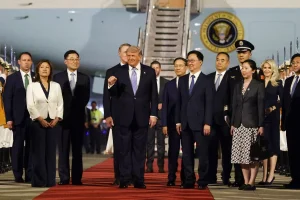
President Donald Trump is joined by Chinese Executive Vice Minister of Foreign Affairs Ma Zhaoxu, US Ambassador to China David Perdue, Vice President of China Han Zheng and Chinese Ambassador to the USXie Feng at Beijing Capital International Airport on May 13 in Beijing, China. Trump is meeting with President Xi Jinping in Beijing to address the Iran conflict (Alex Wong / Getty Images)
What comes next depends on a variable Europe does not control: whether the ceasefire holds. Iran warned European countries on May 11 against sending warships to the Strait of Hormuz, arguing that any military intervention would push energy prices even higher. Tehran’s negotiating position – conditional pauses in enrichment, phased sanctions relief, compensation for war damage – remains far from Washington’s demands. The US and Iran are still talking past each other, and Europe is shut out of the room.
The irony is bitter. Twenty years ago, Europe’s inability to prevent the Iraq war galvanized the continent into creating the E3 format that patiently negotiated the 2015 nuclear deal. The current crisis is producing the opposite – something closer to paralysis – a continent that cannot join a war, cannot shape its outcome, and cannot protect its citizens from its consequences. As Nathalie Tocci wrote in The Guardian:
Europe is more paralysed than divided over the illegal US-Israeli war on Iran. Yet rather than fostering a shared sense of purpose, this crisis is hollowing out Europe’s identity and undermining its ability to act independently in the world.

The latest news in your social feeds
Subscribe to our social media platforms to stay tuned