


US Pulls Back From Canada Defence Board as Alliance Strains Deepen
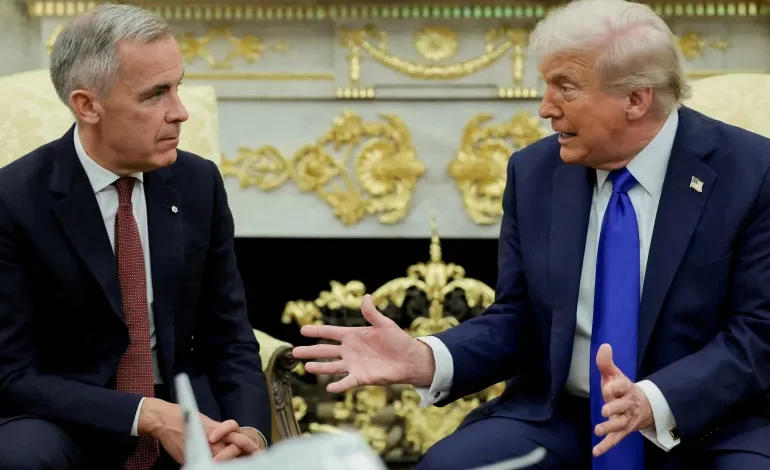

The United States is stepping back from a long-running defence forum with Canada, in another sign that relations between the two neighbours are becoming harder to manage under Donald Trump’s second term.
On Monday, US Undersecretary of Defense Elbridge Colby said the Pentagon would halt participation in the Permanent Joint Board on Defense, a body created during World War II to coordinate continental security between the two countries.
Colby framed the move as a reassessment of whether the forum still serves US interests — and made clear that Washington sees Canada as falling short on defence.
“A strong Canada that prioritizes hard power over rhetoric benefits us all. Unfortunately, Canada has failed to make credible progress on its defense commitments,” Colby wrote on X.
“We can no longer avoid the gaps between rhetoric and reality. Real powers must sustain our rhetoric with shared defense and security responsibilities.”
The announcement fits into a broader pattern from the Trump administration, which has repeatedly accused allies of relying too heavily on US military power while failing to spend enough on their own defence.
Canada rejects that framing. Under Prime Minister Mark Carney, Ottawa has committed to increasing defence spending, including as part of a broader NATO push agreed last year in The Hague, where nearly all member states backed a target of 5 percent of GDP for defence and security-related spending.
Carney’s government said 3.5 percent would go toward Canada’s “core military capabilities”, while the rest would support related areas such as port upgrades, emergency preparedness and strategic infrastructure.
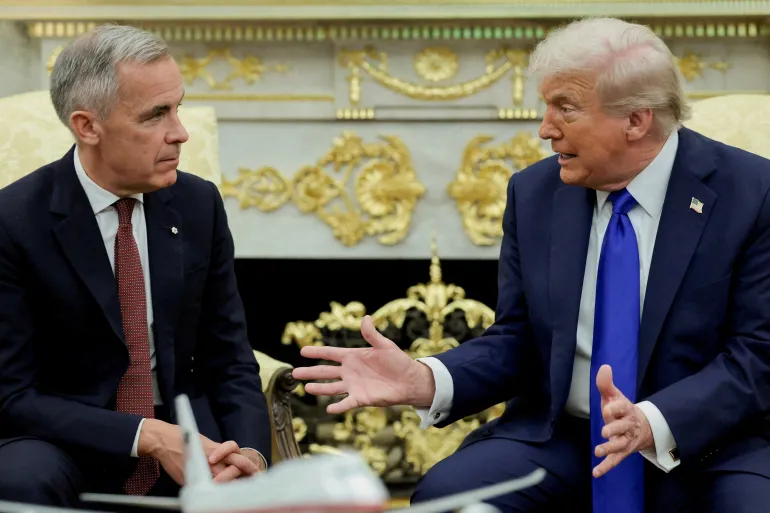
Since becoming prime minister in March 2025, Carney has also argued that Canada needs to reduce its dependence on the United States, both militarily and economically. In a speech this year, he called for “middle powers” like Canada to work together in an “era of great power rivalry” — a clear nod to the pressure created by the US, China and Russia.
But the rift with Washington now goes well beyond defence spending.
Trump has repeatedly accused Canada of unfair trade practices and weak border enforcement, including on drugs and migration. Critics have questioned the basis of those claims, but the White House has used them to justify aggressive tariffs on Canadian imports.
The president has also revived his provocative suggestion that Canada could avoid economic pressure by becoming the 51st US state — language that has landed badly in Ottawa and among some Republicans in Washington.
Republican Representative Don Bacon criticised the decision to pull back from the defence board and linked the deterioration directly to Trump’s rhetoric.
“Cooler and wiser brains are needed to preserve a close alliance w/ our neighbor,” Bacon wrote.
“This all started w/ taunts of ‘Canada will be the 51st state’ and ‘their Prime Minister will be the 51st governor’. The insults gained us nothing but animosity that cost us economically and now militarily.”
The timing is awkward. The US, Canada and Mexico are due to renegotiate the USMCA trade agreement later this year, and tensions over defence, tariffs and sovereignty are already shaping the mood before talks begin.



The latest news in your social feeds
Subscribe to our social media platforms to stay tuned