




AP, the Register, the Independent, Fortune contributed to this report.
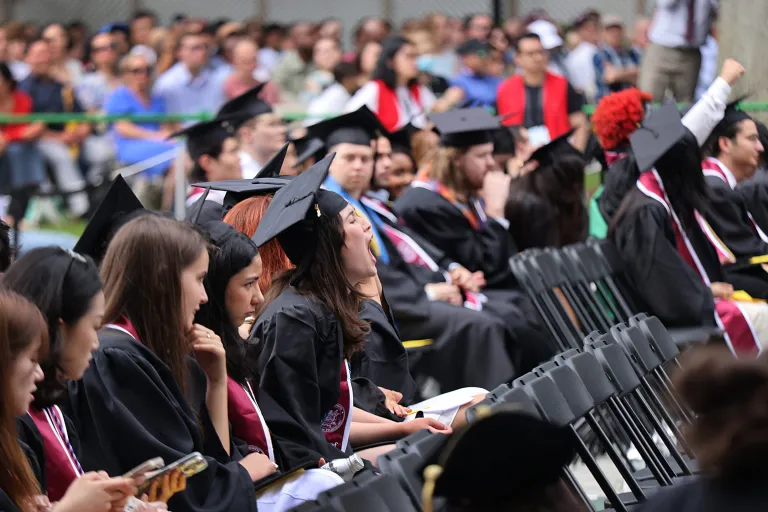
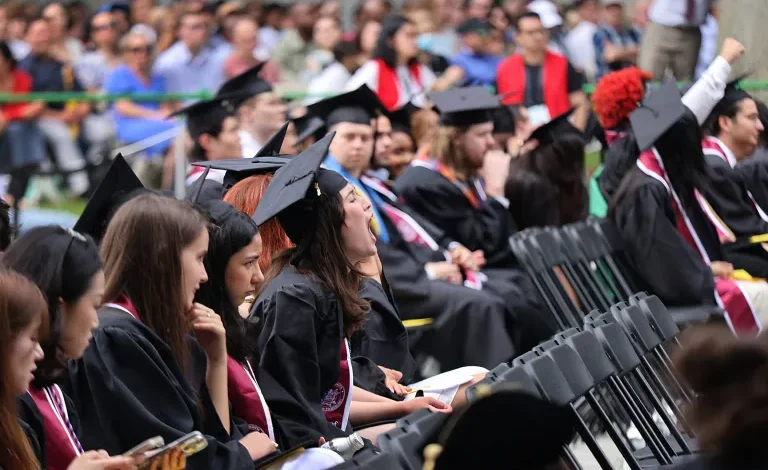
AI has become the least popular guest at this year’s graduation ceremonies.
At campuses across the US, students have been booing when speakers start talking about artificial intelligence. The reaction has been loud, awkward and pretty hard to miss. And honestly, it makes sense. A lot of graduates are stepping into a job market that already feels shaky, and AI is not exactly helping calm nerves.
Former Google CEO Eric Schmidt got a rough reception at the University of Arizona over the weekend when he told about 10,000 graduates that AI would touch “every profession, every classroom, every hospital, every laboratory.” The boos started building almost immediately.
Schmidt tried to address it head-on. He told students he understood the fear, and said many of them worry the future is already being written for them, with machines taking over and jobs disappearing. But the mood in the room had already turned.
For some students, the message landed like a lecture from the very people they feel are speeding up the problem.
Olivia Malone, a 22-year-old Arizona graduate heading to law school, said the speech felt disrespectful. Her frustration was simple: students are being told to avoid AI, punished if they use it, and then asked to clap for one of the biggest names pushing it forward. That was never going to go down smoothly.
The same basic scene has played out at other schools too. Real estate executive Gloria Caulfield was booed at the University of Central Florida after calling AI “the next industrial revolution.” At Middle Tennessee State University, music executive Scott Borchetta got similar treatment when he told grads that AI is already rewriting the industry.
The backlash is not just about tone. It is about timing.
Students are graduating into a labor market that already looks rough, and many think AI is making it worse. Recent surveys back that up. Around 70% of college students see AI as a threat to their job prospects, and Gen Z’s feelings toward the tech have been getting more negative, not less.
That anxiety showed up again at Marquette University, where graduate Sami Wargo said an AI expert was chosen as commencement speaker even after students petitioned for someone else. Wargo, who studied digital media and advertising, said the choice felt out of touch. She has applied for dozens of jobs and keeps seeing openings that ask candidates to “collaborate with AI,” even though her classes often banned it.
That contradiction is what seems to be getting under people’s skin. AI is everywhere in the pitch deck and the keynote speech, but for students, it is showing up as uncertainty, mixed signals and one more thing to worry about on top of rent, loans and landing a first job.
So when graduation speakers start telling them to embrace the future of AI, plenty of them are not hearing inspiration. They are hearing hype.



The latest news in your social feeds
Subscribe to our social media platforms to stay tuned