


EXCLUSIVE:Billionaire Money, $7 Trillion Question in US Politics


The scale of billionaire influence in American politics reached a new level during the 2024 election cycle, with ultra-wealthy donors and their families contributing roughly $3bn to federal races: nearly one-fifth of all reported campaign spending.
According to a New York Times investigation, just 300 billionaire families accounted for 19 percent of federal campaign donations through direct giving and political action committees. The report described a political system where a tiny donor class increasingly shapes elections at every level, from Senate races to local school boards.
The numbers reflect a dramatic transformation in campaign finance over the past two decades. In 2008, before the Supreme Court’s Citizens United ruling expanded protections around political spending, billionaire contributions represented only 0.3 percent of federal campaign money. By 2024, that share had exploded.
The influence was particularly visible in tightly contested races and local political battles. In Nebraska, the family of billionaire Joe Ricketts reportedly accounted for 21 percent of all political donations statewide. In California, donors including Netflix co-founder Reed Hastings and Walmart heir Jim Walton supplied the overwhelming majority of funding behind campaigns tied to charter school expansion.
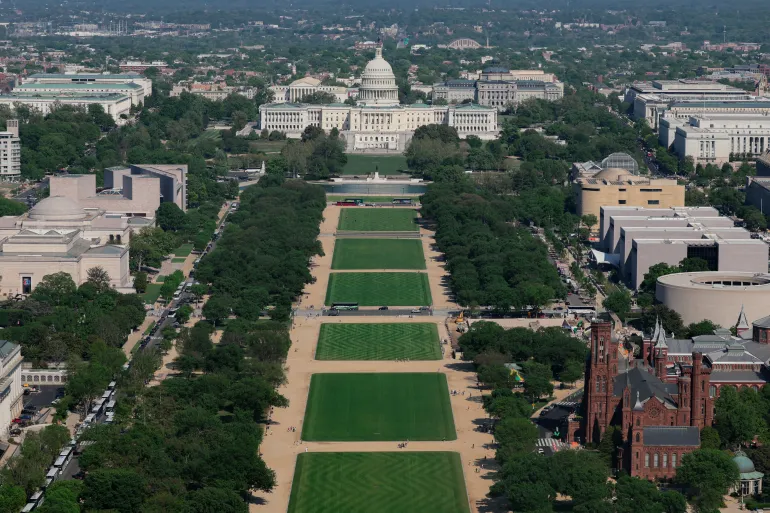
The growing concentration of political money has intensified debate over donor influence, “dark money” groups and the relationship between wealth and political power in Washington.
But for Mark Meckler, President of Convention of States Action, the issue is less about the donors themselves and more about the scale of federal authority that makes political influence so valuable in the first place.
“When Washington controls roughly a quarter of GDP and writes rules that can make or break entire industries overnight, every dollar spent on a federal campaign is really a bet on a regulatory or appropriations outcome,” Meckler told the Wyoming Star. “That’s not a flaw in donor behavior, it’s a rational response to a federal government that has grown far beyond anything the Founders designed.”
Meckler argues that campaign finance debates often focus too narrowly on disclosure laws and donor restrictions while avoiding the deeper structural incentives driving political spending.
“Shrink the size of the prize and you shrink the incentive to capture it,” he said. “As long as there are trillions of dollars in subsidies, contracts, and rule-making at stake, the smart money will keep showing up—no campaign finance law can change that math.”
The argument reflects a long-running conservative critique of federal expansion: that the more economic and regulatory power concentrated in Washington, the more aggressively corporations, billionaires and political organisations will compete to influence it.
That debate has become even sharper as political spending increasingly flows through outside groups and nonprofit organisations often described collectively as “dark money” networks.
Critics argue those systems obscure donor identities and weaken public accountability. Meckler, however, says the public conversation fundamentally misunderstands the issue.
“The debate treats ‘dark money’ as the disease when it’s really a symptom — and worse, the proposed cures almost always make the underlying problem bigger,” he said.
According to Meckler, stricter disclosure laws and expanded federal oversight often strengthen entrenched political actors rather than reducing influence.
“In practice they entrench incumbents, raise the cost of entry for challengers, and push spending into channels that are harder to track, not easier.”
For Meckler, the central question is not whether wealthy donors exist, but why control of federal office has become so economically significant.
That broader frustration with Washington has increasingly fueled calls for structural constitutional reform from outside traditional party leadership.
Meckler, whose organisation Convention of States Action advocates using Article V of the Constitution to limit federal power, argues that meaningful reform is unlikely to come through Congress itself.
“Honestly, close to zero,” he said when asked about the chances of major reform without reducing the scope of federal authority. “Congress will not voluntarily reduce its own power, the Supreme Court has rightly held that political spending is protected speech, and every new federal ‘reform’ simply reshuffles the influence game without shrinking it.”
Instead, Meckler points to Article V — the constitutional mechanism allowing states to convene a convention to propose amendments, as the only realistic path toward limiting federal spending, imposing term limits and reducing Washington’s reach.
Still, he acknowledged the political obstacles remain enormous.
“The obstacles are the obvious ones: a permanent political class that benefits from the status quo, a press that has confused incumbency with stability, and a public that has been told for fifty years that fundamental reform is impossible.”
The broader debate over campaign finance now sits at the intersection of several larger political anxieties in the United States: distrust in institutions, rising concentration of wealth, the expansion of executive and federal power, and the growing sense that elections increasingly depend on access to enormous pools of money.


The latest news in your social feeds
Subscribe to our social media platforms to stay tuned