




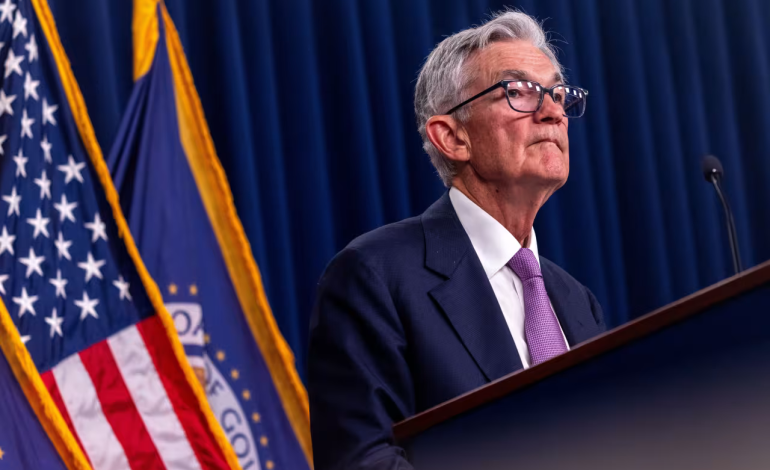

Federal Reserve Chair Jerome Powell’s recent decision to lower the benchmark interest rate by half a percentage point has sparked discussion about the central bank’s future monetary policy.
While the rate reduction to a range of 4.75% to 5% marked a departure from the Fed’s traditional gradual approach, the minutes from the Federal Open Market Committee (FOMC) meeting on September 17-18 reveal mixed feelings among officials regarding the speed and magnitude of future cuts.
At a press conference following the meeting, Powell described the move as a “recalibration” aimed at maintaining a robust labor market. This decision was influenced by recent inflation data that led many officials to believe the rate of price changes was trending toward the Fed’s 2% target. However, the minutes indicate a preference among some officials for a more cautious approach, emphasizing the resilience of the economy despite what they termed “restrictive” policies.
“Some participants observed that they would have preferred a 25-basis-point reduction of the target range at this meeting,” the minutes noted.
The minutes suggested a divided perspective within the committee. According to economist Derek Tang from LH Meyer/Monetary Policy Analytics, the dominant sentiment among the more cautious members was that they were willing to support a larger cut this time but would prefer smaller adjustments moving forward.
Powell reinforced the committee’s inclination toward a gradual rate-cutting strategy in comments made at the National Association for Business Economics meeting on September 30.
“This is not a committee that feels like it’s in a hurry to cut rates quickly,” he stated.
Powell added that decisions would be guided by incoming economic data.
Recent labor market data indicates a strong performance, with the economy adding 254,000 jobs in September and the unemployment rate dropping to 4.1%. Additionally, the Atlanta Fed’s GDP tracker estimates third-quarter economic growth at an annualized rate of 3.2%. These robust indicators have led some Fed officials to advocate for a more measured approach to rate cuts.
St. Louis Fed President Alberto Musalem expressed caution, stating that he believes the risks of easing monetary policy too quickly outweigh the potential costs of being overly conservative. He remarked that further gradual reductions in the policy rate will likely be appropriate over time. Similarly, San Francisco Fed President Mary Daly noted that a few cuts within the year might be more realistic, while Dallas Fed President Lorie Logan pointed to the need for a gradual return to a normal policy stance.
The minutes highlighted a split in the FOMC, with a “substantial majority” supporting the larger cut, although there were discussions about the merits of smaller adjustments. The minutes indicated that a few officials felt a quarter-point reduction might provide a clearer path toward policy normalization.
As the Fed navigates these discussions, officials have emphasized that the larger cut should not be interpreted as a sign of concern about the economic outlook. Instead, they view it as a response to changing economic conditions, including declining inflation and solid job growth. Nonetheless, the likelihood of another significant rate cut this year appears diminished as positive economic trends continue to emerge.
Looking ahead, the FOMC will face critical decisions regarding its balance sheet, which has been gradually shrinking following extensive bond purchases during the pandemic. The minutes revealed a consensus among several participants that ongoing balance sheet reductions could continue, even as the committee adjusts its target for the federal funds rate.
As the Fed balances the need for a robust economic response with caution, the focus remains on the data that will inform future policy decisions. The next scheduled meeting is set for November 6-7, where the committee will reassess its approach to interest rates in light of the latest economic indicators.
Bloomberg, the Wall Street Journal, and the New York Times contributed to this report.


The latest news in your social feeds
Subscribe to our social media platforms to stay tuned