





Calls for Grizzly Bear ‘Metapopulation’ Management Grow Amid Potential Delisting Decisions
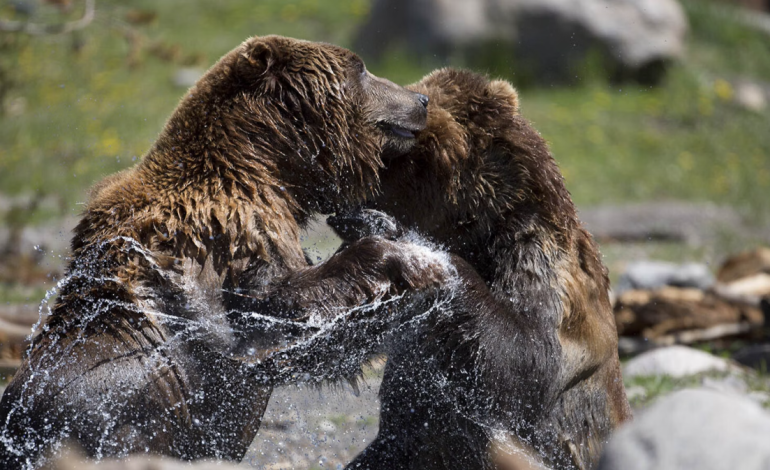

A proposal to revise how grizzly bears are managed across the Rocky Mountain region is gaining momentum as federal authorities approach key decisions on the species’ endangered status.
Chris Servheen, a former US Fish and Wildlife Service (FWS) grizzly bear recovery coordinator, is leading calls for a shift in strategy to manage grizzlies as a “metapopulation” — a single interconnected group of bears rather than isolated populations.
This approach comes as the US Fish and Wildlife Service faces a January 20 deadline to decide on Wyoming’s petition to delist grizzlies in the Greater Yellowstone Ecosystem (GYE). Similar petitions from Montana and Idaho are also pending, raising the possibility that grizzlies could lose federal protection across the Lower 48 states.
When Servheen authored the 1993 Grizzly Bear Recovery Plan, the goal was to restore and protect six isolated populations of bears. Now, with bear numbers on the rise and grizzlies venturing beyond traditional recovery zones, he believes it’s time for a new approach. Servheen is calling for the creation of a metapopulation spanning the northern Rockies, with an emphasis on habitat connectivity and the protection of areas where grizzlies are likely to travel between populations.
“Where we are now, we see bears outside the recovery zones, and they’re trying to move on their own,” Servheen explained. “The long-term health of grizzly bears would greatly benefit by managing them as one single unit.”
This new strategy would prioritize “connectivity areas” — places outside of core bear habitats like Yellowstone where grizzlies move in search of food, mates, and new territory. Servheen argues that these areas must be safeguarded to improve genetic diversity and make grizzlies more resilient to changes in climate and habitat.
The proposal for metapopulation management faces several challenges. Unchecked residential development, road construction, and human-wildlife conflicts pose threats to grizzlies moving between ecosystems. State policies allowing wolf trapping and the use of hounds for hunting in grizzly territory are also concerning for Servheen, as these activities increase the risk of bear deaths.
An even more immediate threat could come from the potential delisting of grizzlies in key ecosystems. If FWS grants Wyoming’s petition to delist GYE grizzlies, management would shift from federal to state control, potentially allowing hunting seasons for the bears. Wyoming, Montana, and Idaho have already signed agreements to manage grizzly populations within the Greater Yellowstone region if delisting is approved. These agreements would permit hunting of 40 to 80 bears annually in specific areas, depending on the population size.
Servheen’s primary concern is not hunting in the Demographic Monitoring Area (DMA) — the core habitat where population thresholds are closely managed — but rather hunting in the buffer zones between major populations.
“To put an additional risk on those bears is totally counter to connectivity on the landscape,” he said.
Servheen emphasized the critical role these zones play in facilitating movement between grizzly populations.
The push for a metapopulation approach coincides with looming decisions on delisting. US District Judge Alan Johnson recently ordered FWS to make a final decision on Wyoming’s petition to delist GYE grizzlies by January 20, 2024. Similar delisting petitions for grizzlies in Montana’s Northern Continental Divide Ecosystem and for the broader Rocky Mountain region remain under review.
Wyoming Governor Mark Gordon applauded the judge’s order, stating:
“With the bear recovered, it is long past time for GYE grizzly bear management to be entrusted to the states.”
Environmental groups, however, oppose delisting. Earthjustice, a legal advocacy group, has already filed a petition challenging the move, arguing that the grizzly population has not fully recovered and that delisting would jeopardize genetic diversity and habitat connectivity. Mary Cochenour, an Earthjustice attorney, pointed out that federal oversight is essential for updating the recovery plan to incorporate modern conservation strategies.
If delisting occurs, Wyoming, Montana, and Idaho would have greater autonomy over grizzly bear management. Some state officials argue that grizzlies have surpassed recovery goals, pointing to population increases and signs of density-driven slowing of growth in core areas like Yellowstone. The bears’ movement beyond core areas is seen by some as proof of recovery.
However, Servheen and other advocates argue that these movements highlight the need for better connectivity. Without it, the populations remain genetically isolated, making them more vulnerable to disease and climate change. Critics also warn that state management could lead to inconsistent policies on hunting and human-wildlife conflict resolution.
While hunting proponents argue that population growth warrants stricter control of grizzlies, wildlife advocates stress that grizzlies are a keystone species with cultural and ecological importance. The death of grizzly 399, a famous 28-year-old bear hit by a car in 2023, highlighted the risks posed by increased human activity in bear territory.
Servheen and Earthjustice argue that updating the 1993 Grizzly Bear Recovery Plan is essential for the long-term survival of the species. But to do so, bears must remain under federal protection. The FWS faces a choice: either delist the bears and transfer control to the states or keep them listed and update its conservation strategy.
“Montana, Idaho, and Wyoming should be proud to be some of the few places where these magnificent animals roam,” said Servheen.
He called for a balanced approach that supports both grizzly conservation and human activity.
US News & World Report, the Associated Press, Wyoming Tribune Eagle, and Cowboy State Daily contributed to this report.



The latest news in your social feeds
Subscribe to our social media platforms to stay tuned