






The Consumer Financial Protection Bureau (CFPB) has finalized a rule that will limit how banks and credit unions charge overdraft fees.
The rule, which applies to financial institutions with more than $10 billion in assets, is expected to save American consumers an estimated $5 billion annually. Set to take effect on October 1, 2025, the regulation gives banks three options for charging overdraft fees, a significant departure from the status quo where fees often average $35 per transaction. However, the rule faces strong opposition from the banking industry and could be subject to legal and political challenges.
The CFPB’s new rule aims to curb excessive fees charged to customers when their bank account balance is insufficient to cover a transaction. Financial institutions will be required to choose one of the following three options:
- Flat $5 Fee: Banks may charge a simple $5 fee per overdraft, significantly lower than the current industry average of $35.
- Cost-Based Fee: Banks can charge a fee that reflects their actual costs and losses related to the overdraft.
- Loan Disclosure Approach: Banks may treat overdrafts as short-term loans, requiring full disclosure of the interest rate and terms, similar to other consumer loans.
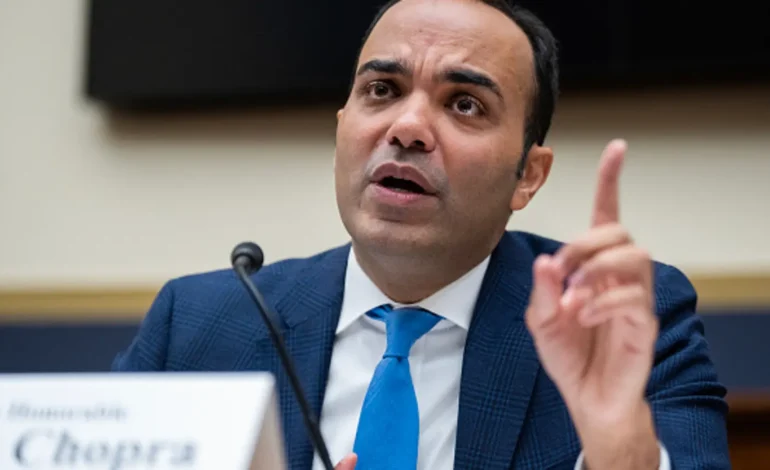
According to CFPB Director Rohit Chopra, the move is intended to end what he described as “junk fees” that have disproportionately impacted low-income households.
“For far too long, the largest banks have exploited a legal loophole that has drained billions of dollars from Americans’ deposit accounts,” Chopra said.
The CFPB estimates that the rule will save consumers $5 billion annually, or about $225 per household for those who regularly incur overdraft fees. Consumer advocacy groups, including Americans for Financial Reform, praised the new rule, saying it would help people avoid account closures and prevent them from being locked out of the banking system.
“High overdraft fees make it harder for customers to return to a positive balance,” said Christine Chen Zinner, senior policy counsel at Americans for Financial Reform. “It contributes to involuntary account closures, even blocking some customers out of the banking system altogether.”
The new regulation faces fierce opposition from banking industry groups, which argue that it will reduce access to overdraft services and force customers to rely on more expensive alternatives, like payday loans.
The American Bankers Association (ABA) and the Consumer Bankers Association (CBA) have criticized the rule, with CBA President Rob Nichols claiming that it prioritizes “demonizing highly regulated and transparent bank fees” over helping consumers. Banking groups argue that the rules will discourage banks from offering overdraft services, potentially forcing some customers into financial hardship.
The rule also faces potential legal challenges. Similar efforts to cap credit card late fees were delayed after lawsuits were filed, and banks have signaled that they may challenge the new overdraft fee rule in court. Additionally, the regulation may face a review from Congress under the Congressional Review Act, which allows lawmakers to overturn certain federal agency rules within a specific time frame.
The future of the rule remains uncertain, particularly with Donald Trump’s return to the presidency in January. Under Trump’s previous administration, the CFPB faced significant pushback, with some of his advisers calling for the agency’s elimination.
The incoming Trump administration is expected to appoint a new head for the CFPB, potentially altering its direction and enforcement priorities. In the past, Trump’s administration adopted a more lenient stance toward banks, and there is speculation that the new administration may try to roll back this rule.
Banking groups may also pressure Republican lawmakers to use the Congressional Review Act to repeal the rule. However, the narrow Republican majority in the House and Senate may make it difficult to build enough support for such a move.
The overdraft fee rule is part of a broader effort by the Biden administration to eliminate what it calls “junk fees”—unnecessary or excessive fees charged by financial institutions, airlines, ticketing services, and other industries. In recent months, the CFPB has also pursued regulations on credit card late fees and efforts to monitor big tech companies’ payment services.
Overdraft fees have been a major source of revenue for banks, generating $280 billion in revenue since 2000, according to the CFPB. In recent years, some large banks, including Bank of America and JPMorgan Chase, have reduced or eliminated overdraft fees in response to consumer pressure and regulatory scrutiny. However, industry advocates argue that the fees provide liquidity for consumers in financial emergencies.
While the new overdraft fee rule is scheduled to take effect on October 1, 2025, its future is far from certain. The combination of industry lawsuits, political shifts, and regulatory changes under the incoming Trump administration could delay, weaken, or overturn the rule.
With input from CNBC, the New York Times, and the Wall Street Journal.



The latest news in your social feeds
Subscribe to our social media platforms to stay tuned