





A Wyoming-based cryptocurrency firm, Bison Blockchain, has reached a $4.1 million settlement following a lengthy legal battle involving a Chinese-owned Bitcoin mining operation in Cheyenne, Cowboy State Daily reports.
The settlement comes in the wake of a rare federal divestment order issued by President Joe Biden, who, along with the Committee on Foreign Investment in the United States (CFIUS), mandated the mine’s closure due to its proximity to sensitive military and technology sites.
This development sheds light on broader national security concerns surrounding foreign-owned cryptocurrency operations in the US, as well as the complexities of Wyoming’s role in the growing blockchain industry.
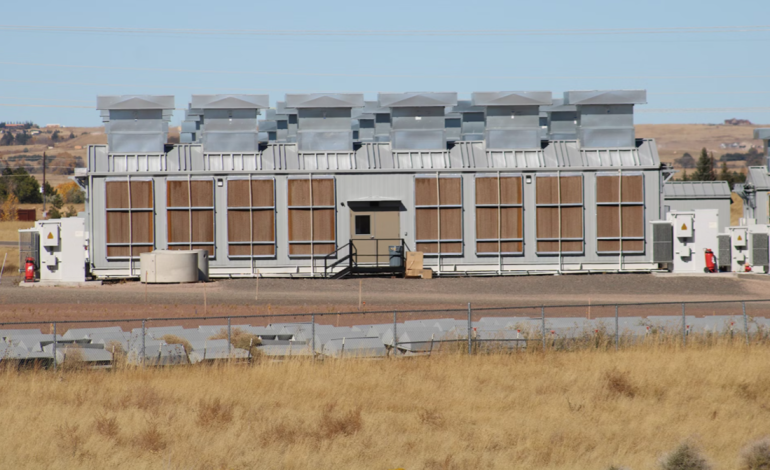
The conflict began when Bison Blockchain, a local cryptocurrency mining company, alleged it had been wrongfully pushed out of a five-year service agreement it had secured with Black Hills Energy to operate Bitcoin mining sites near Cheyenne. The two sites were located just 1.3 miles from F.E. Warren Air Force Base and directly across from a Microsoft data center, raising national security alarms.
In May 2023, the Biden administration, citing the site’s proximity to the Air Force base, ordered the divestment of the Chinese-controlled crypto mining site. The move was part of a broader effort to protect critical infrastructure and safeguard sensitive areas from potential foreign surveillance or interference.
The US Treasury later issued rules restricting foreign-owned crypto mining businesses from operating near military installations or critical infrastructure, reinforcing the government’s stance on national security threats posed by certain foreign investments.
Bison Blockchain filed a $22 million lawsuit in May 2023 against several companies linked to the mine’s operations. The defendants included five companies registered in Delaware or the Cayman Islands, which Bison alleged were affiliated with Chinese corporate entities.
Bison Blockchain accused the companies of breaching contracts, interfering with business relations, and acting in bad faith. Sean Murphy, a former Bison Blockchain employee, revealed that Bison initially believed it was partnering with “international investors” but later discovered deeper ties to China, which would have significantly altered the terms of their agreement had they known earlier.
According to Murphy, had Bison been aware of the companies’ Chinese connections, they would have demanded ownership of the site, control of the land, and direct management of the power contract.
Ultimately, after US District Court Judge Johnson ruled in June that Bison Blockchain had a “meritorious claim for relief,” negotiations with the defendants accelerated, culminating in the $4.1 million settlement.
Murphy described the court’s decision as pivotal to the outcome, stating:
“It was a big thing that the court did, but it only did it because it thought we had a good claim.”
Following the shutdown order, MineOne, the Chinese-affiliated owner of the sites, sold the two Bitcoin mines and the associated 75-megawatt power contract to CleanSpark, a Las Vegas-based company, for $22.5 million. This sale included a power supply deal with Black Hills Energy, which had been one of the key assets Bison Blockchain was initially involved in managing.
CleanSpark, an American cryptocurrency mining company, has since announced plans to invest heavily in its Wyoming operations. The company intends to allocate $40 to $50 million toward infrastructure improvements, including substations, over the next several months, with an additional $100 million earmarked for new Bitcoin servers. CleanSpark estimates these investments will create around 40 new jobs in Wyoming.
While Murphy acknowledged that CleanSpark is a US-based company, he expressed disappointment in its role during the litigation process. He claimed CleanSpark contributed $1.3 million to assist Chinese-backed defendants in clearing the North Range site amid ongoing settlement negotiations.
“It was well thought out,” Murphy said. “They knew they needed the money.”
CleanSpark did not respond to requests for comment on its involvement in the case.
Despite receiving the $4.1 million settlement, Bison Blockchain’s future remains uncertain. The company, which had been instrumental in developing the Campstool Bitcoin mining site near Cheyenne, has seen its role diminished. It still holds a 10-year state land lease for the Campstool site, which is designated for Bitcoin mining use, but CleanSpark has reportedly shown little interest in working with Bison on the site.
Bison’s original business plan aimed to use power from the Campstool substation to operate Bitcoin mining machines, with Wyoming earning royalties for each machine under a Special Use Lease. With CleanSpark now firmly in control, that vision is unlikely to materialize.
“They’ve really given us the ultimate cold shoulder,” Murphy said of CleanSpark’s approach toward Bison Blockchain’s interests.
Bison Blockchain’s case is part of a larger pattern of increased government scrutiny of foreign investments in US infrastructure and technology. President Biden’s order to shut down and sell the Chinese-owned crypto mine marked a rare intervention by CFIUS, which typically focuses on high-profile mergers or acquisitions.
The incident reflects growing concerns about foreign influence, especially from China, in areas of strategic importance. The US has been tightening regulations on industries linked to critical infrastructure, such as telecommunications, energy, and digital technologies like blockchain and cryptocurrency mining.
The proximity of the Cheyenne crypto mine to military and tech facilities heightened these concerns. Similar fears have driven US efforts to limit the influence of Chinese firms in other sectors, including semiconductors, rare earth minerals, and telecommunications.
According to Murphy, this case is part of a broader effort to reassert US control over key economic and strategic sectors.
“Under tariffing pressure, they’re (the American government) going to start to find ways to tighten these up or find workarounds, so their companies aren’t tariffed,” he said.
In November 2023, the US Department of Treasury introduced new regulations designed to restrict foreign-owned cryptocurrency mining operations from being located near sensitive infrastructure. The rules are part of a larger strategy to close loopholes that foreign companies could exploit to gain access to critical US assets.
The $4.1 million settlement for Bison Blockchain closes a turbulent chapter in Wyoming’s cryptocurrency mining industry, but it also highlights broader national security concerns linked to foreign ownership of US infrastructure.
While CleanSpark is poised to expand its Wyoming footprint, Bison Blockchain faces an uncertain future. The company still holds a land lease at the Campstool site, but its original business ambitions have been curtailed.



The latest news in your social feeds
Subscribe to our social media platforms to stay tuned