



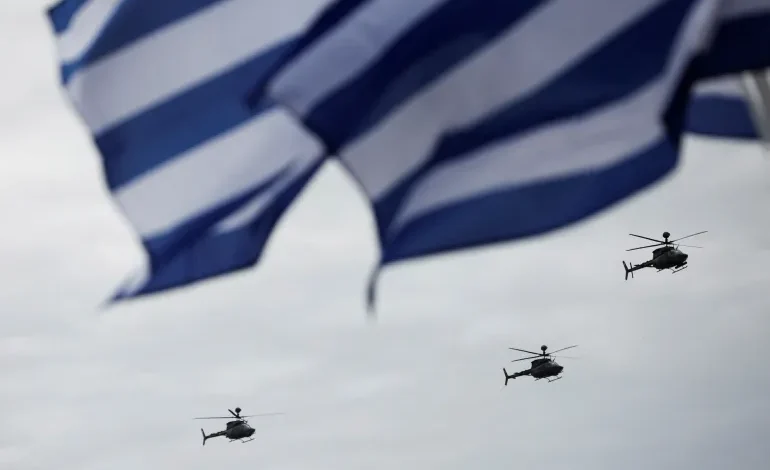

Greece has become the first European Union member to leverage newly relaxed spending regulations for defense, announcing a multi-year rearmament program valued at €25 billion ($27 billion), Al Jazeera reports.
Prime Minister Kyriakos Mitsotakis unveiled the initiative in parliament on Wednesday, highlighting its centerpiece: a multi-layered defense system dubbed the “Shield of Achilles.” According to Mitsotakis, the system represents a comprehensive approach to national security, “essentially a dome combining existing air defenses with new systems, offering protection on five levels – anti-missile, anti-ballistic, anti-aircraft, anti-ship, anti-submarine and anti-drone.”
This marks Greece’s first comprehensive, multi-year rearmament effort and forms part of a broader military modernization plan called Agenda 2030. Mitsotakis characterized the shift as the “most drastic transformation in the history of the country’s armed forces.”
Greece has historically maintained a high level of defense spending, driven in part by its complex relationship with Turkey. This year, the country is projected to allocate 3% of its gross domestic product (GDP) to defense, significantly exceeding the European average of 1.9% as estimated by the Stockholm International Peace Research Institute.
The EU, amidst the ongoing conflict in Ukraine and uncertainties surrounding US commitment to NATO, recently decided to permit member states to raise up to €650 billion ($705 billion) in off-the-books additional defense spending. Europe’s total defense spending in 2023 amounted to $569 billion.
Furthermore, the EU is offering member states €150 billion ($163 billion) in low-interest loans to bolster European defense industries. Greece and Poland were vocal proponents of these relaxed fiscal rules.
Mitsotakis argued that the EU’s ability to raise funds more cost-effectively than individual member states makes collective debt underwriting a fiscally sound approach.
The EU first employed mutualized debt during the COVID-19 pandemic in 2020, establishing a €730 billion ($805 billion) stimulus fund. The €150 billion ($165 billion) rearmament fund, known as Security Action for Europe (SAFE), is funded by remaining resources from that initial stimulus package.
Historically, Greece has primarily purchased weapons from the United States. However, the economic downturn following the 2008 global financial crisis has shifted Greece toward a more pro-European defense procurement strategy.
Years of austerity measures halved Greece’s defense budget to $4.6 billion between 2010 and 2014. Concurrently, Turkey’s economy and defense budget experienced growth.
In response, Greece has focused on acquiring sophisticated weapons systems to offset the numerical disparity with Turkey. While the United States aimed to maintain a balance between its two allies in the Eastern Mediterranean, Greece increasingly sought European systems not available to Turkey.


The latest news in your social feeds
Subscribe to our social media platforms to stay tuned