




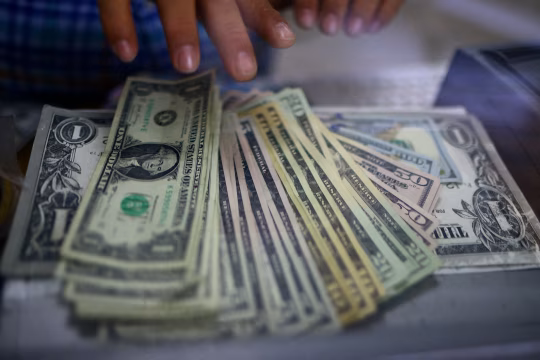

The US dollar, traditionally one of the safest assets to invest in during times of economic uncertainty, has recently lost its luster among global investors.
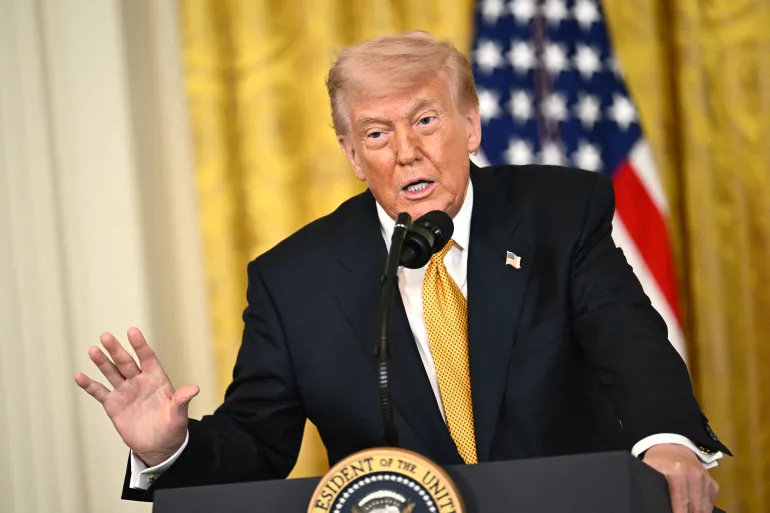
This shift in sentiment comes as a result of President Donald Trump’s aggressive tariff policies, which have heightened concerns about their potential impact on US economic growth and global trade stability.
On Wednesday, President Trump announced substantial tariffs on goods from approximately 60 countries, including major trade partners such as China. The tariffs, which are set to take effect on April 9, have rattled financial markets, causing the dollar to decline while other safe-haven assets like gold, the Japanese yen, and the Swiss franc gained traction. These concerns about the tariffs’ long-term effects have shifted market behavior and prompted investors to seek refuge in alternatives to the dollar.
Historically, the dollar has been a favored safe-haven currency, especially during times of market turmoil. It typically strengthens when global stock markets are under pressure, such as during recessions or financial crises. However, this has not been the case in recent months. Despite a volatile stock market, the dollar has lost nearly 4% of its value this year, marking its worst start to the year since 2016. Analysts attribute this weakening to growing concerns over the potential for a US recession, which has been exacerbated by Trump’s unpredictable trade policies.
Van Luu, the head of currency and fixed income strategy at Russell Investments, noted that he is rethinking the traditional view of the dollar as a primary safe haven. The uncertainty created by the tariffs has led some investors to rotate their capital out of US assets, prompting the dollar’s decline. According to Rong Ren Goh, a portfolio manager at Eastspring Investments, the dollar’s weakening may persist as market participants begin to fully factor in the possibility of a recession.
While the dollar has faltered, other assets traditionally viewed as safe havens have benefited. Gold, for instance, has surged to all-time highs, surpassing $3,000 per ounce. Central banks, portfolio managers, and retail investors have flocked to gold as a hedge against inflation and the uncertainty surrounding the global economy. Gold’s role as a store of value has long been established, and its recent performance underscores its appeal during times of crisis.
Meanwhile, the Japanese yen has also strengthened in response to heightened market volatility. The yen, along with the Swiss franc, has historically performed well during periods of market stress, and this trend has continued as investors have sought refuge from the market turmoil induced by Trump’s tariff announcements.
Despite the growing risk of a trade war and recession, US government bonds have seen increased demand, particularly at the shorter end of the yield curve. The uncertainty surrounding global economic growth and the US economy has led to a drop in US Treasury yields, with the 10-year Treasury yield seeing its largest weekly drop in five weeks.
Additionally, investors have been turning to defensive stocks, such as those in the pharmaceutical, utilities, and food and beverage sectors, which tend to perform well even in times of economic downturns. These stocks have outperformed cyclical sectors, such as technology and mining, which are more sensitive to global economic shifts.
The broader implications of Trump’s tariff strategy may go beyond the immediate effects on the US dollar. For many investors, the rise of protectionist policies and trade tensions could signal a shift in the global economic landscape. Some analysts believe that the aggressive tariff policies may erode confidence in the US economy’s long-term potential, weakening the dollar further. Others argue that Trump’s economic approach may contribute to a new global dynamic where US economic leadership faces increased challenges from both China and Europe.
This changing sentiment reflects broader concerns about the future of the global trade system. The tariffs, which have caused disruption in global supply chains, may ultimately hurt US competitiveness, particularly in industries like the automotive sector. This could lead to a situation where the US economy, rather than benefiting from a weaker dollar, faces increasing inefficiencies due to protectionist measures.
Reuters and the Wall Street Journal contributed to this report.



The latest news in your social feeds
Subscribe to our social media platforms to stay tuned