


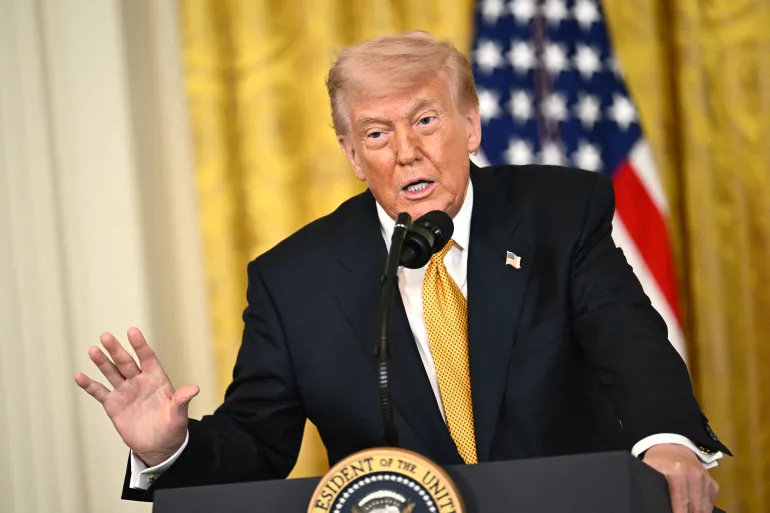


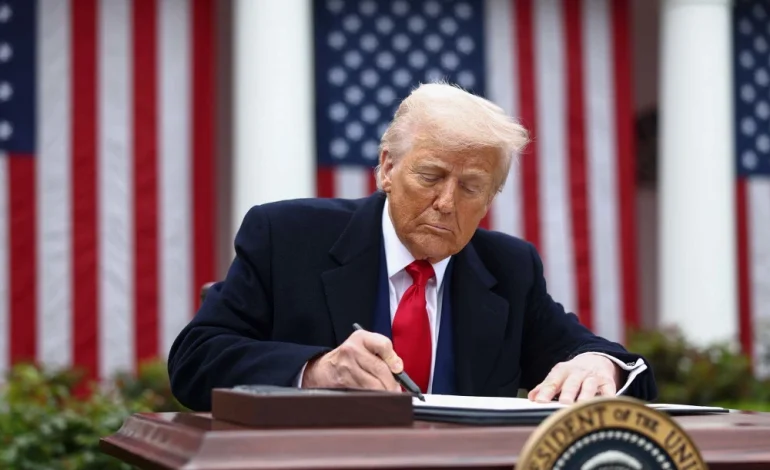

On Wednesday, President Donald Trump announced a sweeping set of tariffs that have sent shockwaves through global markets.
The new duties, which affect over 180 countries, have led to significant reactions from US allies and other major economies, many of whom have vowed to retaliate with their own tariffs and trade measures. As a result, stock markets have been rattled, with steep declines in US tech stocks and other companies dependent on international supply chains.
The new tariffs, which include a baseline 10% tax on all imports and significantly higher rates for specific countries, are seen as part of Trump’s broader strategy to address what the administration has described as unfair trade practices. Countries seeking to sell goods to the United States now face tariffs as high as 54%, depending on how the White House calculates duties based on US exports.
The reactions from global markets have been swift. US stock prices dropped significantly in after-hours trading, particularly in the tech sector, with companies like Meta, Nvidia, Apple, and Amazon seeing drops of around 5-6%. This decline is attributed to fears that the tariffs will increase the costs of goods, disrupt global supply chains, and potentially lead to higher prices for consumers. In particular, industries such as industrials, retail, automotive, and consumer electronics are expected to feel the pinch.
Tech companies like Apple, which rely heavily on production in countries such as China, India, and Vietnam, may be hit especially hard. Although Apple has made moves to diversify its supply chain away from China, the company still manufactures a significant portion of its products in Asia. For example, China accounts for around 80% of Apple’s production capacity, with other countries like India and Vietnam also playing significant roles in the company’s global manufacturing footprint. The new tariffs, particularly the steep levies on China and Vietnam, could potentially raise production costs for Apple and its suppliers.
In addition to tariffs on imports, the Trump administration has also moved to end a loophole for online shoppers. Under the current “de minimis” exemption, packages valued under $800 could be imported duty-free, benefiting companies like Shein, Temu, and other online retailers. However, the recent executive order removes this exemption, which could increase costs for consumers and affect companies that rely on inexpensive imports.
Despite these concerns, some experts argue that Trump’s tariff policy may have long-term benefits for the US economy. Nick Vyas, founding director of the Randall R. Kendrick Global Supply Chain Institute, believes that while tariffs can lead to higher prices in the short term, they could ultimately help the US rebuild its manufacturing base and reduce its dependence on cheap imports from China. Vyas suggests a multi-tiered approach to trade that includes a focus on advanced manufacturing, such as semiconductors and defense technologies, and programs to train a new generation of skilled workers.



The latest news in your social feeds
Subscribe to our social media platforms to stay tuned