




Despite approving sweeping property tax relief measures in recent years, Wyoming lawmakers are now exploring a more radical step: eliminating property taxes entirely from the state’s Constitution.
At a recent Joint Revenue Committee meeting, legislators voted 11–3 to draft a constitutional amendment that would remove all mentions of property taxes from Article 15 of the Wyoming Constitution. While some supporters framed the proposal as a step toward long-term reform, others warned that the move could result in significant and unpredictable financial consequences for schools, hospitals, and local governments.
The push to repeal property tax provisions follows a series of legislative efforts aimed at easing the burden on homeowners. This year alone, lawmakers passed several measures, including a 25% exemption for primary residences and a 50% exemption for long-term homeowners over the age of 65 who have paid property taxes in the state for 25 years or more. These changes have already had a noticeable fiscal impact.
In Teton County, local officials estimate a $35 million shortfall in school funding and multi-million-dollar losses for the county government and St. John’s Health. Special districts, including those focused on fire protection and water conservation, have also seen revenue reductions.
Critics of the constitutional amendment, like Rep. Liz Storer (D-Jackson), argue that the proposed repeal could lead to a revenue loss of over $2 billion annually if all categories of property taxation — residential, mineral, industrial, and commercial — were removed. About two-thirds of that funding currently supports public education.
Sen. Bob Ide (R-Casper), who introduced the motion, voiced frustration with what he described as an overly complex patchwork of exemptions and limitations. He called property taxes “the most immoral tax,” citing their inescapable nature and vulnerability to inflation.
“Ideally, we simplify the system. But right now, we have layers upon layers,” Ide said during the meeting, referencing various caps, rebates, and exemption criteria passed in recent years.
But other lawmakers, including Sen. Cale Case (R-Lander), urged caution. Case noted that completely removing property taxes from the Constitution could result in an underdeveloped tax structure with broad unintended consequences.
“We need to study the topic first,” Case said. “Throwing out constitutional language without a full analysis opens us to a lot of risk.”
Case also expressed concern that replacing property taxes with a consumption-based tax — such as a sales tax — could disproportionately impact lower-income residents and fail to generate adequate revenue for rural counties.
According to a report by the Wyoming Department of Revenue, property taxes generated over $2 billion in fiscal year 2024, compared to about $1.3 billion from sales and use taxes. Severance taxes added $748 million, while lodging, gasoline, and other taxes contributed far smaller amounts.
Wyoming is one of a few states without an income tax, placing heavier reliance on property and sales taxes to fund government operations. As a result, any effort to overhaul the property tax system would require significant planning to maintain budget stability across various levels of government.
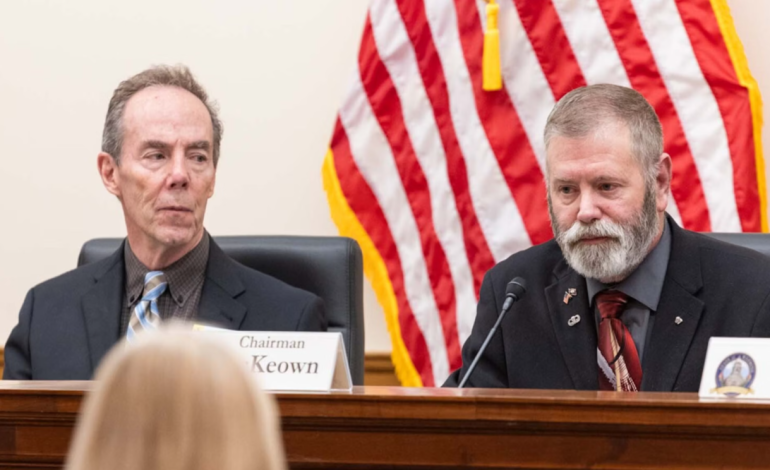
Despite advancing the draft amendment, committee leaders later acknowledged the proposal may have gone further than intended. Sen. Troy McKeown (R-Gillette) and Rep. Tony Locke (R-Casper), who co-chair the committee, said they plan to review and revise the proposal at the group’s August meeting.
“The goal is not to eliminate all property taxes,” McKeown said. “It’s about exploring reform, particularly for residential properties.”
A constitutional amendment would need to pass both chambers of the Legislature by a two-thirds margin in 2026 before being placed on the ballot for a statewide vote.
Meanwhile, the committee continues to consider additional legislation to adjust or expand existing exemptions and rework how residential properties are assessed — proposals that, while less sweeping, could still reshape the tax landscape across the state.
With input from Jackson Hole News&Guide, Cowboy State Daily, Wyoming Tribune Eagle.


The latest news in your social feeds
Subscribe to our social media platforms to stay tuned