


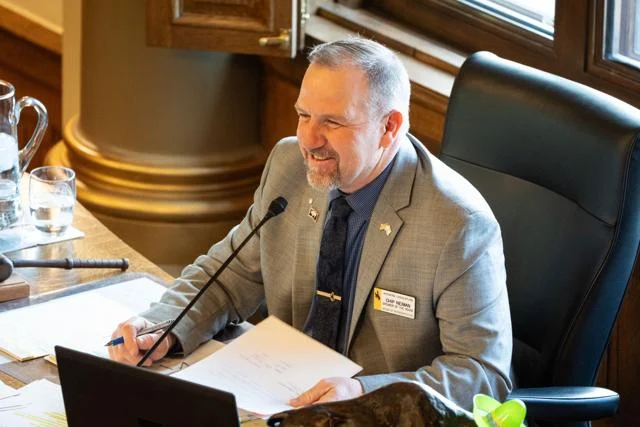

Wyoming House Speaker Chip Neiman says the state needs to confront a basic question: are lawmakers actually following the Wyoming Constitution when it comes to representation? And if not, he argues, they should change it in the open — not ignore it, Gillette News Record reports.
Speaking at a reapportionment subcommittee meeting in Newcastle on Sept. 25, Neiman (R-Hulett) warned that the political influence of rural communities is fading as population centers grow. He pointed to constituent complaints that some counties — including Weston — don’t have their own senator or representative, despite what many residents read in the state charter.
“When we swore to uphold that constitution, we have a responsibility,” Neiman said. “If we can’t abide by it, then we need to change it so that we can.”
What kicked this off
- The Joint Corporations, Elections and Political Subdivisions Committee created the subcommittee on May 8 in Lander, announced the Newcastle session on Aug. 15 in Casper, and tasked it with gathering input on constitutional apportionment, the history and principles of redistricting, and community proposals.
- At the Newcastle meeting, Weston County residents brought forward several reapportionment ideas for the panel to consider.
Neiman said rural voters shoulder huge property tax burdens but risk being outvoted by a single city because of population concentration—he cited data suggesting it can take the combined population of 11 rural counties to match Gillette.
“We are speedily moving toward a rural representation that is quickly disappearing,” he said.
He likened the desired balance to the US Senate, where smaller states retain leverage regardless of population. Neiman didn’t unveil a specific map but floated two big moves:
- Amending the Wyoming Constitution to better protect rural representation.
- Challenging federal redistricting requirements if they’re undermining fair governance in Wyoming.
Subcommittee chair Sen. Cale Case (R-Lander) cautioned that any plan boosting rural clout will likely be seen by Cheyenne, Casper, or Gillette voters as diluting their “one person, one vote” weight — and could invite a lawsuit.
He also noted a political reality: lawmakers can propose constitutional amendments, but voters ratify them.
“If big-city voters won’t ratify, we’re right back where we started,” Case said, questioning whether a constitutional change could actually pass.
The subcommittee will spend the next few weeks gathering material, may hold a follow-up Zoom, and aims to report back to the Corporations Committee by mid-October. Recommendations are still TBD.
Neiman, who represents northern Crook and Weston counties, said his duty is to carry the message he’s hearing back home — even if it’s contentious.
“These folks love this country and they love our constitution,” he said. “We have a responsibility to do something about this, and we can’t just hope it will go away.”

The latest news in your social feeds
Subscribe to our social media platforms to stay tuned