





US government shutdown hits 40 days: 750,000 furloughed, food aid frozen, air travel chaos deepens
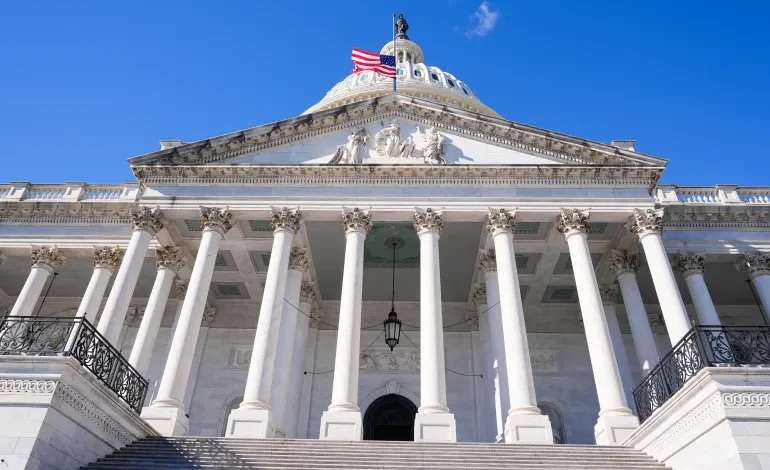

The United States has entered the sixth week of the longest government shutdown in its history, as lawmakers in Washington remain deadlocked over a funding bill that has paralyzed key federal services, grounded flights, and left millions of Americans without vital food assistance.
The shutdown began on October 1, triggered by a bitter dispute between Democrats and Republicans in the Senate over healthcare and social spending. Republicans, backed by President Donald Trump, refused to approve a funding package that included Democrats’ push to renew Affordable Care Act (ACA) subsidies and expand social aid programmes.
Since then, Congress has failed to pass 14 separate funding measures, freezing pay for hundreds of thousands of workers and shuttering large portions of the government.
Around 750,000 federal employees have been sent home without pay, while another 730,000 essential workers, including air traffic controllers, border agents, and TSA officers, are working without salaries.
Agencies like the National Park Service, EPA, and IRS have halted most operations. National parks remain closed or unstaffed, small business loans are on hold, and federal courts are struggling to stay open.
The Department of Housing and Urban Development has warned that if the shutdown continues into December, thousands of tenants could face eviction due to delayed housing assistance payments.
“Every day this drags on, more Americans are directly impacted,” said Maya MacGuineas, president of the Committee for a Responsible Federal Budget. “It’s not just about politics anymore — it’s about people’s livelihoods.”
The shutdown’s most visible fallout is in the skies. Since the Federal Aviation Administration (FAA) ordered phased reductions in air traffic last week due to controller fatigue and no-shows, flight cancellations have surged.
On Saturday, more than 1,530 flights were cancelled, followed by 3,300 cancellations and 10,000 delays on Sunday, according to FlightAware data.
The FAA has ordered airlines to reduce domestic flights by 4 percent, ramping up to 10 percent by Friday, as part of emergency safety measures.
Transportation Secretary Sean Duffy warned that without funding, air travel could “slow to a trickle” before the Thanksgiving holiday, one of the busiest travel periods of the year.
“As we get closer to Thanksgiving, you’re going to see massive slowdowns,” Duffy said on Fox News. “Controllers are exhausted and unpaid — it’s not sustainable.”
The travel chaos threatens to cost the economy billions.
“This shutdown is going to affect everything from business travel to tourism,” said Greg Raiff, CEO of Elevate Aviation Group. “There’s a cascading effect — local tax revenues, hotels, even food suppliers are feeling it.”
As the political stalemate drags on, millions of low-income Americans are at risk of losing access to basic nutrition assistance.
The Supplemental Nutrition Assistance Program (SNAP), known as food stamps, distributes about $8 billion a month to over 40 million Americans. With the shutdown blocking new funds, many states are preparing to ration remaining reserves.
President Trump has refused to release additional food aid until Democrats agree to reopen the government.
“SNAP BENEFITS … will be given only when the Radical Left Democrats open up government,” Trump posted on Truth Social earlier this week.
Democrats accuse the White House of using hunger as political leverage.
“Holding food assistance hostage to score points is unconscionable,” said Senator Jeanne Shaheen of New Hampshire.
Healthcare funding remains another sticking point. Democrats are demanding a one-year extension of the ACA subsidies, which help around 24 million people afford health insurance. Republicans insist they’ll address the issue later, but not before funding is restored.
Trump suggested redirecting the money directly to citizens instead of insurers.
“I am recommending that the hundreds of billions currently being sent to money-sucking insurance companies be sent directly to the people so they can purchase their own, much better, healthcare,” he wrote.
Economists warn that if subsidies lapse, premiums could double by 2026, driving millions out of coverage.
Since 1976, the US has experienced 20 funding gaps leading to 10 full or partial shutdowns, but none as long or disruptive as this one.
The last major shutdown in 2018–2019 lasted 35 days, this one has now surpassed it. The 1980s-era Civiletti ruling prohibits agencies from operating without congressional authorization, meaning any funding lapse triggers immediate shutdowns of “non-essential” services.
Negotiations in the Senate have yielded little progress. On Friday, Democratic leader Chuck Schumer offered Republicans a narrower bill to temporarily fund healthcare subsidies — a compromise aimed at reopening the government, but it was swiftly rejected.
Republicans, led by Senate Majority Leader John Thune, argue that Democrats are prioritizing political optics over reopening the government.
“There’s still only one path out — a clean funding extension,” Thune told reporters Saturday.
Some moderate Democrats, including Shaheen, Tim Kaine, and Angus King, are drafting a temporary funding plan that would reopen parts of the government — such as veterans’ services and food aid, while deferring other issues until January.
But progressives, led by Bernie Sanders, warn that agreeing without guarantees on healthcare would be a “horrific mistake.”
Meanwhile, public pressure is intensifying. Thousands of federal workers protested outside Capitol Hill over the weekend, holding signs reading “Pay us or shut you down.”
The economic cost of the shutdown has already surpassed $15 billion, according to Moody’s Analytics, eclipsing the value of the funding dispute itself.
With both parties refusing to back down, analysts warn the deadlock could continue for weeks, or even months.
“We’re watching a political game of chicken with real human consequences,” said Amy Walter, editor-in-chief of the Cook Political Report. “Each day this continues, both sides lose credibility — but ordinary Americans lose the most.”


The latest news in your social feeds
Subscribe to our social media platforms to stay tuned