
US Senate Blocks War Powers Check on Trump After Tie-Breaking Vote by JD Vance
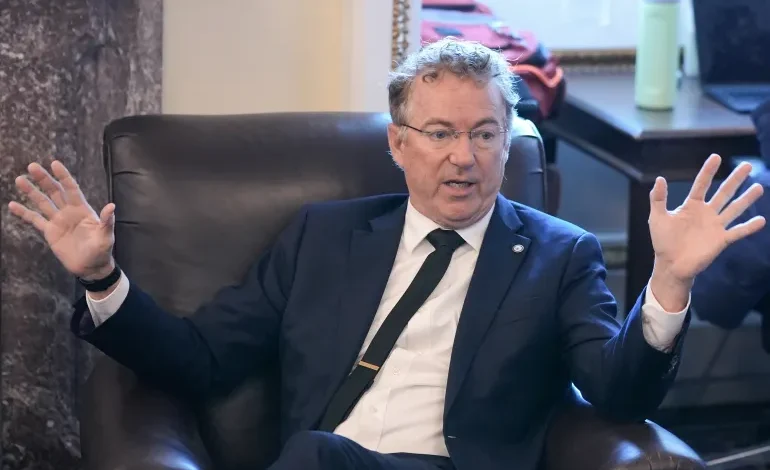

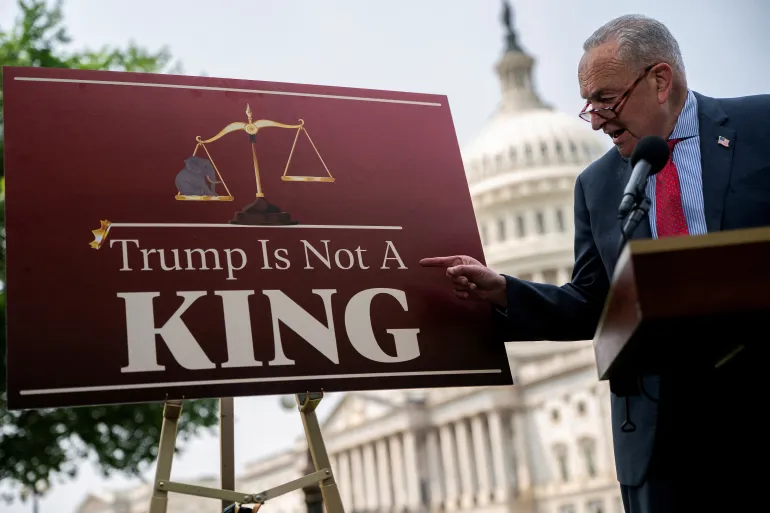
A last-ditch effort to rein in President Donald Trump’s military authority in Venezuela collapsed in the US Senate after Vice President JD Vance cast the tie-breaking vote to defeat a war powers resolution that would have required congressional approval for any further military action.
The vote on Wednesday night ended in a 50–50 split, allowing Vance to step in and kill the measure. The outcome capped a tense session in which two Republican senators held the fate of the resolution in their hands and ultimately withdrew their support.
The resolution had been introduced in response to Trump’s surprise military operation on January 3, when US forces attacked targets in Venezuela, abducted President Nicolas Maduro, and transferred him to the United States to face criminal charges. Maduro’s wife, Cilia Flores, was also captured during the operation.
Last week, the resolution appeared to have momentum. Five Republican senators broke with party leadership to allow it to advance to a full Senate vote, joining Democrats to pass the procedural hurdle 52–47. But by the time the final vote arrived, support had eroded.
Senators Todd Young of Indiana and Josh Hawley of Missouri, both of whom had initially backed the measure, reversed course. Hawley signalled early on Wednesday that he would not support the resolution. Young held out until shortly before the vote.
“After numerous conversations with senior national security officials, I have received assurances that there are no American troops in Venezuela,” Young wrote on social media. “I’ve also received a commitment that if President Trump were to determine American forces are needed in major military operations in Venezuela, the Administration will come to Congress in advance to ask for an authorization of force.”
Young also shared a letter from Secretary of State Marco Rubio, dated Wednesday, offering qualified assurances about congressional consultation.
“Should the President determine that he needs to introduce US Armed Forces into hostilities in major military operation in Venezuela, he would seek congressional authorizations in advance (circumstances permitting),” Rubio wrote.
Those assurances proved sufficient to peel off the final votes needed to sink the resolution.
The legal and constitutional questions at the heart of the debate remain unresolved. Trump’s January operation marked an extraordinary escalation, with explosions reported in Caracas and at nearby military installations before the president appeared on television to announce Maduro’s capture.
“We’re going to run the country until such time as we can do a safe, proper and judicious transition,” Trump said at the time.
Both Trump and Rubio later acknowledged that Congress had not been notified in advance of the operation. Rubio argued that secrecy was essential.
“This was not the kind of mission that you can do congressional notification on,” he said. “It was a trigger-based mission.”
Trump went further, portraying Congress itself as a security risk.
“Congress will leak, and we don’t want leakers,” he said.
Under the US Constitution, Congress holds the power to declare war and authorise military force, while the president serves as commander-in-chief. That balance, however, has steadily tilted toward the executive branch over the past two decades, as presidents of both parties have relied on broad authorisations passed after the September 11 attacks to justify unilateral military action.
Venezuela does not fall under those post-9/11 authorisations, raising immediate doubts about the legal basis for Trump’s move.
On Tuesday, the Department of Justice released a 22-page memo, drafted in December, laying out the administration’s legal justification. The document argued that Maduro’s abduction constituted a law enforcement action rather than an act of war, placing it below the threshold that would require congressional approval.
The memo also claimed that because the operation was not expected to trigger a war, it fell outside Congress’s constitutional authority.
“The law does not permit the President to order troops into Venezuela without congressional authorization if he knows it will result in a war,” the memo stated. “As of December 22, 2025, we have not received facts indicating it will.”


The latest news in your social feeds
Subscribe to our social media platforms to stay tuned