



Iran frames retaliation as self-defence after US–Israeli strikes derail nuclear talks
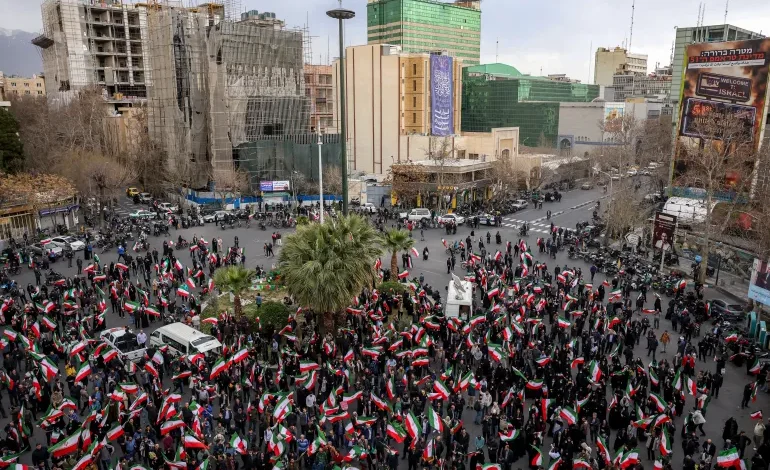

Iran is presenting its military response to the latest US and Israeli attacks not as escalation but as a legal necessity, arguing that the confrontation has shifted from a regional crisis to a test of the international order itself.
“We have every right in accordance with international law, with the UN Charter, to defend ourselves with all might”, Foreign Ministry spokesman Esmaeil Baghaei said, as Tehran sought to anchor its position in legal language rather than battlefield rhetoric.
The strikes that triggered the current exchange hit multiple Iranian cities, including Tehran, in what President Donald Trump described as “major combat operations”. Iranian media, citing the Red Crescent, reported at least 201 people killed. Tehran’s response came in the form of missile fire aimed not only at Israel but at US military assets across the region, stretching from Bahrain and Iraq to Jordan, Kuwait, Saudi Arabia, Qatar and the United Arab Emirates.
Baghaei said the country’s armed forces “are defending national sovereignty and the territorial integrity of Iran against these barbaric acts of aggression”, framing the campaign as a defensive war rather than a regional offensive.
The timing is central to Iran’s argument. The attacks landed just after a third round of indirect negotiations on the nuclear programme had concluded. “We were supposed to meet on Monday to talk about technical aspects of any possible deal on [the] nuclear issue,” Baghaei said. “And the Americans themselves acknowledged that these negotiations went quite well. The mediator, [the] foreign minister of Oman, qualified this round of negotiations as being of significant progress.”
For Tehran, this sequence reinforces a narrative it has used before — that diplomacy is repeatedly interrupted by military action. Baghaei pointed to the earlier episode last year, when negotiations were under way before Israel launched a 12-day war that the United States briefly joined, despite Washington’s stated commitment to a diplomatic track.
The spokesman widened the argument beyond Iran’s immediate security. By describing the operation as “launching an act of aggression against another member of the United Nations”, he linked the conflict to the credibility of the UN system itself. “So, I think what is at stake is not only the security and peace of the region and that of Iran, but also the whole fabric of international law. And the normative system that has been created by the United Nations Charter,” he said.
That legal framing also extends to Iran’s choice of targets. Responding to criticism over missile launches across several countries, Baghaei said: “Under international law, any place, any location, any logistical support that are given to the aggressor [is a] legitimate target for the victim state.” He added:
“So, we are not attacking any country in the region. We are friendly with all countries of the region. What we are doing is just taking defensive actions.”
At the same time, Iran is trying to reassure its neighbours that the confrontation is not directed at them.
“We have proven that we trust our friends in the region,” Baghaei said, while arguing that “the United States is conducting this war of aggression at the cost of everyone, including the countries of the region.”

The latest news in your social feeds
Subscribe to our social media platforms to stay tuned