

EXCLUSIVE: Prisoner releases test Venezuela’s promises of change
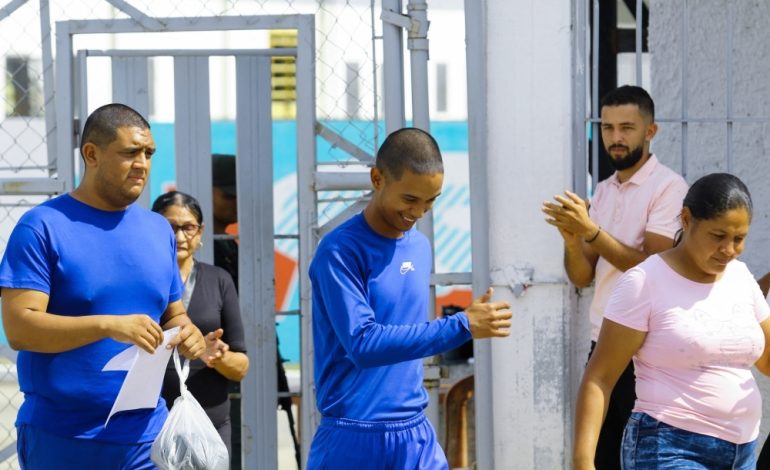

Venezuela’s interim government is trying to project momentum with the release of hundreds of detainees long described by rights groups as political prisoners. But behind the carefully chosen language and symbolic gestures, the picture remains far more cautious and fragile than official statements suggest.
Since early January, more than 300 political prisoners have been freed, according to the Venezuelan rights group Foro Penal. The releases accelerated after the United States captured former president Nicolas Maduro and transferred him to New York to face narcotrafficking charges, a move that dramatically reshaped Venezuela’s political landscape overnight. Acting President Delcy Rodriguez has framed the process as part of what she calls “a new political moment”, promising further releases and announcing plans for an amnesty law that could affect hundreds more detainees.
“We’re talking about the future. We are talking about the country that we are going to give to our children,” Rodriguez said during a signing ceremony for reforms linked to the prisoner releases. Her brother, National Assembly President Jorge Rodriguez, struck a similar note: “Only good things will come after the suffering.”
The Venezuelan government’s decision to free hundreds of detainees has been presented by interim President Delcy Rodriguez as evidence of a “new political moment”. Families, rights groups and foreign governments have welcomed the releases, which accelerated after the United States captured former president Nicolas Maduro earlier this month. But whether this marks a real shift in governance or a tactical response to pressure remains sharply contested.
Yet outside government circles, expectations are sharply tempered. Speaking to Wyoming Star, Phil Gunson, a veteran analyst of Venezuelan politics and a senior adviser with the International Crisis Group argues that the releases, while significant, fall well short of a genuine political opening.
“The prisoner releases, which now total over 300, are welcome, but they do not in themselves amount to a political opening,” Gunson said. “Around 800 or more people still remain arbitrarily detained for political reasons and the releases themselves are conditional, meaning they could be reversed at any time.”
For Gunson, history matters. Venezuela has seen mass releases before, only to watch security forces replenish prison cells months later.
“We have seen large numbers released on previous occasions, although not on this scale, only to see the government employ what human rights activists call the ‘revolving door’ whereby some are released while others are detained,” he said.
That concern is amplified by the lack of transparency surrounding the process. The government has not published official release lists, and its own figures vary widely from those compiled by independent monitors. Officials claim more than 600 detainees have been freed, a number that appears to include releases from previous years. Foro Penal, which tracks cases individually, estimates that more than 700 (and possibly over 800) political prisoners remain behind bars.
“What risks does the lack of transparency pose? For well over a decade, since Maduro came to power, the government has maintained a policy of non-transparency, refusing to release even the most basic official statistics and taking decisions behind closed doors,” Gunson said. “Until it starts rebuilding institutions and accepting accountability it is hard to see how any meaningful negotiations can take place.”
The stakes are high. Families of detainees continue to camp outside prisons and detention centres, often unsure whether their relatives are alive, transferred or quietly released under restrictive conditions. Many of those freed remain under judicial supervision, barred from speaking publicly or leaving the country.
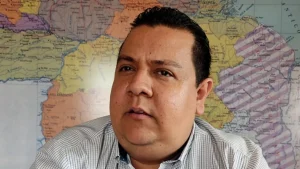
High-profile cases underline both progress and limits. Javier Tarazona, head of the rights group FundaRedes, was released after nearly four years in detention.
“The freedom of one is hope for all,” his brother wrote.
Yet prominent opposition figures including Juan Pablo Guanipa and Freddy Superlano remain imprisoned, as do lawyers, journalists and former security officers accused of terrorism and treason: charges their families describe as fabricated.
Rodriguez has tried to balance reassurance to Washington with signals to domestic hardliners that the state remains firmly in control. While pledging continued releases, she has also promised “strict” enforcement of the law and criticised rights organisations as purveyors of “falsehoods”. Flanked by Interior Minister Diosdado Cabello, she took no questions at her first press briefing and credited Maduro himself with initiating the process, distancing her government from claims that the releases were driven by US pressure.
Gunson says observers should focus less on announcements and more on structural change.
“Torture and arbitrary imprisonment must end and security forces be thoroughly purged of repressive elements,” he said. “Institutions such as the supreme court, the public prosecutor’s office and the electoral council need to be put in the hands of public servants rather than party political militants.”
He adds that the test of any real opening will be political pluralism.
“Political parties must be legalised, the right of peaceful protest respected and exiled politicians permitted to return.”
The latest news in your social feeds
Subscribe to our social media platforms to stay tuned