





The World Health Organization says the Ebola outbreak spreading through the Democratic Republic of the Congo and Uganda has now reached 600 suspected cases and 139 suspected deaths, underscoring how quickly the crisis has escalated in just a few weeks.
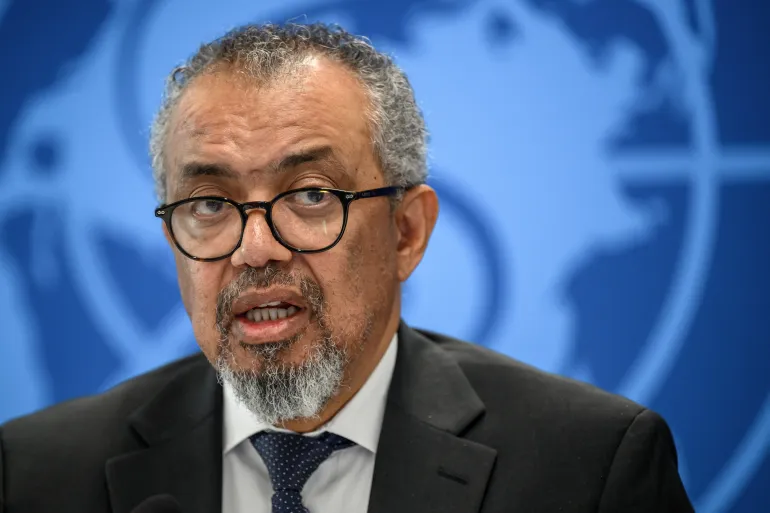
The WHO Emergency Committee met in Geneva on Wednesday, where Director-General Tedros Adhanom Ghebreyesus confirmed that the outbreak still qualifies as a public health emergency of international concern, though not yet a pandemic emergency.
“The WHO assess the risk of the epidemic as high at the national and regional levels and low at the global level,” Tedros said.
The updated figures mark another sharp rise from earlier estimates released by Congolese authorities, who previously reported 513 suspected cases and 131 deaths. The outbreak comes only five months after the DRC declared its last Ebola epidemic over, raising fresh concerns about containment capacity in a region already dealing with conflict and fragile healthcare infrastructure.
WHO emergencies chief Chikwe Ihekweazu said the immediate focus is tracing the spread of the virus.
“That will then enable us to really define the scale of the outbreak and be able to provide care,” Ihekweazu said.
Tedros said he declared the emergency status on Sunday without first consulting the usual expert panels because of the speed and urgency of the outbreak.
Health officials say the epidemic is being driven by the Bundibugyo strain of Ebola, a variant for which there is currently no approved vaccine or treatment. That detail has added another layer of concern for global health authorities, especially given the cross-border spread already underway.
Of the 600 suspected cases, 51 have been laboratory-confirmed in the DRC’s northern provinces of Ituri and North Kivu. Uganda has also confirmed two cases in Kampala, including one death involving people who had travelled from the DRC.
The outbreak is also beginning to spill into international health systems. A US medical missionary infected in the DRC is being transferred to Germany for treatment, while health authorities continue monitoring high-risk contacts in Europe.
WHO experts believe the outbreak may have started months ago, with the first suspected death recorded on April 20. Investigators suspect a major transmission event happened either during a funeral or inside a healthcare facility, though the exact circumstances remain under investigation.
European officials are trying to reassure the public that the immediate risk outside the region remains limited.
“We know that diseases do not stop at the borders, and this is also the case of Ebola,” European Union spokesperson Eva Hrncirova told reporters.
But “there is no indication” that Europeans need to do anything other than follow standard health advice, she added.


The latest news in your social feeds
Subscribe to our social media platforms to stay tuned