

AP, Investor’s Business Daily, and the Independent contribute to this report.
Wall Street hit pause for Good Friday, but the futures market didn’t entirely clock out – and the mood there leaned slightly negative.
Early Friday trading was thin, with investors reacting to a stronger-than-expected jobs report out of Washington. S&P 500 futures slipped 0.3%, Dow futures eased 0.2%, and Nasdaq futures led the dip, down 0.4%.
The pullback came even as the latest labor data painted a much brighter picture than expected. US employers added 178,000 jobs in March, a sharp turnaround from February’s revised loss of 133,000 positions. The unemployment rate edged down to 4.3% from 4.4%, another sign the labor market hasn’t lost its footing.
With stock markets closed, there wasn’t much room for a full reaction. Trading desks were quiet. Volumes, light.
Energy markets were also shut, but the real action had already happened. Oil prices surged Thursday, rattled by fears the Iran conflict could drag on. US crude jumped 11.4% to $111.54 a barrel, while Brent climbed 7.8% to $109.03.
Tensions escalated after US President Donald Trump said the military campaign against Iran would continue, offering no clear endpoint. That uncertainty is starting to ripple through energy markets.
Analysts at BMI, part of Fitch Solutions, warned a prolonged conflict could keep pressure on critical infrastructure and extend disruptions in the Strait of Hormuz – a chokepoint for global oil flows. The longer the war drags, the more likely price shocks stretch deeper into the year.
For the US, the direct hit may be limited. It sources only a small share of its oil from the Persian Gulf. But oil prices don’t respect borders – they’re set globally, and any disruption hits everyone.
In Asia, the stakes are higher. Countries like Japan depend heavily on shipments passing through Hormuz. Any sustained blockage or instability forces tough choices – either secure alternative routes or rely on fragile diplomatic arrangements to keep oil moving.
Markets across Europe – including France, Germany and the UK – remained closed for the holiday.
Asia offered a mixed picture. Japan’s Nikkei 225 climbed 1.3%, and South Korea’s Kospi surged 2.7%, tracking optimism around global growth and the US labor rebound. China’s Shanghai Composite, however, slipped 1%.
Several regional markets – including Hong Kong, Australia, India and Singapore – were also closed, keeping trading activity subdued worldwide.
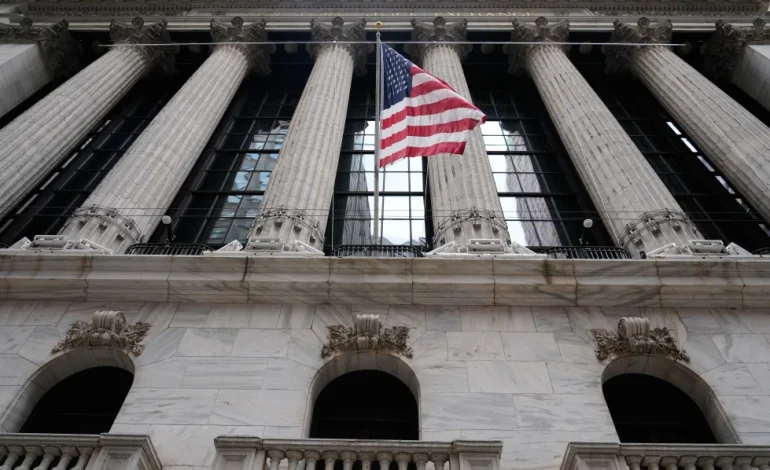
Back in the US, both the New York Stock Exchange and Nasdaq stayed dark for the day. For now, investors are left balancing two competing forces: a resilient jobs market and a geopolitical situation that’s getting harder to ignore.


The latest news in your social feeds
Subscribe to our social media platforms to stay tuned