




Million-Dollar Listings: How Data Centers Are Fueling Cheyenne’s Luxury Real Estate Surge

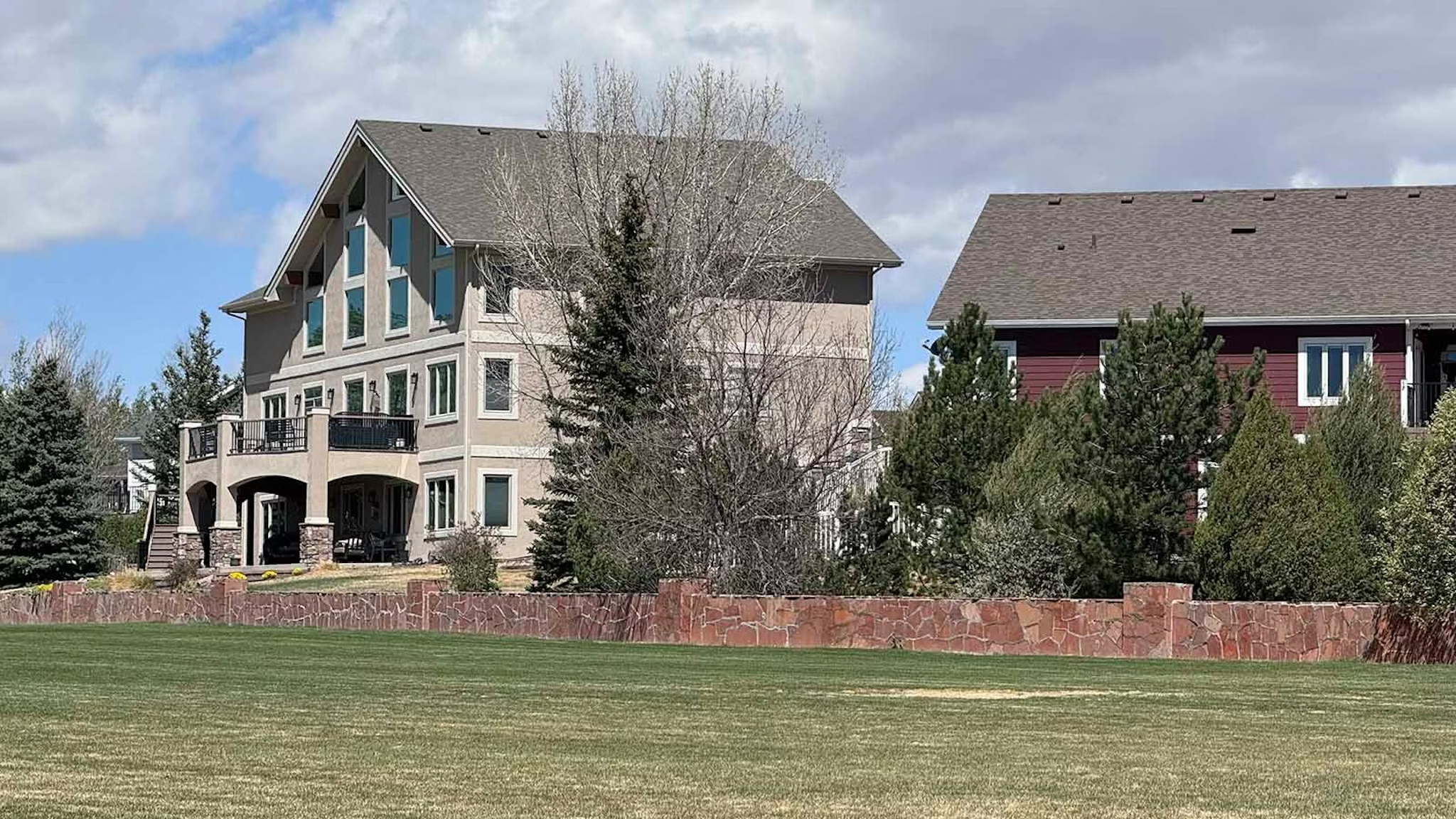
For decades, “luxury real estate” in Wyoming meant one place: Jackson Hole. But a striking shift is underway. Cheyenne, the state capital, is seeing a surge in million-dollar home sales, and real estate agents point to a single driver—artificial intelligence data centers.
“There’s electricity in the air,” says Cheyenne Realtor Dominic Valdez. “Business activity is bringing in top-earning employees, and they’re wanting higher-priced real estate. We’re selling a lot of properties above $800,000, and a lot into the low $1 millions.”
Agents say Wyoming’s business-friendly climate—no state or local income tax, sales tax exemptions, and fast-track permitting—has made Cheyenne a magnet for data centers. Microsoft plans to triple its footprint in the city. Meta has announced a new facility. And Project Jade, a massive development, could scale up to 10 gigawatts. These projects bring hundreds of high-wage jobs and billions in capital investment. The intersection of Interstates 25 and 80 makes Cheyenne a natural logistics hub, while available land, power, and fiber optics seal the deal.
Kevin Brinkman, whose Fort Collins-based company just acquired a 123-unit luxury apartment portfolio in Cheyenne, says this is the hottest market he has seen in 20 years. “This is historic growth,” he says. His bet is that as Cheyenne grows, demand for high-end rentals will persist—especially since building new is becoming more expensive every year.
But the luxury surge raises concerns about a housing crunch. A 2022 study found Cheyenne short 5,000 single-family homes and 8,400 rental units. Mayor Patrick Collins says the city permitted about 1,100 units last year—compared to 1,600 for the entire state of Wyoming in 2023. Zoning changes now allow smaller lots, cottage developments, and reduced material requirements to boost affordability. “We’re making a dent,” Collins says.
Realtor Mariah Jeffery calls the 45 miles between Fort Collins and Cheyenne “the most important stretch of road” for a company’s bottom line. One client saved $500,000 a year in taxes by choosing Cheyenne over Colorado. “That definitely makes your break-even period condense quite a bit,” she says.
Valdez hopes residents see the boom as an opportunity. “This is our time to shine,” he says. “I don’t think it’s helpful to be isolationist and say, ‘Don’t California or Colorado my Wyoming.’ Everyone is out there trying to do their best.” For better or worse, Cheyenne’s luxury market has arrived—and data centers are writing the check.



The latest news in your social feeds
Subscribe to our social media platforms to stay tuned