


Scientists Keep Location Of Prehistoric Squid Found In Eastern Wyoming A Secret

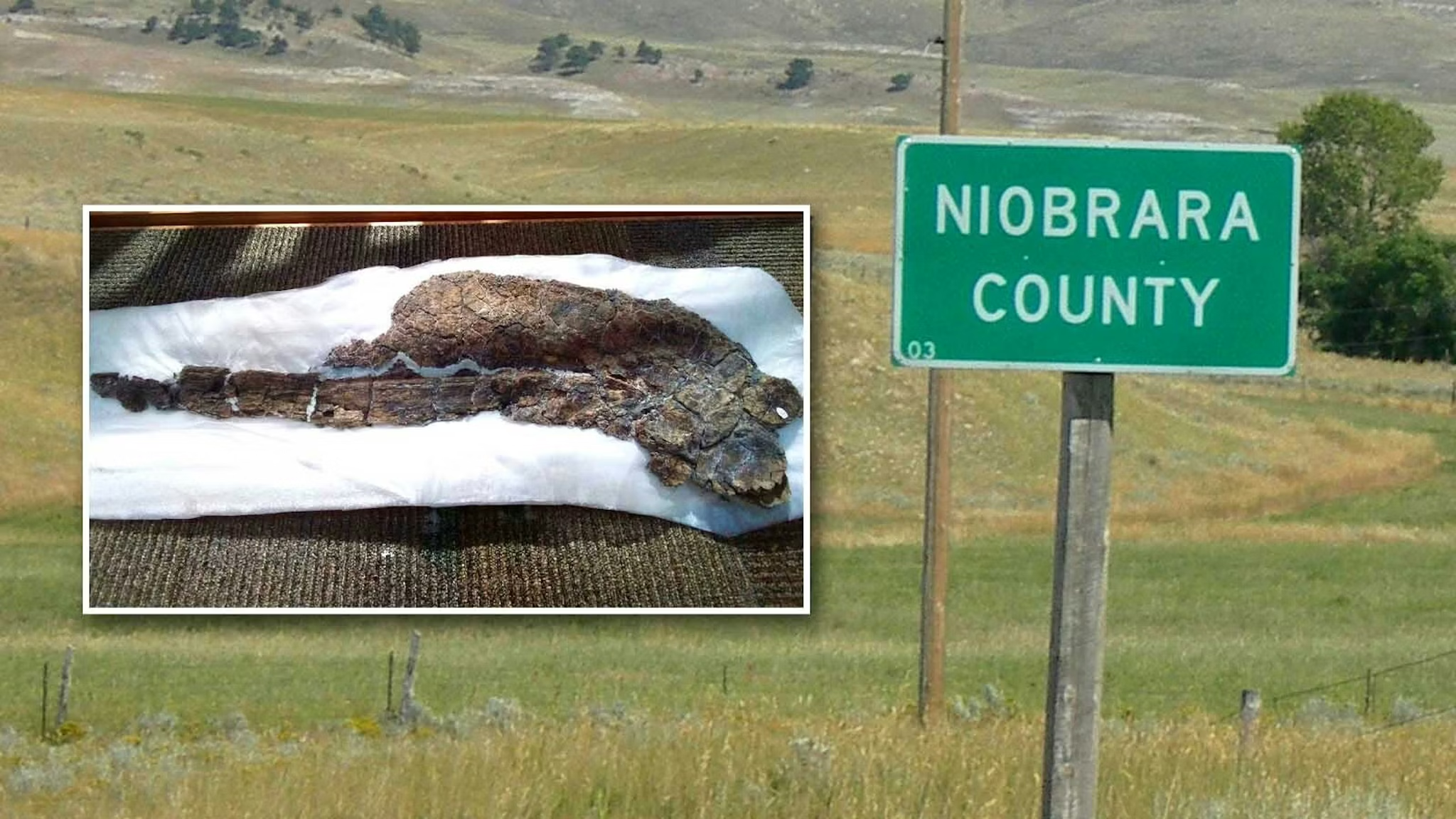
The Tate Geological Museum at Casper College is showcasing a first-of-its-kind fossil from Niobrara County: a 2-foot-long bladed structure that belonged to one of Wyoming’s extremely elusive giant squids. But if you ask collections specialist J.P. Cavigelli exactly where it was found, he won’t tell you. “If I told you any more, I’d have to kill you and all your readers,” he jokes.
The fossil has been tentatively identified as part of the internal shell, or gladius, of a Niobrarateuthis—a giant squid that lived in Wyoming’s last ocean around 80 million years ago. The gladius, sometimes called a “squid pen,” is the hard, bone-like structure inside the otherwise soft body of a squid. This specimen is incomplete but still over two feet long, confirming it came from a truly giant animal. Paleontologists believe Niobrarateuthis could grow up to 10 feet long, possibly much larger depending on tentacle length.
The fossil was recovered from the Sharon Springs member of the Pierre Shale, a rock layer from the Late Cretaceous Period that preserves the inhabitants of the Western Interior Seaway—an inland sea that once stretched from the Gulf of Mexico to the Arctic Ocean. “It’s a black shale from the bottom of the ocean that split North America in half,” Cavigelli says. “It wasn’t a very deep ocean but pretty expansive.”
Giant squid fossils are extremely rare because most of their bodies were soft tissue that decomposed before fossilization. Cavigelli notes there are not many spots in Wyoming where this particular rock layer is exposed and accessible. “You can find fossils in it, but there aren’t many spots where you’d expect to find these things, and the preservation is typically pretty lousy,” he says.
Even a 10-foot squid was not safe from the sea’s top predators. Giant marine reptiles like the mosasaur Tylosaurus grew over 50 feet long, with a 5.6-foot skull full of serrated teeth. Fossil evidence from a related squid species shows grooves matching mosasaur teeth—suggesting a failed predation attempt. “I think mosasaurs would have had a great time with them,” Cavigelli says.
The Tate’s squid pen was found during a field trip for participants of the museum’s annual paleontological conference in May 2025. On that same trip, the group also collected the first Cretaceous marine bird bones from Wyoming. “I’d say it was a pretty good field trip,” Cavigelli says. The fossil is now on display in the museum’s lobby—but the exact location of the quarry remains a closely guarded secret.


The latest news in your social feeds
Subscribe to our social media platforms to stay tuned