



Skyrocketing Costs, Drought A ‘Perfect Storm’ For Wyoming Farmers and Ranchers

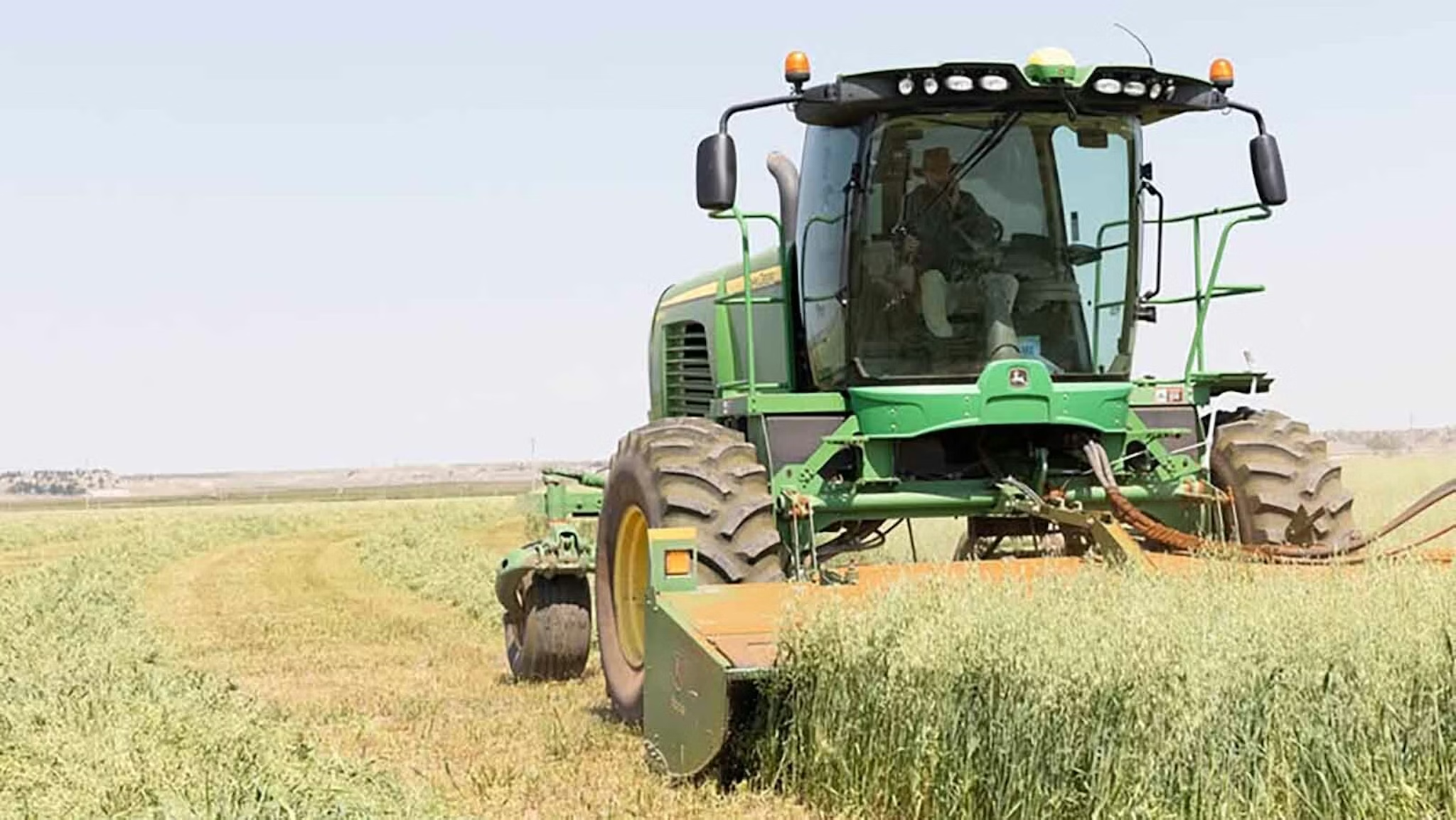
Wyoming farmers and ranchers are facing a brutal convergence of soaring fertilizer prices, record drought, and escalating fuel costs—forcing many to make impossible choices about what to plant, whether to fertilize, and how to feed their livestock. “It’s kind of the perfect storm for agriculture,” said Todd Fornstrom, a Laramie County farmer and president of the Wyoming Farm Bureau Federation.
Fertilizer costs have spiked due to supply chain disruptions caused by the closure of the Strait of Hormuz. A recent American Farm Bureau Federation survey found that 70% of respondents cannot afford all the fertilizer they need. Fornstrom said fertilizer is so expensive that applying it would guarantee a loss rather than a profit. Many farmers are simply skipping fertilizer this year—a risky move in Wyoming’s marginal soils. “We don’t have the deep, black soil like Iowa, Illinois or Indiana,” he said. “Our soil really needs the nutrients.”
Meanwhile, drought has gripped nearly the entire state. The U.S. Drought Monitor shows almost all of eastern Wyoming and a substantial southern portion in extreme drought, meaning surface water is inadequate for ranching and farming. “Grass is the big issue,” Fornstrom said. “That feed is not there. The cattle either need feed brought to them or go to places that have feed.”
Aiden Johnson, founder of HayWire Ag LLC, said Wyoming is “essentially sold out of hay.” Alfalfa cubes are trading at $375-$380 per ton. “When a state that normally exports hay runs dry, buyers start pulling from Nebraska, Colorado, and Montana, and you’re already seeing prices climb in those markets too,” he said.
Fornstrom is pivoting from corn to short-season crops like grass, alfalfa, oats, barley, and millet—expecting lower yields and quality. Cattle ranchers are enjoying high beef prices due to the lowest cattle supply in 75 years, but much of that revenue is going back into expensive purchased feed.
Maureen Tescher, who operates Udder Chaos Farm near Casper, spent about $35,000 on hay last year. She said if she had to buy from a different seller, it would be closer to $50,000. She recycles manure as fertilizer and is seeing others do the same. “A lot of people are trying to keep costs down, so you’re seeing a lot of farms not fertilizing the way they used to,” she said. “They can’t afford it.”
Fornstrom noted that everything is expensive—diesel, electricity, tires. Farm diesel prices are up 46% since late February. “There’s not a lot to like out there for the farming industry right now,” he said. “It’s going to be a rough, long year.”



The latest news in your social feeds
Subscribe to our social media platforms to stay tuned