

US–Venezuela flights resume after years of isolation

The first direct commercial flight between the United States and Venezuela in seven years has landed in Caracas, reopening a route that had been frozen since 2019 and signaling a broader, if still tentative, shift in relations between the two countries.
Flight AA3599, operated by Envoy Air, a regional subsidiary of American Airlines, left Miami slightly ahead of schedule and arrived in the Venezuelan capital roughly three hours later. It is the first nonstop service since the US Department of Homeland Security suspended flights over security concerns, forcing travelers for years to rely on indirect connections through other Latin American cities.
The return of the route comes in the wake of a dramatic political reset. Washington’s January operation that led to the abduction of former President Nicolas Maduro marked a turning point, clearing the way for renewed logistical and economic links, even as diplomatic ties remain strained.
“Today is about more than just another flight, it’s a critical milestone in strengthening the United States relationship with Venezuela and unleashing economic opportunity in both countries,” US Transportation Secretary Sean P Duffy said.
That framing reflects how the move is being positioned in Washington: not just as a transport decision, but as part of a broader recalibration of policy toward Venezuela.
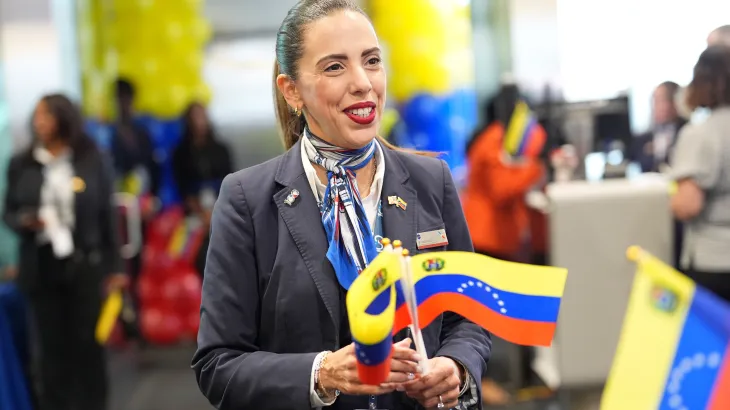
Symbolically, the restart was handled with care. At Miami International Airport, American Airlines marked the departure with Venezuelan flags and national colors, while passengers were served coffee and arepas on board — small gestures aimed at a community that has been physically and politically separated for years.
“Parents will be able to reconnect with children, grandparents with grandchildren, and families with the place they once called home,” Miami-Dade County Mayor Daniella Levine Cava said.
The human dimension is hard to miss. Miami-Dade hosts the largest Venezuelan diaspora in the United States, and for many, the resumption of direct flights removes a practical barrier that had turned even short trips into complicated journeys.
Still, the economics tell a more cautious story. Early fares for the Miami–Caracas route are significantly higher than indirect options, with return tickets initially exceeding $1,200 — well above the cost of flights via hubs like Bogota. Visa restrictions remain another constraint, limiting who can actually take advantage of the reopened corridor.
In that sense, the route’s return is less a full normalization than a first step. Airlines are expanding capacity — a second daily flight is planned — but demand will depend on whether pricing stabilizes and administrative hurdles ease.
The broader context also matters. American Airlines was the last US carrier to leave Venezuela in 2019, after Delta and United had already withdrawn amid the country’s deepening political and economic crisis. That collapse triggered one of the largest migration waves in the region, reshaping both Venezuelan society and its diaspora abroad.


The latest news in your social feeds
Subscribe to our social media platforms to stay tuned