

Trump pauses Hormuz escort mission as talks with Iran inch forward
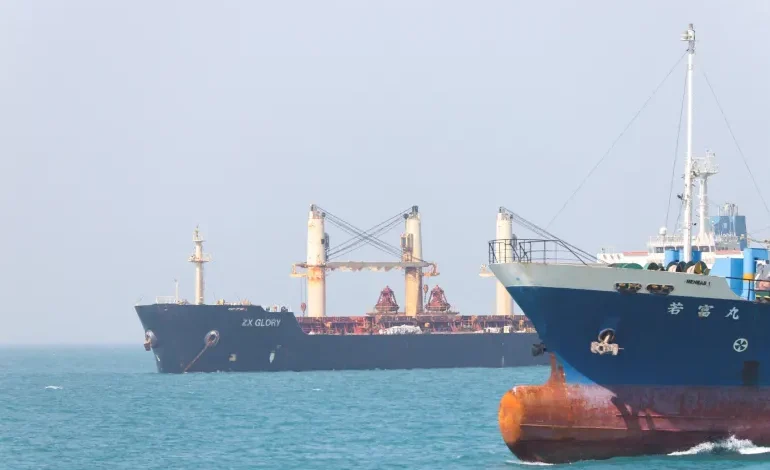


Donald Trump has temporarily halted a US military effort to move stranded ships through the Strait of Hormuz, framing the pause as a test of whether ongoing negotiations with Iran can be finalised.
Announcing the decision on Truth Social on Tuesday, Trump said the move was made “based on the request” of Pakistan and other countries, as well as the “fact that Great Progress has been made toward a Complete and Final Agreement” with Iranian representatives.
“We have mutually agreed that, while the Blockade will remain in full force and effect, Project Freedom (The Movement of Ships through the Strait of Hormuz) will be paused for a short period of time to see whether or not the Agreement can be finalized and signed,” he wrote.
There was no immediate response from Tehran.
The pause comes against a backdrop that still looks volatile on the ground. The US military said it had destroyed several Iranian boats in the strait, along with cruise missiles and drones. The United Arab Emirates reported a second consecutive day of missile and drone attacks attributed to Iran, while another commercial vessel in the waterway said it had been struck by an “unknown projectile”. Iran has not acknowledged carrying out those attacks.
At the same time, Iran’s Islamic Revolutionary Guard Corps issued an updated map of the strait, expanding the area it considers under its control and warning vessels to follow designated corridors or face a “decisive response”.
In Washington, Marco Rubio said the US had concluded its offensive phase, known as “Operation Epic Fury”, and signalled a shift to a more defensive posture. “there’s no shooting unless we’re shot at first,” he told reporters, while also warning that Iran must “pay a price” for attempting to control the waterway.
“The Straits of Hormuz do not belong to Iran. They don’t have a right to shut it down and blow up ships and lay mines,” Rubio said. “Under no circumstances can we live in a world where we accept, ‘OK, this is normal – you have to coordinate with Iran. You have to pay them a toll in order to go through the Straits of Hormuz’. Not only is that unacceptable in the straits, you’re creating a precedent that could be repeated in multiple other places around the world.”
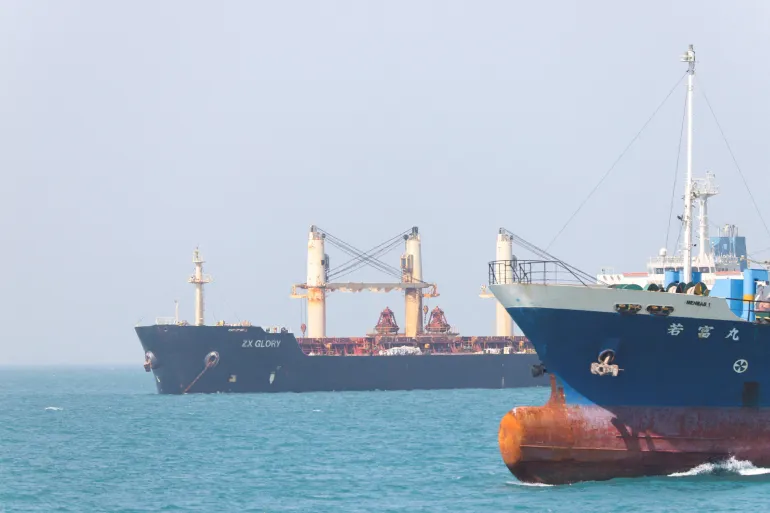
The Strait of Hormuz remains the central pressure point. Roughly one-fifth of global energy supplies typically pass through the route, which Iran has effectively sealed since the war with the US and Israel began on February 28. Even after an April ceasefire, the standoff has continued through competing forms of pressure: Iran restricting access to the strait, and Washington imposing a blockade on Iranian ports to force concessions in talks mediated by Pakistan.
The economic fallout has been immediate, with disruptions pushing up oil and fertiliser prices and fuelling broader concerns about global trade and growth.
Trump, speaking earlier at the White House, said the combined military and economic pressure was bringing Iran closer to a deal, despite mixed public messaging from Tehran.
“Iran wants to make a deal. What I don’t like about Iran is they’ll talk to me with such great respect, and then they’ll go on television. They’ll say, ‘We did not speak to the president’,” he said. “So they play games. But let me just tell you, they want to make a deal. And who wouldn’t? When your military is totally gone, we could do anything we want to them.”
He added that Iran’s forces had been reduced to firing “peashooters”, and declined to spell out what would constitute a breach of the ceasefire, saying only: “They know what not to do.”
At the Pentagon, Defence Secretary Pete Hegseth maintained that the current flare-ups do not amount to a collapse of the truce. “American forces won’t need to enter Iranian waters. It’s not necessary. We’re not looking for a fight. But Iran cannot be allowed to block innocent countries and their goods from international waterways,” he said, adding: “Right now, the ceasefire certainly holds, but we’re going to be watching very, very closely.”



The latest news in your social feeds
Subscribe to our social media platforms to stay tuned