




The United States is preparing to reimpose 25 percent tariffs on European car imports, rolling back a compromise reached just months ago and reopening a trade dispute with the EU.
Jamieson Greer said on Monday that Washington is “moving forward with this action”, signalling that the White House is ready to return to the higher tariff level after agreeing in August to scale it down to 15 percent.
The legal backdrop is mixed. Earlier this year, the US Supreme Court ruled that Donald Trump could not use the International Emergency Economic Powers Act (IEEPA) to impose sweeping global tariffs. But the administration already has a separate pathway: last year’s 25 percent duties on automotive imports under Section 232, justified on national security grounds.
The August deal with the EU lowered those levies, but implementation has been uneven. Rachel Ziemba of the Center for a New American Security said the authority to act remains intact, even if the rationale is less clear. “He does have authority to do this. What’s less clear is what the US issue is. Europe had needed EU-level implementation of the agreement, which delayed some implementation,” she told Al Jazeera.
Washington’s justification has shifted toward political leverage. Trump has argued that the EU failed to live up to the deal — a claim Brussels rejects — and pointed to European reluctance to support US naval operations in the Strait of Hormuz.
“This threat is a negotiating tactic, of course. However, the US leverage is somewhat less after the IEEPA tariff rulings,” Ziemba said.
The timing overlaps with broader friction in transatlantic relations. The White House last week announced plans to withdraw 5,000 troops from Germany after Chancellor Friedrich Merz criticised US handling of Iran talks, adding another layer to an already strained relationship.
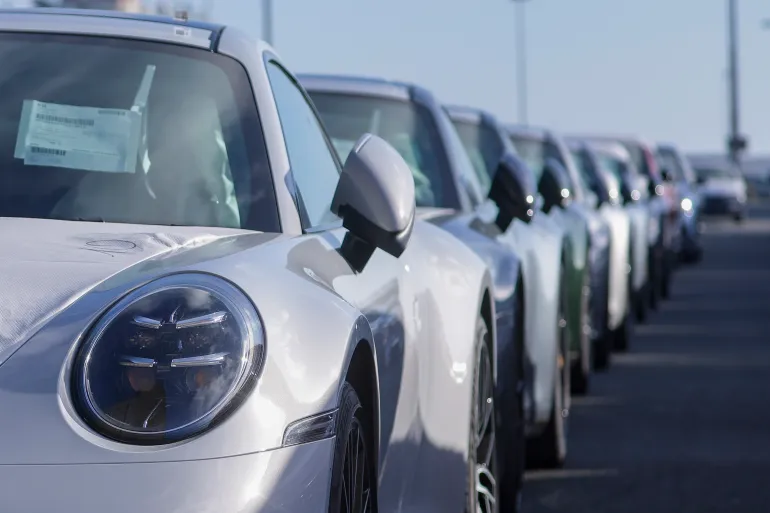
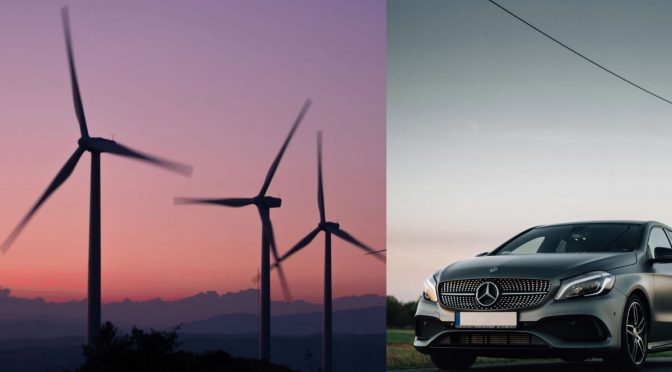
If implemented, the tariffs would fall most heavily on Germany’s auto sector. Carmakers such as BMW, Mercedes-Benz and Volkswagen all have significant exposure to the US market, which remains the largest destination for EU-built cars.
The structure of the trade also matters. Automotive exports account for around 8 percent of total EU-US trade, according to the European Automobile Manufacturers’ Association, with the US taking nearly a third of EU car export value. Gregory Shaffer of Georgetown University said the impact would be uneven but politically sensitive.
“The Trump administration continues to use coercive threats. In this case, it would be Germany that would be hardest hit by the tariffs because of the importance of its car industry. Europe so far has yet to push back on Trump’s tariffs, in large part because of security concerns,” he told Al Jazeera.
The burden would likely fall most on higher-end vehicles.
“It [the tariffs] has more impact on higher-end cars since those are the ones primarily imported as finished items. European automakers tend to produce mid-level cars in the US given the USMCA-related incentives,” Ziemba said.

The latest news in your social feeds
Subscribe to our social media platforms to stay tuned