
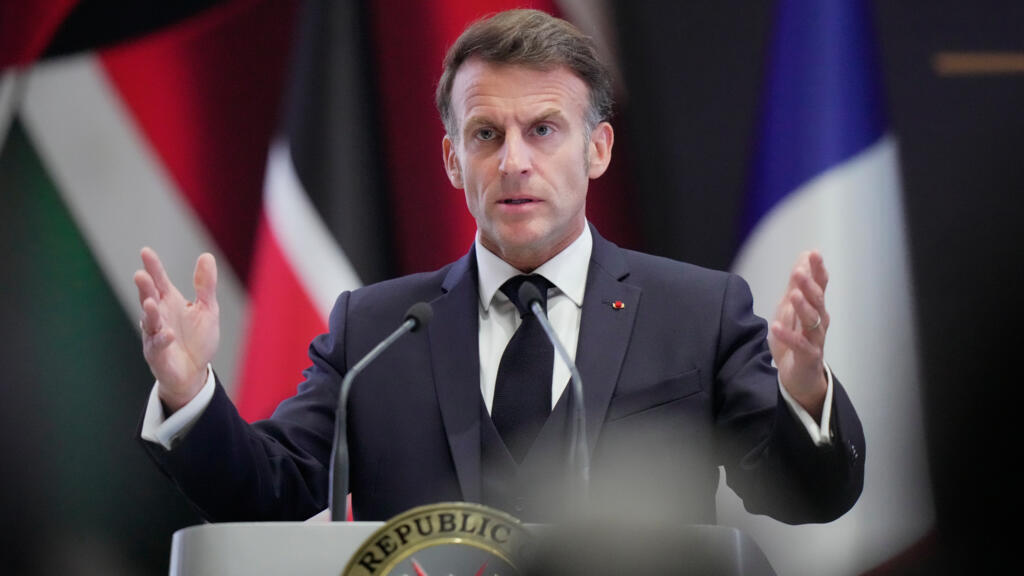



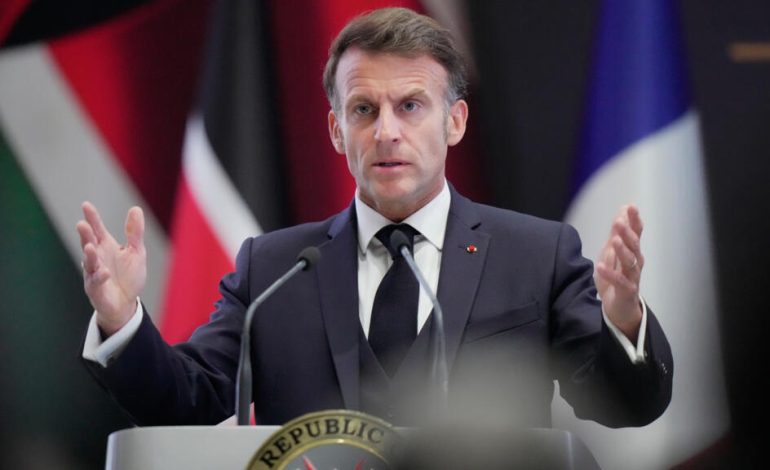

Emmanuel Macron arrived in Kenya promising a new relationship between France and Africa — one based, at least in Paris’s telling, on partnership rather than paternalism. But a few unscripted minutes at the Africa Forward Summit ended up capturing exactly why many Africans remain skeptical.
During a panel featuring artists and young entrepreneurs, Macron abruptly walked onto the stage, took the microphone and scolded audience members for talking during the presentations. Calling the noise a “total lack of respect,” he said he would “restore order.”
The intervention was brief, but the optics were difficult to ignore. At a summit designed to present France as a more equal and less domineering partner, the French president was suddenly cast in the role of a stern headmaster disciplining the room.
The contrast was especially striking because only hours earlier Macron had described himself as a “Pan-Africanist” during a joint news conference with Kenyan President William Ruto.
“We are the true Pan-Africanists,” Macron said.
That remark had already generated pushback. Pan-Africanism is rooted in resistance to colonialism and the assertion of African political and cultural autonomy. For a French president to claim that mantle was always likely to be controversial, given France’s long and often fraught history across the continent.
The summit itself was meant to underscore a strategic reset. Macron announced a $27 billion investment package targeting sectors including energy, artificial intelligence and agriculture, part of a broader effort to reposition France as a long-term economic partner rather than a former colonial power trying to preserve influence.
But symbolism matters as much as money.
“Just imagine what would happen if an African leader did the same thing in America or Europe,” said Thierno Mbaye.
“He acted like a schoolteacher scolding children.”
The criticism was not limited to Africa. In France, left-wing lawmaker Danièle Obono said on social media:
“It’s stronger than him: as soon as he sets foot on the African continent, he can’t help but behave like a colonizer.”
The backlash touches on a deeper problem facing France. For decades, Paris maintained political, economic and military influence in its former African colonies through a system widely referred to as Françafrique. In recent years, that model has come under intense criticism, particularly in West Africa, where governments and opposition movements have accused France of treating sovereign states as junior partners.
The result has been a sharp erosion of French influence. Paris has withdrawn most of its troops from the region, including completing its military withdrawal from Senegal in July.
Against that backdrop, the summit in Nairobi was supposed to mark a new chapter. Instead, Macron’s stage intervention reinforced the impression that France’s rhetoric has evolved faster than its instincts.
Some attendees applauded his attempt to quiet the room. But the broader reaction suggests that even well-intentioned gestures can be overshadowed when they echo old hierarchies.


The latest news in your social feeds
Subscribe to our social media platforms to stay tuned