

Taiwan Reasserts Independence While Sticking to the Status Quo
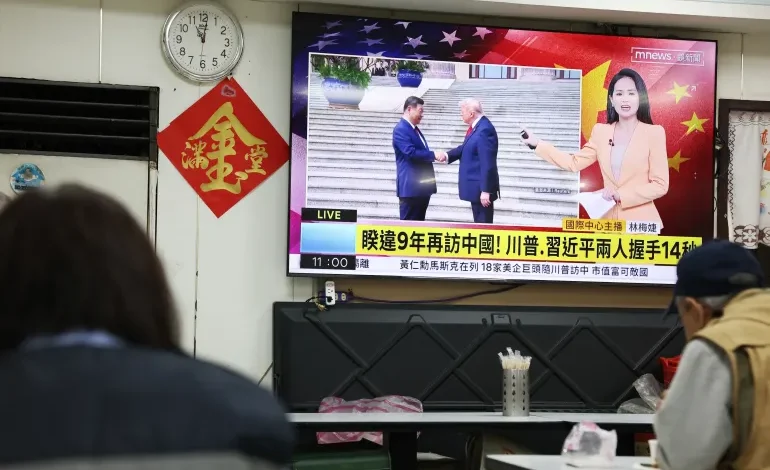

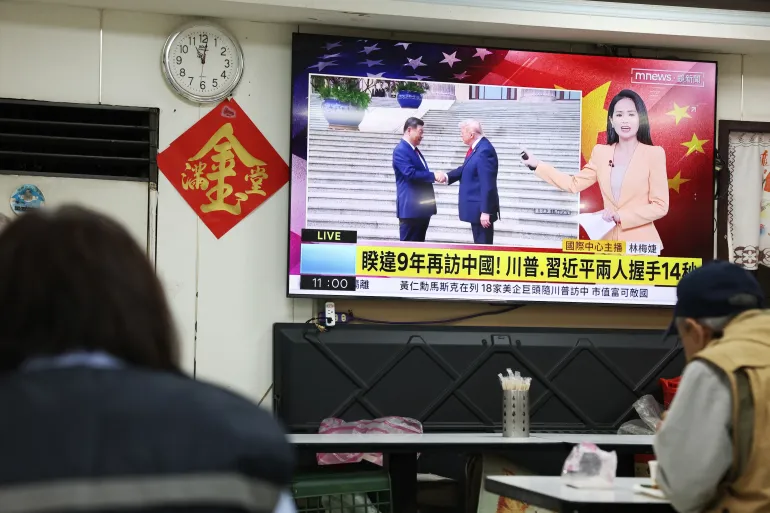
After Donald Trump wrapped up a closely watched visit to China, Taiwan moved quickly to restate a position it has long tried to balance: it sees itself as sovereign and independent, but has no plans to formally declare independence from Beijing.
In a statement issued on Saturday, Taiwan said it remains “sovereign and independent” while continuing to uphold the “cross-strait status quo”. In practice, that means maintaining self-rule without taking the formal legal step that Beijing considers a red line.
The statement was a direct response to comments Trump made in an interview with Fox News after leaving Beijing, where he held talks with Xi Jinping.
“I’m not looking to have somebody go independent,” Trump said, referring to Taiwan.
The remark suggested a more restrained approach than the rhetoric often heard from Washington, where support for Taiwan is usually framed as a matter of deterrence and regional stability rather than a question of formal independence.
Trump also appeared cautious about the prospect of military involvement.
“You know, we’re supposed to travel 9,500 miles [15,289km] to fight a war. I’m not looking for that. I want them to cool down. I want China to cool down,” Trump said.
“We’re not looking to have wars. If you kept it the way it is, I think China’s going to be OK with that. But we’re not looking to have somebody say, ‘Let’s go independent because the United States is backing us.’”
The comments captured the logic that has underpinned decades of US policy: support Taiwan’s security, but discourage any unilateral move that could trigger a military crisis with China.
Taiwan’s status remains one of the most sensitive issues in US-China relations. The dispute dates back to the Chinese civil war in the late 1940s, when rival governments in Beijing and Taipei each claimed to represent China.
Today, Taiwan governs itself, holds democratic elections and maintains its own military, but Beijing continues to view the island as part of its territory.
During Trump’s visit, the issue was front and centre. Chinese state media reported that Xi described Taiwan as the “most important issue in China-US relations”.
“If mishandled, the two nations could collide or even come into conflict, pushing the entire China-US relationship into a highly perilous situation,” Xi said.
Trump later told reporters that Xi “feels very strongly” about the issue, but stressed that he “made no commitment either way”.
He also signalled uncertainty over a proposed $11bn US arms package for Taiwan that Congress has already approved.
“I haven’t approved it yet. We’re going to see what happens,” Trump told Fox News. “I may do it. I may not do it.”
For Taipei, the immediate goal was to reassure both domestic and international audiences that Washington’s broader position has not fundamentally shifted.
Taiwan’s Ministry of Foreign Affairs said US officials and Trump have made clear that American policy “remains unchanged”. It added that Taiwan would continue to deepen ties with the US and described China’s military pressure as “the only real insecurity” in the region.
“Arms sales to Taiwan are not only a security commitment to Taiwan,” the ministry said, “but also a joint deterrent against regional threats.”
The exchange underscores the familiar but fragile formula at the heart of cross-strait relations: Taiwan insists it already functions as an independent state, China rejects that claim, and the US continues to support Taiwan’s defence while avoiding a definitive answer on whether it would intervene militarily.
The latest news in your social feeds
Subscribe to our social media platforms to stay tuned