
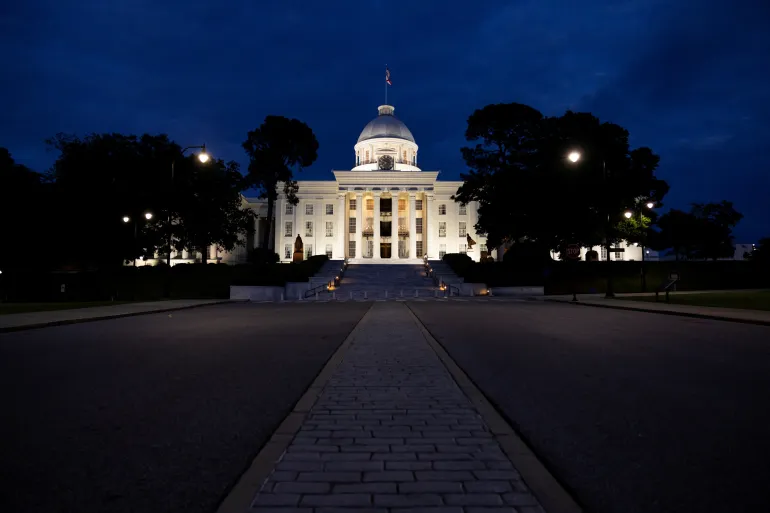



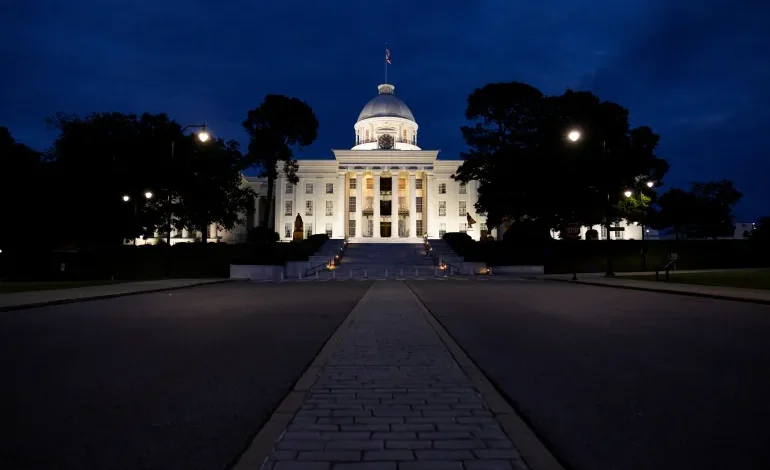

Alabama voters are heading to the polls on Tuesday, but for some of them, this primary may not be the final word.
Four congressional districts in the state are expected to hold special primaries again in August after a recent Supreme Court decision cleared the way for Alabama to use a new congressional map. That map had previously been rejected for weakening the voting power of Black voters, but the court’s latest ruling has reopened the door.
The result is a slightly surreal election calendar: voters in the affected districts will cast ballots under the current map on Tuesday, only to potentially return later under a redesigned one.
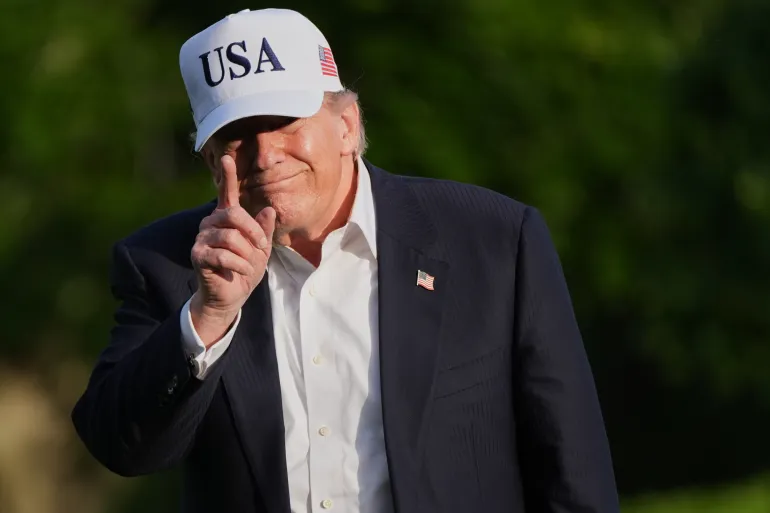
The fight is part of a larger national redistricting battle ahead of November’s midterm elections. President Donald Trump has pushed Republican-led states to redraw congressional maps in ways that could help the party protect or expand its narrow majority in the US House of Representatives.
In Alabama, the new map would reshape four districts in the southern part of the state. It would concentrate many Democratic voters into one district rather than two, improving Republican chances of gaining another House seat.
Shortly after the Supreme Court decision, Governor Kay Ivey announced special primary elections for the affected districts so the new map could be implemented. Still, the originally scheduled primaries are going ahead on Tuesday.
Polls opened at 7:00am local time and close at 7:00pm.
Ivey herself is not on the ballot for another term. Alabama limits governors to two consecutive four-year terms, making the 81-year-old Republican ineligible to run again in 2026. She has led the state since 2017 and is the longest-serving female governor in US history.
Her departure has opened a competitive race to replace her, though in Alabama, the Republican primary is often the real contest. The state has not elected a Democratic governor since 2003.
Republican Senator Tommy Tuberville is the clear frontrunner in the governor’s race. A former Auburn University football coach, Tuberville built a national profile in the Senate as a hard-right Trump ally. In 2023, he drew national attention for blocking hundreds of military promotions in protest of a policy that supported travel for service members seeking abortion care.
With Tuberville running for governor, his Senate seat has become the most closely watched contest in the state.
Ten candidates are running to replace him, including six Republicans. The leading GOP contenders are state Attorney General Steve Marshall, Navy SEAL veteran Jared Hudson and US Representative Barry Moore.
Their platforms overlap heavily: border security, support for law enforcement and gun rights. Each is trying to find a way to stand out in a very crowded conservative lane.
Moore has emphasized his early support for Trump’s 2016 campaign and has received Trump’s endorsement in the Senate race. Hudson has leaned into his military background, which carries weight in a state with major military installations and a large aerospace presence in Huntsville.
If no Republican Senate candidate wins at least 50 percent of the vote, the race is expected to head to a runoff in June.
Democrats are also choosing their Senate nominee. Dakarai Larriett, Kyle Sweetser, Everett Wess and Mark Wheeler are competing for the party’s nomination.
All seven of Alabama’s US House districts also have primaries on Tuesday, along with state-level races for attorney general, secretary of state and treasurer.
But the redistricting issue is what gives this primary cycle its unusual edge. The Supreme Court’s April decision raised the bar for challenging congressional maps on racial grounds, requiring plaintiffs to show that districts were designed overtly to disenfranchise minority voters.
That change allows Alabama to move ahead with a map that could reduce the number of Democratic-leaning districts from two to one.
The affected areas are Alabama’s first, second, sixth and seventh congressional districts. Under the current map, one Democratic-leaning district includes Birmingham, while another stretches across the state from east to west. The new design would fold the western portion into the Birmingham-based district, concentrating Democratic voters in one area.
That could matter nationally. Republicans currently hold 217 seats in the 435-member House, leaving little margin for error. A single additional seat from Alabama could prove important in the broader battle for control of Congress.
Results from Tuesday’s primaries are expected to be posted on the Alabama Secretary of State’s website before the end of the night, including in the districts that may vote again in August.
Polling suggests Moore leads the Republican Senate primary with 23 percent support, followed by Hudson at 19 percent and Marshall at 14 percent, though 40 percent of voters remain undecided. In the governor’s race, Tuberville appears far ahead, with 65 percent support.

The latest news in your social feeds
Subscribe to our social media platforms to stay tuned