

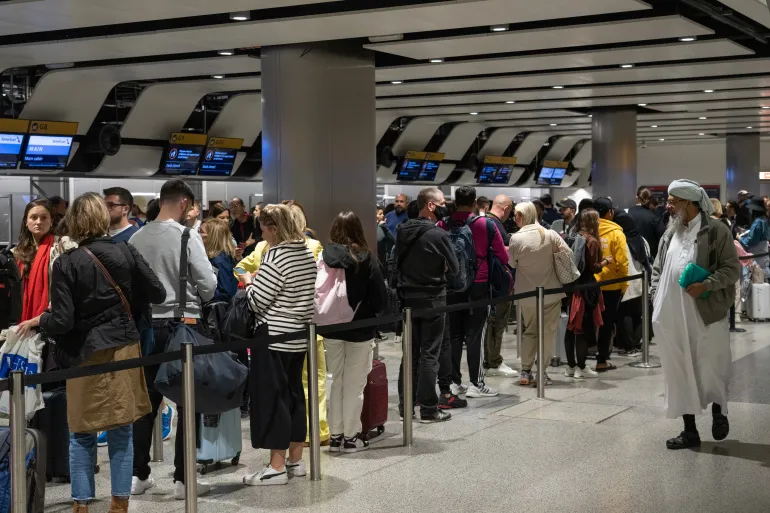




Long-term net migration to the United Kingdom almost halved in 2025, dropping back towards levels last seen before the post-Brexit immigration system came into force.
The Office for National Statistics (ONS) said on Thursday that net migration fell to 171,000 in the 12 months to the end of December, down from 331,000 a year earlier. That continues a steep fall from the record high of 944,000 recorded in 2023.
The drop reflects the impact of tighter immigration rules introduced over recent years, including restrictions on dependents for most international students and higher salary thresholds for skilled worker visas.
Immigration has dominated British politics for more than a decade, cutting across questions of labour supply, public services, national identity and post-Brexit control. Successive governments have promised tougher rules, and the current Labour government is now pushing that agenda further.
British Future said the country was “experiencing one of the sharpest falls in net migration on record”, while noting that many people still believe migration is rising.
Interior Minister Shabana Mahmood welcomed the figures but said the government would continue tightening the system.
“We will always welcome those who contribute to this country and wish to build a better life here. But we must restore order and control to our borders,” she said.
Mahmood added that the government’s new skills-based approach would reward contribution and reduce reliance on “cheap overseas workers”.
The political pressure around migration has only intensified. On Saturday, far-right activist Tommy Robinson drew tens of thousands of people to his “unite the kingdom” march in London. Islamophobic and ethnonationalist hate flyers were reportedly distributed among the crowd.
“In a country saturated with degenerates, grifters and imported political enemies … We are a brotherhood of White Europeans who share the same values,” one leaflet read.
At the same time, employers and economists have warned that sharp cuts to migration risk worsening labour shortages in sectors such as care and hospitality.
The ONS said long-term net migration is now close to where it stood before the UK’s new immigration system began in early 2021, when Britain had completed its departure from the European Union and COVID restrictions were still affecting movement.
The current decline began after the previous Conservative government introduced restrictions in 2024, including a ban on most international students bringing dependents and higher salary requirements for skilled worker visas.
Labour has since gone further, partly as it tries to counter Nigel Farage’s Reform UK, which campaigns on an anti-migration platform and is leading by double digits in opinion polls.
The government has moved to end overseas recruitment of care workers, one of the biggest drivers of work migration in recent years, and has raised salary thresholds again. It has also announced broader reforms, including faster deportations for people arriving illegally, a longer route to settled status for some workers and temporary refugee status.


The latest news in your social feeds
Subscribe to our social media platforms to stay tuned