


US Strikes Iran During Qatar Peace Talks, Raising Questions Over Ceasefire Stability


The United States has carried out fresh strikes in southern Iran even as senior Iranian officials gathered in Qatar for talks aimed at securing a longer-term agreement with Washington.
US Central Command, or CENTCOM, said the attacks were conducted as “self-defence strikes” intended to protect American troops from what it described as threats posed by Iranian forces.
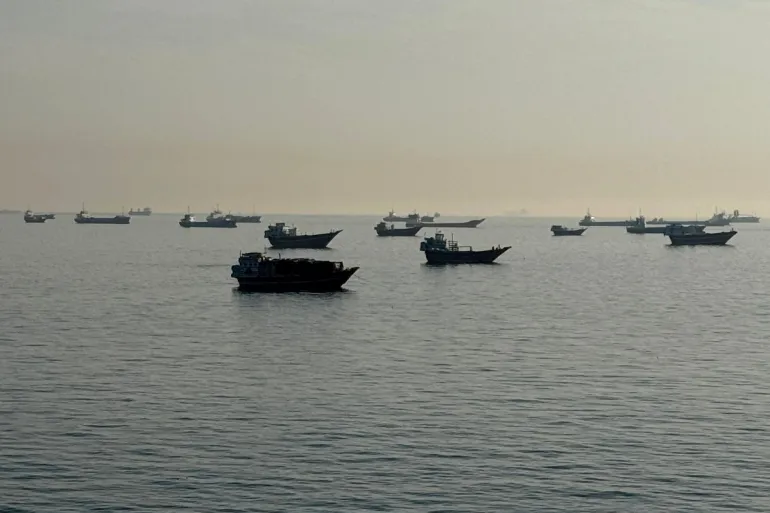
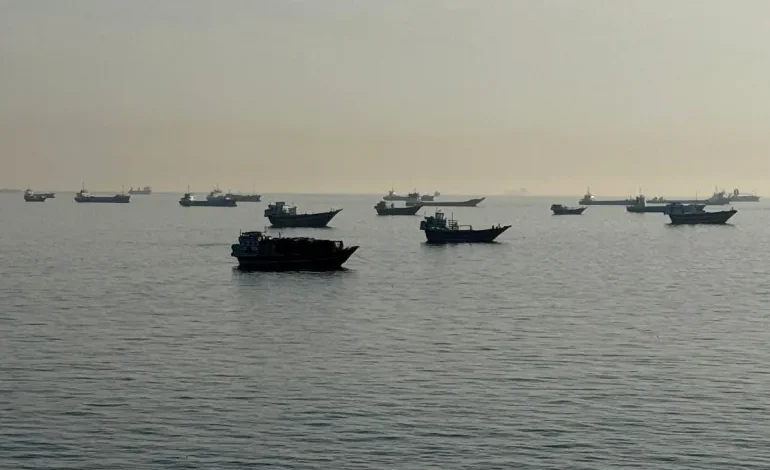
“Targets included missile launch sites and Iranian boats attempting to emplace mines,” Navy Captain Tim Hawkins, a CENTCOM spokesperson, said in a statement to Al Jazeera late Monday.
“US Central Command continues to defend our forces while using restraint during the ongoing ceasefire.”
The US military did not provide additional operational details, and the exact scale of the strikes remains unclear.
Iranian sources told Al Jazeera that the Islamic Revolutionary Guard Corps (IRGC) had targeted a vessel at sea shortly before the American attacks began. According to those sources, several IRGC personnel were killed.
The strikes come despite an official ceasefire that has technically remained in place between Washington and Tehran since April 8. While smaller confrontations have continued intermittently since then, the latest exchange lands at a particularly sensitive moment, with both governments publicly discussing progress in negotiations.
Reporting from Washington, DC, Al Jazeera correspondent Alan Fisher noted that the operation risks complicating ongoing diplomatic efforts.
“There have been a number of skirmishes like this, particularly just after the start of the ceasefire. At the time, Trump said he didn’t consider these to be a breach of the ceasefire,” Fisher said.
“There is very limited information coming from the US side; we don’t know the extent of the operation.”
“It’s hard to say whether this skirmish is unusual.”
Earlier Monday, a senior Iranian delegation arrived in Doha for another round of negotiations focused on ending the US-Israel war involving Iran. The delegation includes Iranian Foreign Minister Abbas Araghchi and Parliament Speaker Mohammad Bagher Ghalibaf.
The diplomatic track has remained fragile from the beginning, balancing ceasefire management, regional security concerns and wider disputes involving Iran’s nuclear programme and Israel’s role in the region.
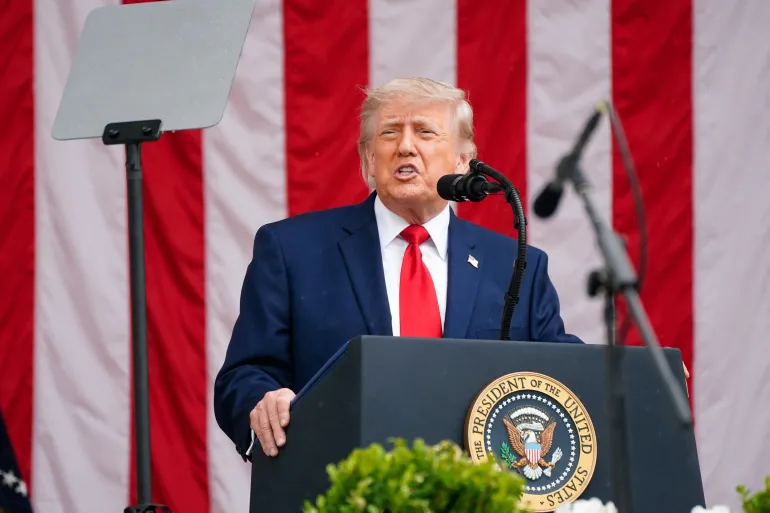
US President Donald Trump struck an optimistic tone earlier in the day, writing on Truth Social that negotiations were “proceeding nicely”, while also warning that Washington would only accept a substantial agreement.
“It will only be a Great Deal for all or, no Deal at all — Back to the Battlefront and shooting, but bigger and stronger than ever before — And nobody wants that!”
Trump also attempted to connect the negotiations to a broader regional realignment involving the Abraham Accords, suggesting that additional Muslim-majority countries could normalize ties with Israel as part of a larger settlement framework.
“It may be possible that one or two have a reason for not doing so, and that will be accepted, but most should be ready, willing, and able to make this Settlement with Iran a far more Historic Event than it would, otherwise, be,” Trump wrote.
Originally signed during Trump’s first term in 2020, the Abraham Accords normalized relations between Israel and several Arab states, including the United Arab Emirates, Bahrain and Morocco.
At the same time, Trump reiterated one of Washington’s core demands regarding Iran’s nuclear programme, saying enriched uranium should either be transferred to the US or “destroyed in place or, at another acceptable location, with the Atomic Energy Commission, or its equivalent, being witness to this process and event”.
Iranian officials, however, signaled a more cautious reading of the negotiations.
“To say that we have reached a conclusion on a large portion of the issues under discussion would be correct. However, to say that this means an agreement is on the verge of being signed is not something anyone can claim,” Iranian Foreign Ministry spokesman Esmaeil Baghaei said during a news conference in Tehran.
Baghaei also stressed that discussions currently remain centered on ending the war rather than Iran’s nuclear programme itself.



The latest news in your social feeds
Subscribe to our social media platforms to stay tuned