


OPINION. Beyond the “Thucydides Trap”: Can President Xi Jinping’s New Paradigm of Great Power Relations Reorder the 21st Century?
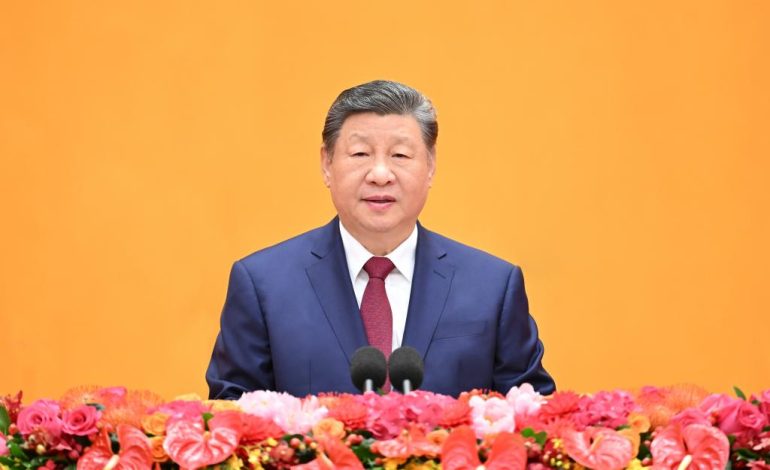
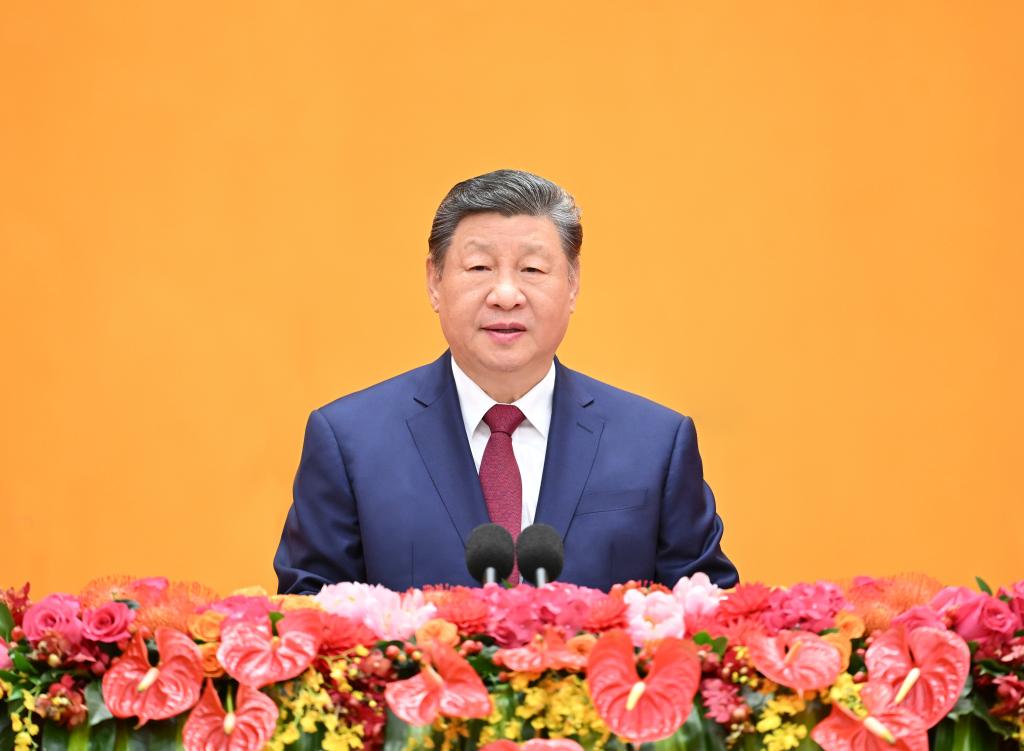
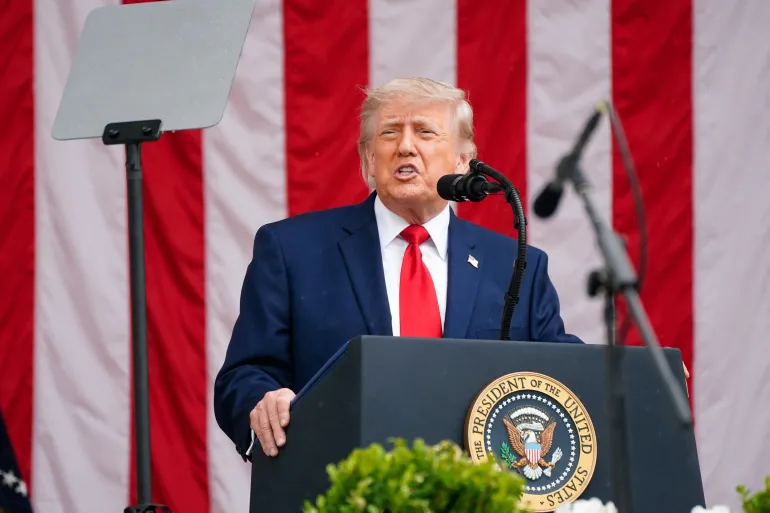
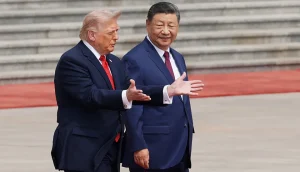
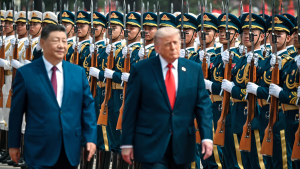
In their latest summit meeting in Beijing, Chinese President Xi Jinping called for a “new paradigm of great power relations” in discussions with his American counterpart President Donald Trump. The talk of a new paradigm was more than offering a diplomatic slogan. President Xi, in reality, proposed an alternative blueprint for global order.
At first glance, the idea sounds straightforward: major powers, especially China and the US, should avoid conflict, respect each other’s core interests, and cooperate for mutual benefit. In a century increasingly defined by strategic rivalry, that sounds not only reasonable, but necessary.
Yet, beneath the reassuring language lies a more complicated political project. What exactly does this “new paradigm” mean? Is it a genuine attempt to prevent catastrophic conflict between a rising and an established power? Is it a strategic framework for managing inevitable rivalry? Or is it a carefully crafted diplomatic doctrine designed to legitimize China’s rise while reshaping international norms in Beijing’s favor?
Xi’s proposal deserves serious attention, not because it has already succeeded, but because it captures the central geopolitical dilemma of our time: how does a rising power coexist with an established dominant one without war, while other rising powers like India and the broader Global South demand a larger role in shaping the future?
Whether the world likes it or not, the debate around this new paradigm is really a debate about the rules of the 21st century.
The historical problem Xi attempts to solve
International politics has long been haunted by a recurring pattern: when a new power rises, the old power resists. This dynamic is often summarized by the idea of the Thucydides Trap, named after the ancient Greek historian Thucydides who explained the Peloponnesian War as the result of fear generated by the rise of Athens and the anxiety of Sparta. This was a fourth-century B.C. event.
Modern examples back up “Thucydides trap,” a concept coined by Harvard Professor Graham Allison. World War I followed the rise of imperial Germany. World War II emerged partly from Germany’s revisionist challenges to the post-World War I order that barely lasted for twenty years. The Cold War institutionalized long-term strategic competition between the two superpowers – the US and the former Soviet Union.
President Xi has intended to make the central claim that China and the US do not have to repeat that history. There can be an alternative way, as XI believes.
The intellectual appeal of the new paradigm is that it rejects fatalism, originating from Allison’s Thucydides trap. Its core promise is simple – power transition without war. That alone makes it historically significant. But promises are easier than practice.
The three pillars of the new paradigm
Xi’s framework usually rests on three interlocking ideas. First, the principle of no conflict, no confrontation. This principle seeks military restraint, crisis communication, and diplomatic continuity. Hence, this is the most universal and least controversial principle.
China argues that military conflict between Beijing and Washington would be catastrophic. Given their economic interdependence, nuclear capabilities, and global influence, even limited war would destabilize the international system.
In theory, few would object. In practice, however, avoiding confrontation is harder when both sides increasingly view each other as strategic competitors. That contradiction has become obvious in disputes over Taiwan, the South China Sea, and advanced semiconductor technology.
The second principle relates to mutual respect. This is the heart of the doctrine, and also its most contested feature. For China, “mutual respect” means recognizing China’s political system, the leadership of the Chinese Communist Party, China’s territorial claims, and China’s right to national rejuvenation.
In Beijing’s language, this means respecting China’s “core interests.” But from Washington’s perspective, the phrase often sounds less reciprocal. Many American policymakers interpret it as: accept China’s red lines while preserving ambiguity around your own.
That creates a credibility problem. Can mutual respect exist when one side defines respect as non-interference and the other defines it as adherence to international rules? That tension has never been resolved.
The third principle is win-win cooperation. This is the most optimistic element. China argues that global problems create shared incentives to deal with climate change, pandemics, nuclear proliferation, financial instability, and global trade.
The logic is rooted in interdependence. The two economies remain deeply linked, even after the China–US trade war.
Yet, recent developments show the limits of this assumption. Interdependence has not reduced rivalry. Trade has often been weaponized. Semiconductor restrictions, supply-chain restructuring, and investment screening show that economic ties can intensify strategic distrust rather than diminish it.
At the end of the day “win-win” cooperation is increasingly harder to sell in a zero-sum political climate, especially to a rival like the US.
The wider dimensions of the paradigm
President Xi’s concept is not only bilateral diplomacy. It has broader strategic dimensions – political, economic, and security.
Politically, China prefers institutionalized dialogues. It wants stable leader-to-leader communication. Summits, strategic dialogues, and hotlines are meant to reduce miscalculation. This is sensible. Still, great powers often stumble into conflict not because they want war, but because they misread each other. And diplomacy alone cannot substitute for trust. Neither does it erase structural rivalry.
The economic dimension refers to stability through interdependence. For decades, this was the strongest part of the US–China relationship. American consumers relied on Chinese manufacturing. China relied on US markets and capital.
This interdependence created a powerful assumption: countries that trade heavily do not fight each other. That assumption now looks incomplete. Economic interdependence creates leverage. Leverage creates vulnerability. Vulnerability creates fear. The result is “de-risking,” not integration.
This weakens one of the original foundations of President Xi’s framework.
In the security dimension, the new paradigm struggles most. Military competition is intensifying in the areas of naval expansion, cyber operations, missile development, and alliance strengthening.
Taiwan remains the most dangerous flashpoint. For China, Taiwan is a sovereignty issue. For the US, it is a credibility issue. That is a combustible mix. A doctrine of “no confrontation” sounds reassuring until both sides believe backing down is politically impossible.
The battlefield of global governance – reform or revision?
China argues that existing institutions reflect outdated Western dominance. It wants greater influence in the United Nations, World Trade Organization, and International Monetary Fund. At the same time, it has built alternatives: the Asian Infrastructure Investment Bank (AIIB), the New Development Bank or the BRICS Bank, and the Belt and Road Initiative (BRI).
While China describes this as reform, critics describe it as revisionism. Both views contain some element of truth. China does want a bigger voice in the global order. It also wants to rewrite some rules. That makes the debate unavoidable.
Other significant factors
Most discussions treat Xi’s framework as a US–China issue. That is too narrow. Its success also depends on how other rising actors like India fit into it.
China often invites India into a multipolar narrative. Through BRICS, AIIB, and the Shanghai Cooperation Organization (SCO), Beijing presents India as a partner in building a post-Western order. But India is least interested in Chinese hierarchy. India’s answer has been strategic autonomy to be achieved through multi-vector diplomacy and multi-alignment.
New Delhi works with China in BRICS and SCO. It also works with the US through the Quadrilateral Security Dialogue. That tells us something important: India supports multipolarity, but not Chinese primacy. That is a major limitation for Xi’s vision.
President Xi’s new paradigm of great power relations also has implications for the Global South. In much of Africa, Asia, and Latin America, China’s message has traction. This is because many states share China’s complaints about Western dominance, unequal institutions, conditional aid, and selective intervention.
In contrast, China offers infrastructure financing, diplomatic respect, political non-interference. That is attractive. But support is often transactional, not ideological. Countries like Indonesia, Brazil, and Saudi Arabia do not want to replace dependence on Washington with dependence on Beijing. They prefer multi-alignment.
That means the Global South may strengthen China’s influence, but not necessarily its leadership.
Arguments for and against the new paradigm
Its greatest strength is normative. It insists that great-power rivalry does not have to end in war. That matters but too much strategic thinking today treats conflict as inevitable. Xi’s framework challenges that. It says competition is acceptable, catastrophe is not. Even skeptics should support that goal because the alternative is unmanaged escalation.
Still, the framework has some flaws. The language is elegant, rules are not. There are serious questions about Xi’s new paradigm. What counts as “mutual respect?” Who defines “core interests?” What happens when they clash? Without operational clarity, calls for a new paradigm become diplomatic theater.
Furthermore, China and the US do not see the world the same way. China seeks recognition of status. The US seeks preservation of world order rules made in its own image, power, and interest following World War II. Those are not identical goals. One seeks space. The other seeks continuity. That makes friction unavoidable.
There is a fear that the new paradigm may be Sino-centric. China speaks of equality. But many neighbors experience hierarchy. Whether in maritime disputes, trade coercion, or diplomatic pressure, smaller states often feel China demands deference.
That weakens the moral credibility of the framework. A genuinely new paradigm cannot simply replace American dominance with Chinese dominance. It must offer something different. That remains unproven.
Can Xi’s new paradigm succeed?
The answer depends on what success means. If success means eliminating rivalry, no. The US and China are strategic competitors. So, their rivalry is likely to continue.
If success means managing rivalry without war, perhaps. That is more achievable. A successful version of Xi’s framework would not create rock solid China–US friendship, it would definitely create guardrails. Those guardrails might include institutionalized military dialogue, stable economic rules, clearer red lines, selective cooperation, and crisis-management systems to maintain some degree of stability in the global order.
Perhaps the biggest problem with the phrase “new paradigm” is that it sounds too transformative. The world is unlikely to become harmonious. A more realistic future is competitive co-existence, except for war and violence, short of all-out cooperation. Herein lies President Xi’s vision for a new paradigm of great power relations.



The latest news in your social feeds
Subscribe to our social media platforms to stay tuned