


Canada Turns to Sweden in Defence Shift Away From US Reliance

Canada has announced plans to purchase early warning surveillance aircraft from Swedish defence company Saab instead of selecting a competing platform from Boeing, in what analysts see as a significant sign of Ottawa’s broader effort to reduce military dependence on the United States.
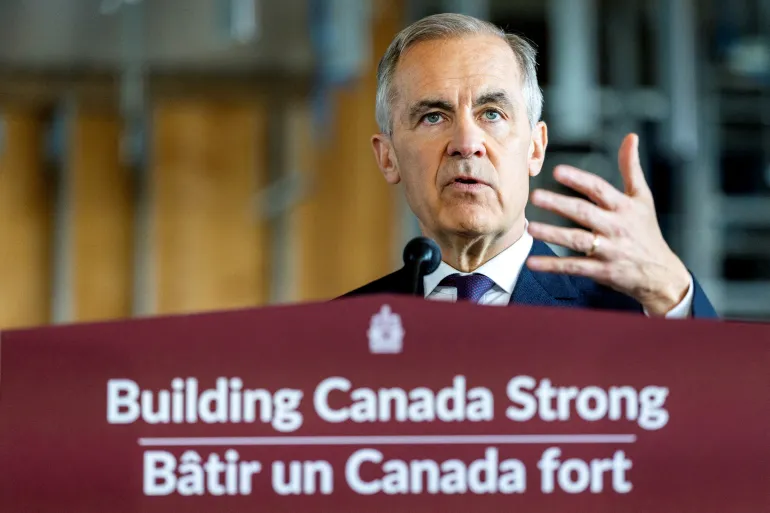
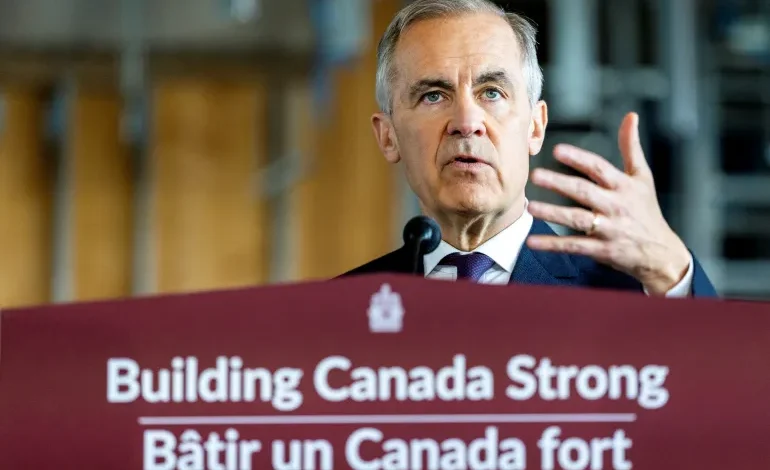
Prime Minister Mark Carney said Wednesday that Canada intends to move forward with Saab’s GlobalEye system, which is built around Bombardier’s Global 6500 aircraft. Boeing’s E-7 Wedgetail had also been considered for the contract but has faced repeated delays and rising costs in recent years.
“With a suite of advanced sensors and mission systems, Saab’s GlobalEye will be a key resource for the Canadian Armed Forces to detect and deter threats across the Arctic,” Carney said during a defence conference in Ottawa.
The decision lands at a moment of growing strategic anxiety in Canada over Arctic security and its long-term defence relationship with Washington.
For decades, Canada relied heavily on military coordination with the US to monitor its Arctic territory — a region spanning more than 4.4 million square kilometres across land and sea. But Carney has increasingly framed Arctic sovereignty as an area where Ottawa must become more self-reliant.
Earlier this year, he pledged that Canada would take “full responsibility” for protecting the Arctic, while also increasing defence spending after years of criticism from NATO allies over military underinvestment.
Carney announced in March that Canada had finally reached NATO’s benchmark of spending 2 percent of GDP on defence.
While the government has not disclosed the final size or cost of the GlobalEye purchase, military officials previously indicated Canada was looking to acquire six aircraft.
Saab also said it plans to expand research and development work inside Canada as part of the agreement, adding an industrial component to the defence partnership.
Analysts say the symbolism of the deal matters almost as much as the aircraft themselves.
Philippe Lagasse, associate director of international affairs at Carleton University in Ottawa, described the decision as “an important test case for the Carney government’s policy of pivoting away from American military capability”.
The move also deepens Canada’s defence relationship with Sweden, which formally joined NATO earlier this year.
Swedish Prime Minister Ulf Kristersson welcomed the announcement, saying: “GlobalEye is already creating jobs in Canada, and working with the Canadian supply chain. This decision ties our two nations even closer together.”
Saab is also competing to sell Canada its Gripen fighter jets, potentially complicating Ottawa’s existing agreement to buy 88 F-35 aircraft from Lockheed Martin.
That deal has come under renewed scrutiny since trade tensions between Canada and the United States escalated after President Donald Trump imposed tariffs on key Canadian imports and repeatedly floated rhetoric about annexing Canada as the “51st state”.
Last year, Carney asked the Canadian military to explore whether Ottawa could reduce its F-35 order and potentially diversify suppliers.
The Pentagon has openly criticized the hesitation. A US defence official said last week that delays around the F-35 decision suggested Canada was prioritizing politics over defence planning.
Still, Lagasse said he believes Canada will ultimately maintain a mostly F-35-based fighter fleet rather than fully pivoting toward Swedish alternatives.
“If the government was determined to buy Gripens, I would have expected them to make the announcement alongside this [GlobalEye] decision,” he said.
The aircraft announcement also unfolded against the backdrop of increasingly strained trade relations between Ottawa and Washington.
While the United States has already launched formal bilateral trade talks with Mexico ahead of the upcoming review of the USMCA trade pact, negotiations with Canada have moved far more slowly.
Trump has repeatedly questioned the value of the USMCA agreement itself and suggested the United States no longer needs the deal in its current form.
Historically, roughly 80 percent of Canadian exports have gone to the United States, making the deterioration in relations especially sensitive for Ottawa.

The latest news in your social feeds
Subscribe to our social media platforms to stay tuned