





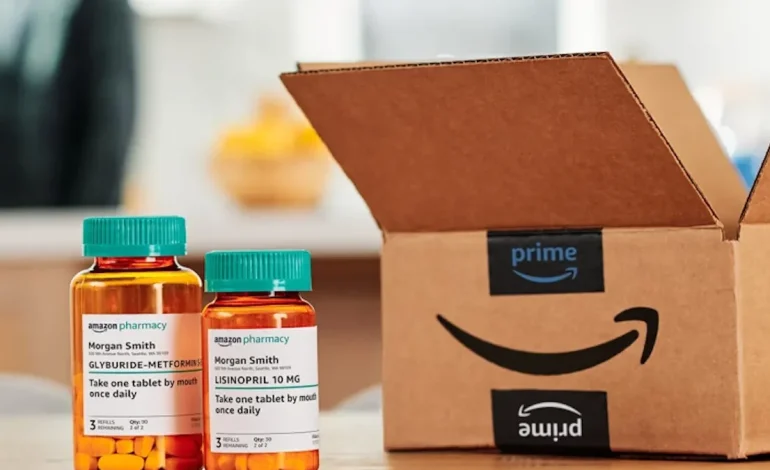

Amazon announced plans to expand its same-day prescription delivery service to an additional 20 cities across the US by 2025.
This move will give nearly half of Amazon Pharmacy’s US customer base access to same-day medication delivery, offering a convenient option for those who rely on fast access to their prescriptions.
The service, already available in cities like Austin, Los Angeles, Miami, New York, and Seattle, will be extended to other major metropolitan areas, including Boston, Dallas, Minneapolis, Philadelphia, and San Diego. Amazon also plans to announce additional cities in the coming months.
The expansion will be supported by new pharmacies built into same-day delivery sites, where Amazon will utilize its extensive logistics network and automation technology. By the end of the expansion, 45% of Amazon Pharmacy customers in the US will be eligible for same-day prescription delivery.
Amazon’s same-day prescription delivery is designed to benefit people with mobility challenges or those who find it difficult to visit a physical pharmacy. Customers can order medication by 5 p.m. and expect delivery by 10 p.m. that same day. For first-time orders, same-day delivery is free, and subsequent orders cost $3 for Prime members and $10 for non-Prime customers.
This initiative is part of Amazon’s broader push into the healthcare industry, following its acquisition of the online pharmacy PillPack in 2018 and telemedicine provider One Medical in 2022. Through services like RxPass, a $5 monthly prescription plan for Prime members, and its expanding healthcare portfolio, Amazon is positioning itself as a major player in the pharmaceutical and healthcare sectors.
The retail giant aims to fill gaps left by traditional pharmacies, particularly in “pharmacy deserts,” where local access to medications is limited due to closures of brick-and-mortar stores. Amazon’s competition includes established pharmacy chains like CVS and Walgreens, which have faced recent challenges, including store closures and staffing shortages.
CNBC, the Washington Post, CNET contributed to this report.



The latest news in your social feeds
Subscribe to our social media platforms to stay tuned