





Wyoming Eyes $1 Billion Health Care Fix as Insurance Costs Soar and Rural Hospitals Feel the Squeeze

Dr. Joseph Gutman has practiced medicine for nearly 50 years in big-city hospitals and small Western towns, Gillette News Record reports.
From his couch in Casper, he sums up the post-COVID health care world in one unsettling line:
“Covid is the modern equivalent of the Tower of Babel. Everyone is speaking a different language.”
By “everyone,” he means patients, doctors, insurers, and politicians — and he says that confusion is helping push rural health care to the brink.
That pressure is now showing up in a very personal way for Wyoming families: massive health insurance hikes for 2026, warnings of rural hospital closures, and a scramble in Cheyenne to grab up to $1 billion in federal funds to keep the system from cracking.
In recent weeks, Wyoming residents have started opening renewal letters for their 2026 health insurance plans — and some of the numbers are brutal.
- One woman’s premium is jumping from about $700 a month to $4,700 for the same plan.
- Two others are seeing monthly costs leap from $400–$500 to $2,775 and $3,200.
Every single one of them told the Douglas Budget essentially the same thing: if they can’t find another option by Jan. 1, they’ll drop coverage and hope they don’t get sick.
At the same time, Congress is locked in another bitter fight over Affordable Care Act (ACA) subsidies — the same Obama-era program Republicans spent a decade bashing, but which now keeps coverage even remotely within reach for many people.
A recent 41-day government shutdown revolved around those subsidies, and while lawmakers are racing to patch together a deal before the Christmas recess, there’s no guarantee they’ll succeed.
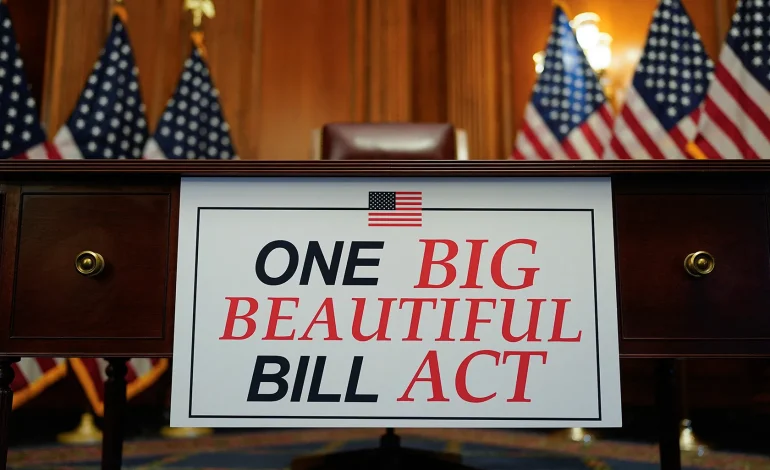
Buried inside Congress’ earlier “One Big Beautiful Bill” is a pot of money for states to tackle their own health care meltdowns. Wyoming has applied for up to $1 billion and has already submitted its plan, but there’s no promise it will get the full amount — or anything at all.
Still, Memorial Hospital of Converse County (MHCC) CEO Matt Dammeyer is watching closely. He says doing nothing isn’t really an option.
“No one knows because the nuclear option (of doing nothing) is so devastating,” he said. “The social carnage will be so devastating. It could be a small beating. It could be a massive beating.”
If ACA subsidies fall apart or vanish, he warns, hospitals will feel it fast.
“If your subsidies go away, your patient, your client base is going to go away as well,” he said.
Even the uncertainty is already causing chaos for hospitals, insurers and patients, Dammeyer and Gutman agree.
Gutman, an endocrinologist who’s practiced in Miami, Baltimore, Arizona and now Wyoming, says all of this lands hardest on ordinary people — especially in rural places.
“There’s a very big emotional disconnect between the bean counters and the sick patient,” he said.
He uses “bean counters” broadly: federal officials, insurance executives, even hospital administrators. All see the system from different angles, often with competing goals.
That’s how you end up with what both he and Dammeyer warn could become a true health care “catastrophe” in rural America:
- Small hospitals going insolvent or closing;
- Specialized services, like obstetrics, disappearing from entire regions;
- Patients forced to travel hours for basic or emergency care.
Wyoming has already seen OB services shut down in several communities, creating what some call “obstetrics deserts.” Dammeyer says MHCC has tried to push back against that trend.
When MHCC bought an OB practice in Casper and decided to expand, not close, its own OB department in Douglas, it was a financial risk.
At the time, Douglas saw only 7–11 births a month — not enough to justify keeping the unit open on local patients alone. But with expectant mothers now traveling in from surrounding counties, the numbers are working. MHCC is on track to deliver about 250 babies this fiscal year.
Dammeyer says that’s what a community-owned hospital should do: put service ahead of short-term profit.
Gutman calls MHCC a “blessing” for Converse County.
“Converse County doesn’t understand the blessing it has that most other places don’t,” he said, pointing out that Douglas not only handles most local needs, but is also close enough to Casper and Fort Collins for higher-level care.
But both men stress: not every Wyoming community is so lucky, and some rural hospitals in the state are already struggling.
Wyoming’s proposal, called “Rural Health Transformation in Wyoming,” has several big pieces.
1. “Right-Sizing” Hospitals and Services
The first two components focus on reorganizing the system so hospitals and clinics do what they can sustainably do well, instead of trying (and failing) to be everything for everyone.
In the state’s own words, the goal is to:
- Let small rural hospitals focus on core services like emergency care, stroke and trauma, EMS and labor and delivery — using their Critical Access Hospital (CAH) status and swing beds to stay afloat, while cutting costly extras.
- Route elective procedures to larger hospitals (likely PPS hospitals) that can handle higher volume, improving efficiency and quality.
- Build regional EMS systems that share resources across communities, coordinated around CAHs and fire departments with stable funding bases.
The idea is to shore up what works instead of propping up everything equally.
Dammeyer says MHCC, as a CAH hospital with strong community backing, is in relatively good shape under this model, though he admits he doesn’t know exactly how “right-sizing” will affect everyone.
“I don’t want to sound overconfident but, you know, we have a pretty good history that when one thing falls another thing can be found to replace it,” he said.
2. A Cheaper, State-Run “Emergency-Only” Health Plan
The third major piece tackles the cost of health coverage itself, especially for people who are healthy but priced out of traditional insurance.
The state is proposing a public benefit plan — operated by Wyoming — that would:
- Cover only emergency episodes of care, not full ACA-style benefits;
- Be available to individuals and small employers;
- Exclude people with serious pre-existing conditions;
- Be offered at cost, with lower premiums than full coverage.
From the application:
“Where the previous two components focus on maintaining physical access to care throughout rural Wyoming, this final component covers financial access, particularly to emergency services.”
For people who feel full ACA plans are unaffordable and overbuilt, the state’s argument is simple: let them buy bare-bones, emergency-only coverage at a lower price instead of going totally uninsured.
Wyoming’s plan doesn’t just spend the money and walk away. A portion of any federal funding would be placed into an investment fund, with the interest used to support health care needs in the future.
Other proposed uses include:
- Matching grants to help providers further their training;
- Technology upgrades at medical centers;
- Expanded telehealth services;
- A public education effort branded “Make Wyoming Healthy Again”.
Both Gutman and Dammeyer like that the proposal looks beyond quick fixes and tries to redesign the system with realistic expectations about rural life, distance, and cost.
Whether Wyoming will get the full $1 billion is another story. Both men doubt the state’s small population will translate into a huge slice of the pie once federal “bean counters” start dividing funds among 50 states.
Even $500 million, though, could make a massive difference, Dammeyer said — particularly if it helps hospitals survive the current turbulence and come out leaner, more focused and more stable.
For now, doctors, patients, and hospital leaders are all in the same boat: waiting to see what Congress does, what the feds approve, and whether Wyoming’s plan can blunt what many fear is a slow-moving health care crisis about to speed up.



The latest news in your social feeds
Subscribe to our social media platforms to stay tuned