





With input from Bloomberg, Axios, CNN, and Forbes.
In a move that’s already stirring plenty of debate, President Donald Trump is turning up the heat on Big Tech – saying it’s time for hyperscalers like Microsoft, Meta and others to start footing part of the bill for surging electricity costs tied to data centers and artificial intelligence demands.
The White House is signaling plans to press major tech companies to pay more for the power their sprawling operations consume, especially as AI systems and massive cloud servers strain the grid. Officials want to reduce the burden falling on everyday consumers and local utilities – costs that often get passed along in the form of higher electricity rates.
Part of this push includes directing PJM Interconnection – the grid operator serving much of the Eastern US – to hold what’s being called an emergency electricity auction, aimed at boosting power generation capacity and stabilizing prices. The idea is to incentivize new power plant construction so the region isn’t scrambling for juice every time demand spikes.
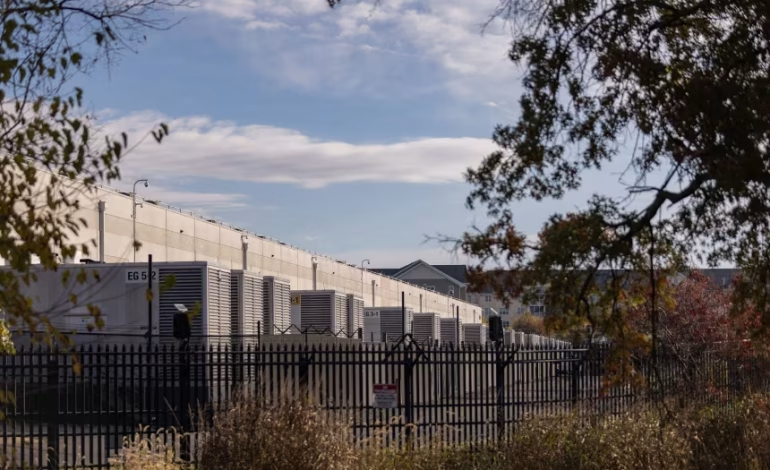
Why spotlight tech? Because data centers – particularly those running advanced AI workloads – are energy hogs. Companies like Microsoft and Meta have been on a building spree, constructing data centers in communities across the country. Some are so big they rival small cities in electrical demand.
Local utilities and regulators have flagged the pressure this puts on grids, especially in hot spots like the Northeast and parts of the Midwest. In some markets, AI-linked demand has forced utilities to buy power at sky-high spot prices or run expensive emergency auctions just to keep lights on.
Trump’s team argues that the companies most responsible for this spike should share more of the cost, rather than leaving ratepayers – and by extension taxpayers – to shoulder the burden.
And tech isn’t sitting quietly. Microsoft and Meta are reportedly airing ads pitching their data centers as community boosters, promising jobs and local investment wherever they build. The “good neighbor” messaging is clearly aimed at softening blowback from rising utility costs tied to their facilities.
But with energy prices always sensitive politically, the strategy could backfire if voters feel tech giants are dodging responsibility for infrastructure strains they helped create.
Trump’s proposal taps into a populist vein – big companies benefiting from the digital age should pay their fair share for the collateral damage on local services and infrastructure. Supporters say this is no different than making polluters pay for environmental cleanup. Critics counter that mandating surcharges on tech would chill investment or be legally tricky, given that grid pricing and utility regulation is mostly handled by state agencies and independent grid operators like PJM.
If the White House follows through, this fight could move into several arenas:
- Regulatory filings with grid operators and utilities;
- Federal and state legislative proposals to change how electricity costs are allocated;
- Legal challenges from tech companies arguing they shouldn’t be singled out.
At stake is how the US powers its future – and who pays for it. With AI workloads growing exponentially, data centers are only poised to use more electricity. If the federal government pushes through new cost-sharing rules, it could reshape the economics of cloud computing, data center location decisions and even the pace of AI deployment.
In the meantime, everyone from grid operators to tech CEOs to everyday utility customers will be watching closely as this debate heats up – quite literally.



The latest news in your social feeds
Subscribe to our social media platforms to stay tuned