





With input from Reuters, Market Watch, the Wall Street Journal, CNBC, and Bloomberg.
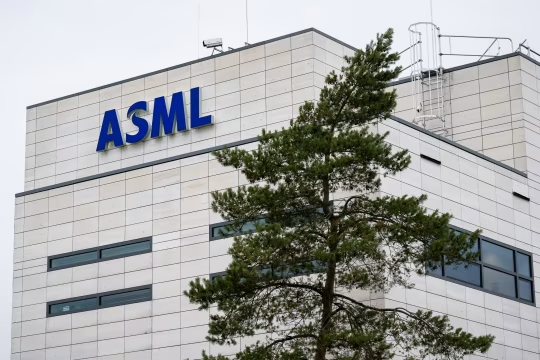
ASML is riding the AI wave – and it’s now betting that surge has more room to run.
The chip-equipment heavyweight just lifted its 2026 revenue outlook, saying it expects sales to land between €36 billion and €40 billion. That’s a notch higher than its earlier forecast and a clear signal that demand for advanced semiconductors isn’t cooling off anytime soon.
The upgrade follows a strong start to the year. First-quarter numbers came in ahead of expectations, with revenue hitting €8.8 billion and profit at €2.8 billion. Not explosive, but solid – and enough to reinforce the broader story: AI is still driving spending across the chip industry.
CEO Christophe Fouquet pointed straight at that trend. Companies are pouring money into AI infrastructure, and chipmakers are scrambling to keep up. Supply hasn’t caught up with demand, so customers are pushing ahead with expansion plans, locking in capacity years in advance.
That’s where ASML sits in a powerful position. The company builds the machines that make cutting-edge chips possible. No tools, no chips. Which makes its order book a kind of early warning system for where the industry is heading.
Curiously, ASML didn’t publish its order intake this time – a number investors usually obsess over. Management insists demand is still “very strong,” and analysts don’t seem too rattled, even if the missing data raised a few eyebrows.
The momentum is showing up across the supply chain. Taiwan Semiconductor Manufacturing Company recently posted record revenue, while memory giants Samsung Electronics and SK Hynix are ramping up production to meet AI-driven demand. That kind of expansion doesn’t happen without more ASML machines in the mix.
Memory chips, in particular, are having a moment. They’re critical for AI systems and data centers, and shortages have pushed prices higher. In the first quarter, more than half of ASML’s new tool sales went to memory customers – a sharp jump from the previous quarter.
Geography tells another story. South Korea and Taiwan are driving a big chunk of demand, while China is slipping down the list. Export restrictions continue to bite, limiting what ASML can ship to Chinese customers. There’s even talk in Washington of tightening those rules further.
That pressure is already visible. Sales to China dropped to 19% of total system revenue, down from 36% just a quarter earlier.
Even so, the bigger picture hasn’t changed. AI spending is rewriting the chip cycle, and ASML is right in the middle of it – supplying the tools everyone else needs to keep up.



The latest news in your social feeds
Subscribe to our social media platforms to stay tuned