



Microsoft to triple its Cheyenne data center footprint with 3,200-acre land buy

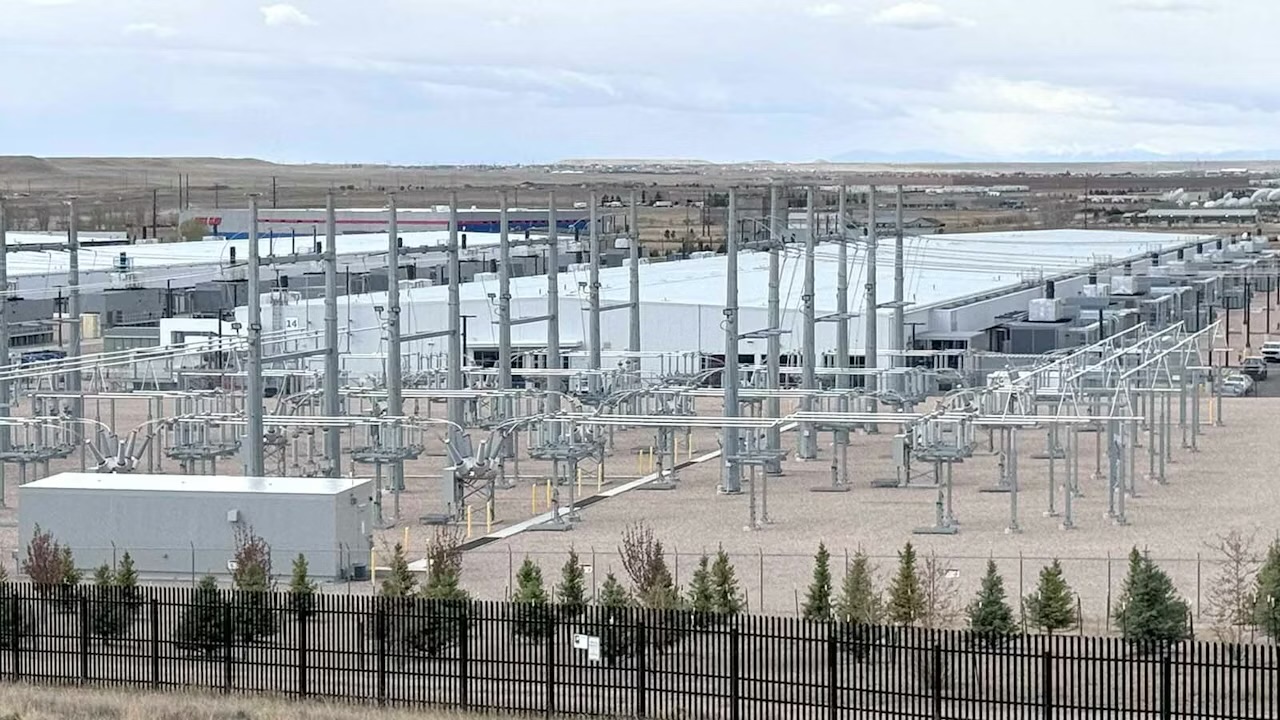
Microsoft announced Tuesday that it will buy 3,200 more acres in Cheyenne to build data centers, tripling its footprint in Wyoming’s capital city while promising to limit impacts on power rates, water and housing. The announcement comes amid simmering debates about data center impacts to energy costs and water usage, as well as what kind of economic development best fits the Cowboy State.
Microsoft officials told Cowboy State Daily that they plan to buy about 3,200 acres on the south edge of Cheyenne, roughly 5 square miles. That will triple Microsoft’s current footprint, which includes 11 operational data centers and three more under construction spread across four campuses. The purchase involves two pieces of land: a 200-acre parcel located in Bison Business Park on Wapiti Trail east of South Greeley Highway, and an adjacent 3,000-acre parcel accessible from Wapiti Trail.
“We built our first data center in Cheyenne back in 2012, more than a decade ago,” said Rima Alaily, Microsoft’s vice president and general counsel for infrastructure and legal affairs. “At the time, we were really attracted by the city’s high-skilled workforce, its infrastructure and its real, thriving energy industry. I think today, the investment that we’re making is really a commitment to continued growth in Cheyenne for those same reasons.”
Wyoming has the right climate to keep energy costs for cooling data and artificial intelligence centers down, Alaily said. The company’s plan is to look first to the “innovative utility partnership” it has with Black Hills Energy, which offers a large power contract service tariff. Black Hills Energy’s tariff ensures Microsoft pays for “all of the infrastructure upgrades and the power that’s procured by the utility to serve our load,” Alaily said, adding that “makes sure that the community residents don’t see their rates go up because we are present in the community.”
As far as water usage, Alaily said Microsoft has been pushing toward more efficient, closed-loop cooling technologies that limit water withdrawal and consumption. The company has also made broader water-replenishment commitments in every community where it operates, ranging from collaboration with Cheyenne to address stormwater pollution in Crow Creek to working with the U.S. Forest Service to decrease erosion and protect wetland habitats downstream of the Pole Mountain area.
Sen. Cale Case, R-Lander, expressed skepticism about data center promises. “It looks good on paper,” Case said. “But what happens down the road when those supplies become constrained? So, it’s not benign, and it takes a lot of thought. I don’t think you can ever say this is not going to impact other customers.” He also questioned claims about water usage, given that the state is already looking at critical groundwater issues for the entire Colorado Basin.
Cheyenne Mayor Patrick Collins said steps are already being taken to address housing challenges. “Last night, we did some zone changes to allow more traditional lots to be split into smaller sizes to make smaller, more-affordable houses,” Collins said. “We rezoned some areas to allow for some additional apartment buildings.” He added that Cheyenne did 1,100 housing units last year while the state as a whole did 1,600.
Microsoft paid $11 million in tax revenue last year, making it the No. 1 taxpayer in Cheyenne and the No. 2 in Laramie County. The company already employs 200 people for its current footprint, with hundreds more expected as the expansion proceeds. The plan is to roll out the expansion as a multi-year, carefully sequenced build-out that will align with infrastructure capacity and permitting, with multiple public hearings ahead. Microsoft has also invested $4.7 million in local IT training with entities including Laramie County Community College. “These types of developments enable people to build a career in the construction trades around jobs that tend to last many years, and up to a decade in a single location,” Alaily said. “So that’s a tremendous opportunity for local tradespeople in Cheyenne, in Wyoming, and further afield.”



The latest news in your social feeds
Subscribe to our social media platforms to stay tuned