
Smaller Wyoming American Legion baseball teams worry they can no longer compete

There’s been a big change in Wyoming American Legion Baseball this season, and many current and former coaches are already calling it a swing and a miss. When the 2026 American Legion Baseball season started earlier this month, the Double A and Single A levels were combined into a single Senior Legion level. That means all 23 teams will compete in two conferences, regardless of the size and skill of their teams. Baseball teams from smaller communities like Cody, Riverton, Lovell and Wheatland will compete against teams from larger communities like Casper, Cheyenne and Gillette.
Ryan Brown, a former baseball coach in Cody and Powell, said the teams he coached “wouldn’t have a chance” with the change. “It’s like telling a 1A football team in Shoshoni that they have to compete with Sheridan’s 4A team,” he said. “Smaller communities don’t have a chance to compete against those bigger teams.” Brown said the Single A and Double A levels were established to accommodate the realities of building baseball teams in different communities. Filling a roster with baseball players is much easier in Gillette than in Lovell, primarily because of population.
“Cody, Lovell, Wheatland and those towns have fewer kids to choose from and compete against Gillette, Casper, and Cheyenne,” he said. “In these smaller towns, you need all your athletes to be able to compete against those bigger towns, and you don’t get many kids that go out for baseball.” Brown cited Cheyenne’s team as an example: “They have eight to nine guys who are just pitchers. That’s a whole team of kids who only pitch, compared to a single team from Wheatland that has 12 kids total. How do you compete with that?”
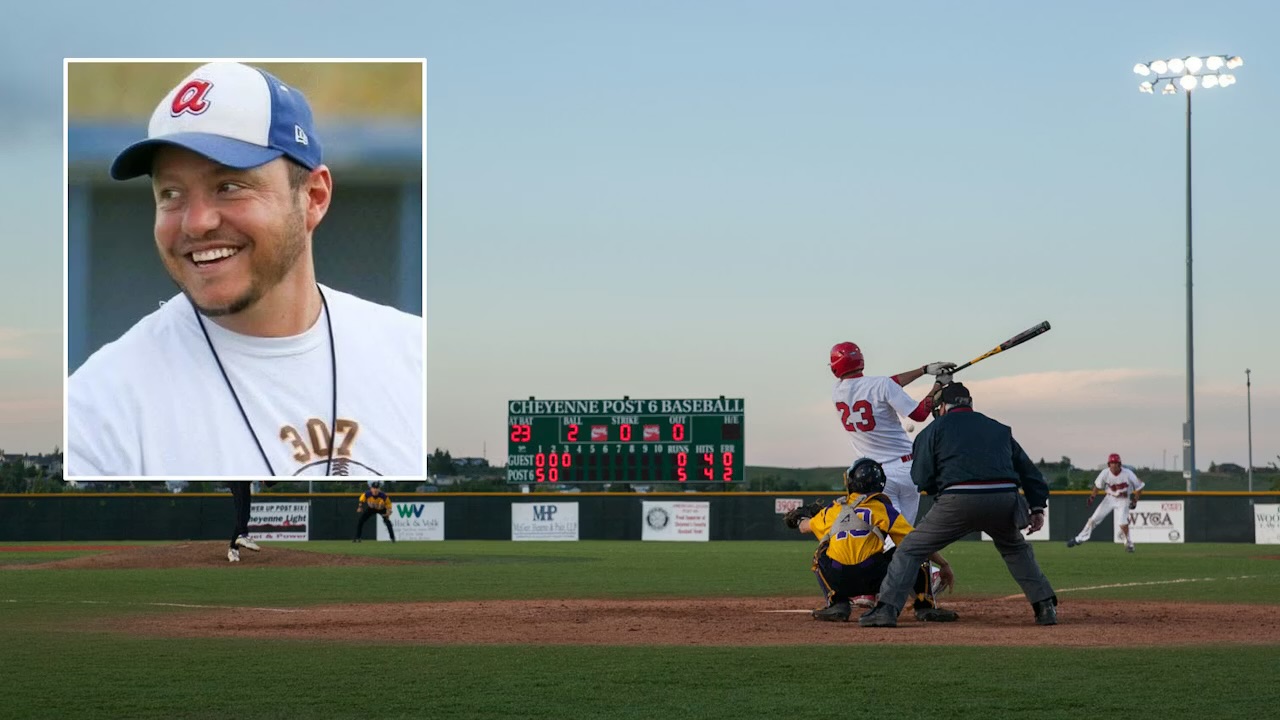
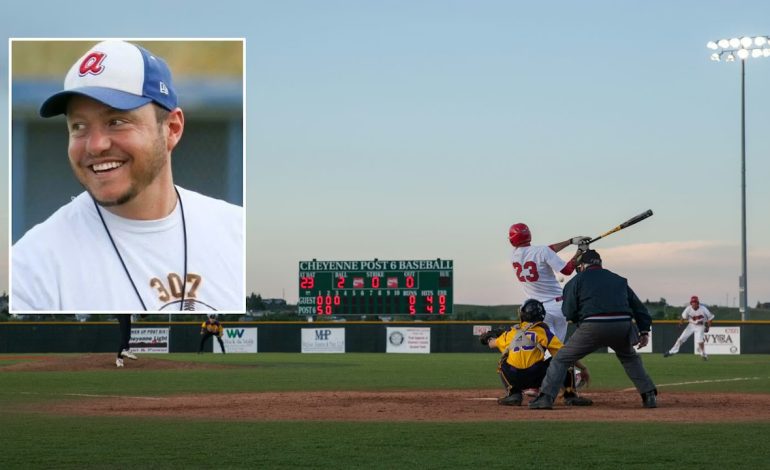
Tagg Lain coached American Legion Baseball in Cheyenne from 1987 to 2015, leading the American Legion Post 6 varsity team to 14 championships at the Double A level. He said the combination of the Double A and Single A levels was “a pretty major change,” but he can appreciate both sides of the argument. “I haven’t heard positive things about it, but from a competitive standpoint, it’s probably the best way to get the top eight teams into one state tournament,” he said. “That’s been a problem that has been addressed in different ways going back to the early 2000s.”
Lain explained that many previously competitive teams switched from Double A to Single A as they became less competitive over the years, not because of leadership or the quality of the players, but because of the overall size of their communities and the number of interested and available players. “Riverton always had a highly competitive team. Cody had a great program, and Powell had some really good teams. With those communities slipping out of Double A, that top level of baseball became less competitive because it was only based on the size of the community,” he said.
Lain’s primary concern is logistical. He thinks the creation of the Senior Legion could deprive both larger and smaller teams of opportunities to gain more experience and exposure by playing out of state. Many American Legion teams travel to tournaments in neighboring states to get additional experience with teams at their level. “It’s going to really tie up every team playing so many games within the state of Wyoming that the tradition of traveling to some of the bigger, better tournaments in Denver, Billings, and Rapid City, and getting in front of the best competition in the country, may be hindered a little bit,” he said.
Lain wasn’t sure how Wyoming’s American Legion teams were responding to the change. If their response was and remains negative, that could have repercussions that the board might not have anticipated. “Parents, coaches, and boosters help sustain these programs,” he said. “They’re making decisions that are in the best interest of their local post, their local Legion team, their towns, and their cities, and I hate to see anything that takes away that autonomy.” He added that any community that feels it doesn’t have a competitive edge might look to take its players to other youth baseball programs, noting that “when you’re running your own program, you look out for your own self-interest.”
In Lain’s 28 years with Wyoming American Legion baseball, he saw several similar efforts to shake things up. “They didn’t last very long,” he said. “Change is a difficult thing. I’ve seen a lot of attempts, but Wyoming doesn’t have enough of the larger communities. It’s a tough situation.” Brown said he hopes it’ll be temporary. “I hope it changes back in the future,” he said. “It makes no sense. Why fix something that wasn’t broken in the first place?”

The latest news in your social feeds
Subscribe to our social media platforms to stay tuned