





A single arrest at an immigration office in Texas is now pointing to a broader policy shift — one that could reshape how the United States treats the families of its own service members.
Deisy Rivera Ortega, the wife of an active-duty U.S. Army sergeant, is being held at a detention facility in El Paso after being taken into custody during what was supposed to be a routine step toward legal residency. Her husband, Jose Serrano, who served three tours in Afghanistan, described the moment in stark terms:
“A person opened the door, escorted us through the hallway, and at the end of the hallway, my wife got arrested,” Serrano said. “Arrested without any order, any warrant … They took away my wife. They don’t tell me anything.”
The case sits at the intersection of immigration law and military policy, an area that has long operated with a degree of flexibility. Programs like “parole in place” were designed to give spouses of service members a pathway to legal status, reflecting the government’s recognition of military service as a mitigating factor.
That framework appears to be narrowing.
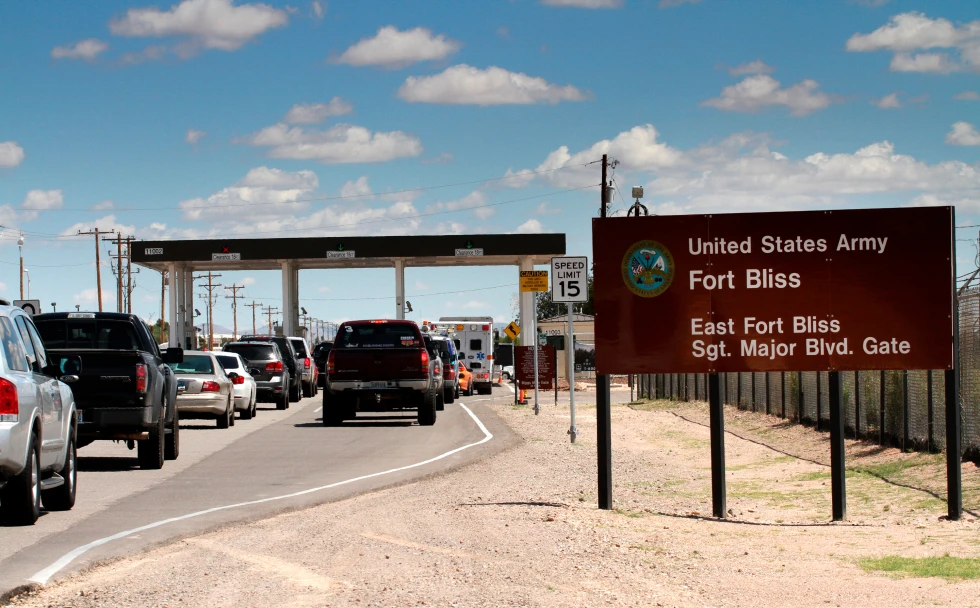
Rivera Ortega, originally from El Salvador, had a valid work permit and had previously been granted protection from removal to her home country, according to her attorney. She is now challenging her detention in federal court and seeking to block a possible deportation to Mexico — a country where she has no ties.
The Department of Homeland Security has taken a more rigid view. It said Rivera Ortega entered the United States illegally in 2016 and remains subject to a final removal order issued in 2019. “Work authorization does not confer any legal status to be in the country. Rivera-Ortega remains in ICE custody pending removal,” the agency said.
What has changed is the policy context around cases like hers. Last April, DHS eliminated a 2022 guideline that treated a family member’s military service as a “significant mitigating factor” in enforcement decisions. The updated position is more direct: “military service alone does not exempt aliens from the consequences of violating U.S. immigration laws.”
In practical terms, that shift reduces the informal protections that once existed for military families. While cooperation between immigration authorities and service members has not been fully dismantled, the margin for discretion appears to be shrinking.
Rivera Ortega’s detention reflects that recalibration. Her case is not just about legal status or procedure; it illustrates how enforcement priorities are being applied more uniformly, even in situations that previously might have been handled with more flexibility.
For Serrano, the issue is immediate and personal. He was able to visit his wife at the El Paso Service Processing Center, speaking to her through a plastic barrier — a setting far removed from the administrative process they had expected.

The latest news in your social feeds
Subscribe to our social media platforms to stay tuned