


EXCLUSIVE: Operation Epstein Fury Part 10. A Hit to the Asia-Pacific Economies.
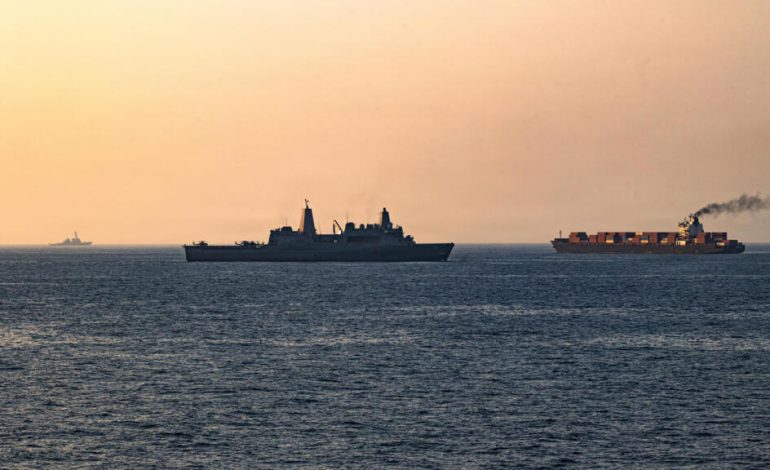



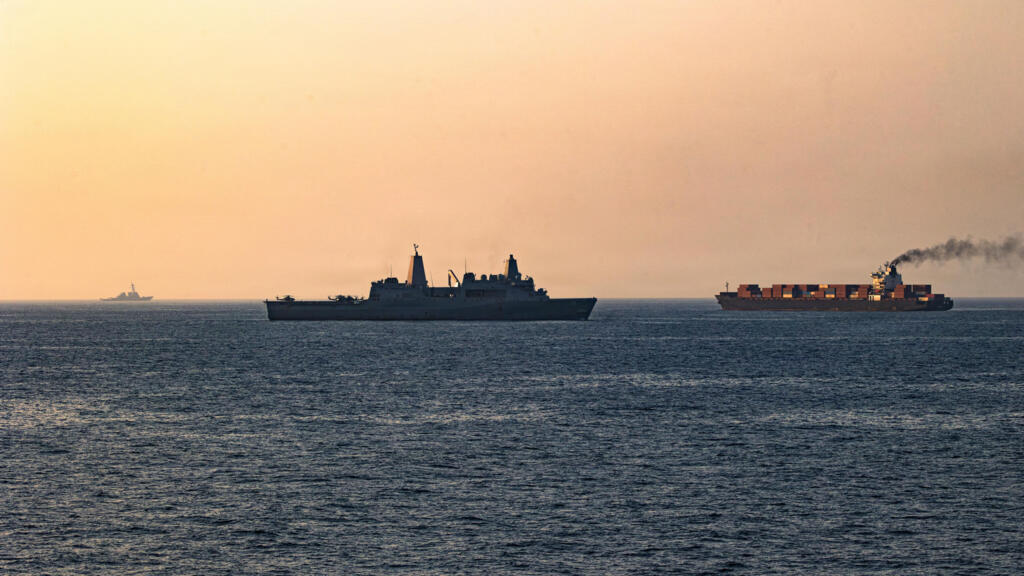
Every week of fighting over a narrow stretch of water in the Persian Gulf delivers a fresh shock to the gas pumps and factory floors of Asia. The war that broke out on February 28 between the United States, Israel, and Iran has killed thousands and upended global diplomacy. But its most persistent damage is playing out in the economies of countries that never fired a shot. From Seoul to Shanghai, from Tokyo to Canberra, the closure of the Strait of Hormuz and the US naval blockade have transformed a geopolitical crisis into a full-blown economic emergency.
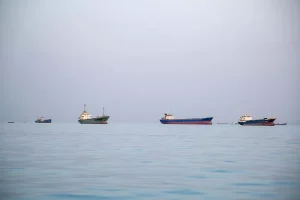
Ships are anchored near the shoreline in Bandar Abbas, Iran, on Wednesday, April 22, 2026 (Getty Images)
The two‑week ceasefire that began on April 7 bought a pause in the bombing but not a break in the pressure. Iranian ships seized two cargo vessels in the strait on April 22. President Trump extended the ceasefire indefinitely yet kept the naval blockade in place. Iran’s top negotiator responded that reopening the strait was “not possible” so long as the blockade continued. By April 23, only a handful of ships – down from an average of 138 per day before the war – were making the crossing.
For South Asia, this is not a momentary spike. It is a structural fracture.
The Strait of Hormuz handles roughly 20% of the world’s oil and nearly 30% of Asia’s LNG. That is the headline statistic. What hides underneath is that almost 90% of those volumes are bound for Asia – for the refineries in South Korea, the power plants in Japan, the factories in China, and the distribution hubs in Singapore. When Iran shut the strait in early March, it effectively cut off the primary energy artery for the world’s most dynamic industrial region.
The damage has cascaded. Supply chains that run on just‑in‑time logistics have ground to a halt. In April, ocean freight rates for Asia‑Europe routes more than tripled. Helium, essential for semiconductor manufacturing, has become scarce. Naphtha – the “rice of industry” in chemical-dependent South Korea – is in short supply. Fertilizer prices have skyrocketed, threatening crops from the Mekong Delta to the Punjab. Even lipstick, sportswear, plastic bags, and syringes are becoming luxury items as petrochemical feedstocks dry up.
The International Energy Agency called the disruption the “biggest energy crisis in history,”estimating that 600 million barrels of oil supply had been lost by the third week of April. The UN Development Program projected that the war could push 32 million people worldwide into poverty. For a region that lifted hundreds of millions out of destitution in the past two decades, this marks a bitter reversal of fortune.
China
China imports more oil through the Strait of Hormuz than any other country – about 5.4 million barrels per day in early 2025. That is roughly as much as India, Japan, and South Korea combined. Yet Beijing has weathered the crisis with a sangfroid that unnerves its neighbors. The secret is not a magic shield but a decade of deliberate policy choices that have made China oddly resilient to the pain.
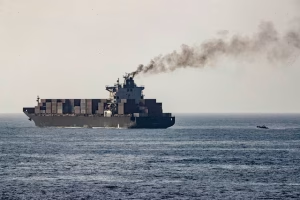
First, the electric‑vehicle boom. Chinese consumer demand for EVs has surpassed all expectations, reducing oil consumption by quantities equivalent to what China used to import from Saudi Arabia. The ruling Communist Party’s flagship newspaper ran an editorial telling readers that China holds its own “energy rice bowl.” Second, strategic petroleum reserves – built up over a year of buying discounted Russian and Iranian crude – give Beijing a cushion of about three months of imports. Third, coal and renewables power the grid, insulating electricity generation from seaborne fossil fuel volatility.
This resilience comes with a hidden cost. China has unofficially curtailed its fuel exports, prioritizing domestic supply and leaving neighbors like Pakistan and Bangladesh scrambling. And while the US blockade has not stopped the flow of Iranian crude to China – Tehran continues to supply at a 20–30% discount, and a shadow fleet of tankers with transponders turned off still runs the gauntlet – it has made the trade riskier and more expensive.
Minghao Zhao, Professor & Deputy Director of the Center for American Studies at Fudan University, the author of ‘Strategic Restraint: Is New-type Sino-US Relationship Possible?’ and ‘The Belt & Road Initiative and America’s Competitive Strategy towards China’, argues that the US campaign against Iran has far-reaching motives – choking off China’s infrastructure ambitions:
“By targeting Iran – a pivotal node in China’s Belt and Road Initiative (BRI) – the United States is not merely pursuing regional security objectives but also exerting pressure on Beijing’s expanding network of infrastructure and investment projects. China’s economic stake in Iran is substantial, including an estimated $4 billion in direct investment, alongside broader strategic cooperation in energy, transportation, and trade corridors that link Asia to Europe.
Since the beginning of this year, the Trump administration has escalated its use of coercive measures against both Iran and Venezuela, two countries widely regarded as key partners of China. These actions are particularly significant because Tehran and Caracas serve as crucial suppliers in China’s long-term energy security strategy. Both nations provide China with diversified access to oil and gas resources, helping reduce its dependence on more volatile or strategically constrained supply routes.
From Beijing’s perspective, the simultaneous pressure applied to Iran and Venezuela is unlikely to be coincidental. Instead, it is interpreted as part of a broader and more coordinated American effort to disrupt China’s global resource network and undermine the geopolitical foundations of the BRI. Such moves are seen not only as economic containment but also as a strategic attempt to limit China’s influence across critical regions spanning the Middle East and Latin America.”
Scott Kennedy, Senior Adviser and Trustee Chair in Chinese Business & Economics at the Center for Strategic & International Studies, offers a more measured view:
“China is the largest customer for Iranian oil, but that oil only contributes roughly 1.5% of China’s total energy needs. It does appear the conflict and higher oil prices are generating some inflation in China, and rising costs globally may slow demand for Chinese exports. On the other hand, high oil costs and instability are incentivizing countries to accelerate their energy transition, and China is well positioned to benefit given its strength in solar, wind, EVs and batteries.
Japan and others in the region are even more dependent on Middle East oil than China, and so relative to others, China is weathering the oil shock reasonably well.”
South Korea
No non‑combatant country has been hit harder. This is the conclusion of a CSIS analysis released in mid‑April. South Korea routes 70% of its crude oil through the Strait of Hormuz. It imports 93% of its primary energy. When the strait closed, the Korean won hit a 17‑year low, the KOSPI suffered its worst single‑day drop on record (19%), and 26 South Korean‑flagged vessels became stranded in the Persian Gulf.
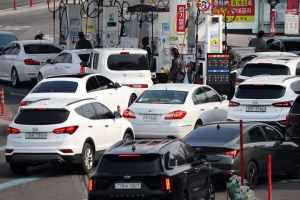
The government estimates that strategic petroleum reserves may now cover only 26 days of actual consumption – a far cry from the 200‑day buffer it once boasted. To compensate, Seoul has scrambled on multiple fronts. President Lee Jae‑myung pushed through a $17 billion supplementary budget to offset energy costs, secured an additional 24 million barrels of crude from the UAE, accelerated the restart of nuclear reactors taken offline for maintenance, and imposed emergency fuel‑price caps. At home, officials asked citizens to “save every drop of fuel,” to work from home, and to limit car travel.
Despite these moves, the economic damage keeps compounding. The OECD slashed South Korea’s 2026 growth forecast by 0.4% points, the steepest downgrade among major OECD economies. Inflation, already elevated, is projected to hit 2.7%, driven by rising transport, logistics, and petrochemical costs. Officials now warn of a “triple shock”: high inflation, high interest rates, and a weak currency that makes imports even more expensive.
Madhavi Pundit, senior economist at ADB, describes the situation Korea finds itself in:
“The Republic of Korea’s exposure stems from its heavy reliance on key imports, many of which transit the Strait of Hormuz. As well as 70% of its crude oil imports, roughly 20% of its LNG supply are tied to Middle East supply chains, along with critical petrochemical feedstocks – such as condensates and naphtha – and industrial intermediates like aluminum and sulfur. Against this backdrop, the disruption can be viewed as a manageable short-term risk, given existing buffers, but one that carries potentially significant medium-term costs through higher prices and supply chain pressures.
The Republic of Korea entered the shock with a strong buffer – around 200 days of oil reserves, higher than many regional peers – providing a cushion against immediate disruptions and time to secure alternative supplies. The primary impact is through prices: higher global energy costs are likely to drive cost-push inflation, raising production and transport expenses and feeding into consumer prices, particularly for food, utilities, and services. Government measures to stabilize prices and ensure supply, alongside efforts to diversify fuel sources, should help contain the impact. Even so, the adjustment is likely to entail a period of higher inflation, weaker growth, and increased fiscal pressures, especially if energy prices remain elevated.”
Melanie Grace Quintos, economics officer at ADB, addresses recent government measures:
“The response is already evident in the Republic of Korea and across the region, particularly as damage to key energy infrastructure suggests that oil prices may remain elevated for longer. In March, the government announced measures to lift caps on coal‑fired power generation and increase the utilization of nuclear power plants to stabilize domestic supply. At the same time, efforts are underway to diversify energy and naphtha imports by securing more supplies from a wider set of sources, including Australia, Africa, Kazakhstan, Malaysia, United States, using routes that are outside the Strait of Hormuz. Reflecting this shift, crude oil imports from Australia, Malaysia, and the United States rose sharply year on year in March 2026.”
Jong Ho Hong, Professor of Economics for the Graduate School of Environmental Studies at Seoul National University and Chairman of the Energy Transition Forum of Korea, the author of ‘Climate Crisis The Great Shift of Wealth,’ put the challenge in stark terms:
“South Korea is a country vulnerable to energy security risks, importing 93% of its primary energy sources. This has been a persistent issue for the South Korean economy even before the blockade of the Strait of Hormuz. Depending on fluctuations in international energy prices, fossil fuel imports account for 20–30% of South Korea’s total annual imports. This is a staggering proportion. Faced with a crisis in oil and gas supply, South Korean President Lee Jae-myung emphasizes that the country must accelerate its transition to a renewable energy-centered energy system. This is the right direction, as wind and solar power are not affected by international oil prices.
However, the government must send clearer policy signals to the South Korean industrial sector and the people. South Korea’s share of renewable energy generation stands at around 10%, ranking at the bottom among OECD countries. We must swiftly reform the outdated electricity pricing system and the structure of the power market. Projects such as agricultural solar farms and rooftop solar installations at industrial complexes must proceed without delay. Only then can we achieve the governmental goal of 100 GW of cumulative renewable energy capacity by 2030.”
Further Prof. Hong’s analysis on Korea’s energy issue can be found in the following Guardian piece and journal entry.
The war has also forced South Korea to face an uncomfortable geopolitical question: can it still rely on the United States for security when Washington is consumed by a distant conflict? The US redeployed high‑altitude missile interceptors that had been promised to South Korea, moving them to the Middle East. This shift, combined with Trump’s transactional approach to alliances, has sparked a rare debate in Seoul about the possibility of pursuing independent nuclear capabilities.
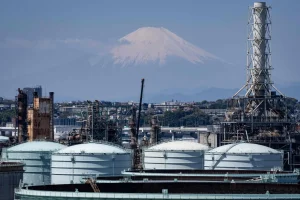
Japan
Japan’s energy vulnerability mirrors South Korea’s, but its economic structure has absorbed the shock differently. Tokyo relies on Middle Eastern suppliers for roughly 90% of its oil needs, most of which transit the strait. In March, at the peak of the crisis, the government released a record 50 days’ worth of oil from its strategic reserves, with plans for an additional 20‑day release in early May. Japan’s reserves remain the largest in the world, a legacy of decades of anxiety over energy security.
Yet the costs are mounting. The weak yen – trading near 170 per US dollar – amplifies every dollar increase in oil prices. Inflation, which had been tamed, is creeping back. Retail petrol prices have risen 30% since February. More worryingly, shortages of naphtha are beginning to threaten the supply of syringes, gloves, and dialysis equipment in hospitals already strained by an aging population. Prime Minister Sanae Takaichi has urged calm, telling a news conference that there would be “no immediate disruptions,” but she cannot promise the same for next month.
Jeffrey W. Hornung, Japan Lead for the National Security Research Division and Senior Political Scientist at the RAND Corporation, explained the depth of the exposure:
“The war in Iran has had negative implications on the Japanese economy, which was already under pressure from a weak yen, inflation, and high prices. Because the economy already was facing these issues, the war’s effects have pushed up fuel costs, fertilizer costs, and prices for basic household necessities. Japan is highly vulnerable to shocks in the Middle East, since it depends heavily on Middle Eastern suppliers for its energy. More than 90% of Japanese oil imports come from the Middle East, making the closure of the Strait of Hormuz incredibly damaging to the Japanese economy. In response, Tokyo released some of its strategic oil reserves.”
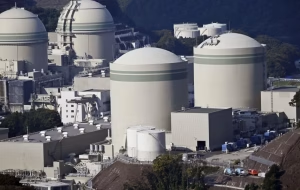
Beyond the immediate economic pain, the war is forcing a strategic realignment. Japan has long balanced its reliance on US security guarantees with independent diplomacy toward Iran. That balance is now under stress. Trump’s “America First” posture has led Tokyo to quietly accelerate its nuclear energy restart program and to explore deeper energy partnerships with non‑Middle Eastern suppliers. In an implicit acknowledgment that the global order is shifting, Japan pledged $10 billion to help Asian neighbors secure energy supplies – a move that also serves its own interest in stabilizing regional supply chains.
The longer the crisis lasts, the more Japan must contemplate a scenario it has long avoided: the possibility that its security umbrella might not be reliable. The Council on Foreign Relations has noted that the Iran war is speeding up a debate in both Tokyo and Seoul not just about expanding civilian nuclear power but about whether the two countries should discuss acquiring their own nuclear weapons. That no longer an unspoken taboo.
Australia
Australia’s position in this conflict is the most paradoxical. Canberra is the least dependent on Hormuz oil of the four countries examined here. It is a net energy exporter, with vast reserves of coal and gas, and it has the capacity to refine its own fuel. Yet the war has hammered the Australian economy harder than many purely import‑dependent nations, and the diplomatic fallout has strained the US‑Australia alliance to a degree not seen in decades.
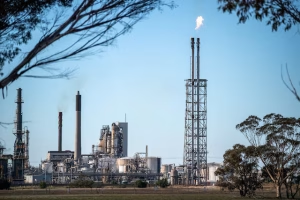
The reason is simple: Australia’s economy runs on trade, and trade runs on oil. The spike in fuel costs has pushed petrol prices up by 50% in some parts of the country. Treasurer Jim Chalmers told ABC News that Australia’s economy “is in lots of ways hostage” to decisions made in Washington and Tehran. Prime Minister Anthony Albanese warned in a rare televised address that the economic shock would “be with us for months” and urged Australians to limit unnecessary fuel use, including switching to public transport.
On the diplomatic front, the relationship with Washington has become uncomfortable. Trump publicly criticized Australia for not providing military assistance, claiming “we asked them to be there,” even though Australian servicemembers suffered an Iranian strike at Al Minhad Air Base in the United Arab Emirates earlier in the war. Albanese responded that Australia has “done what we have been asked to do,” which included sending an E‑7A Wedgetail surveillance aircraft and missiles to bolster Gulf defenses. But Canberra has steadfastly refused to commit ground troops, and opinion polls show only 26% of Australians support the war.
Gigi Foster, Professor with the School of Economics at the University of New South Wales, coauthor of ‘Secession by Western Australia,’ offered a sharp critique of Australia’s energy policy and its foreign entanglements:
“Australia has for years fallen short of the strategic fuel reserve requirements that most expert analysts have advised, and it has also under-taxed the extraction of its extensive domestic natural resources (including energy resources) for years relative to best-in-class examples from overseas, like Qatar. More broadly, it has eagerly joined the push by global leadership for so-called “greener” energy due to what is presented as a climate crisis, even passing a law that explicitly targets the production of “net zero” emissions in the country by 2050. The ongoing disruption in the Strait of Hormuz is being keenly felt in Australia – fuel prices at the pump have increased by 50% in some cases, and the National Economic Panel poll this month asked respondents in detail about how Australian leadership should respond to the fuel crisis and offered a suite of options, including fuel rationing – the silver lining is that this disruption provides the Australian people with an opportunity to demand a return to common sense in the realm of national energy policy. Perhaps the high fuel prices, which reverberate through all sectors of the economy, will remind Australians that cheap, plentiful energy is a prerequisite for a high quality of life and will refocus them on their enviable position as stewards of a large reserve of natural resources that could be used both to provide for Australia’s domestic energy requirements and, through a well-designed resource extraction levy whose proceeds are appropriately directed, to improve the welfare of the Australian people. In the meantime, while many Australians dislike President Trump, the political and geographic realities are such that I do not see Australia walking back its alliance with the US or the West more broadly, even if the war gets significantly worse.”
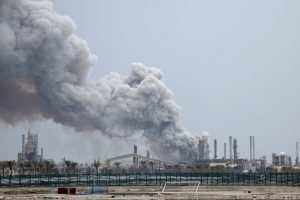
The International Energy Agency has warned that rebuilding Middle Eastern production to pre‑war levels will take around 2 years, even if the strait reopens tomorrow. Repairing damaged infrastructure in Qatar, Saudi Arabia, and the UAE could cost an estimated $58 billion – more than double initial projections. In the interim, the world will have to learn to live with high energy costs, disrupted supply chains, and a persistent risk of another eruption.
For South Asia, the lesson is painful, yet clear: diversify, stockpile, produce locally, and never again put the whole economy on a single tanker sailing through a forty‑kilometer strait. The trust that sustained decades of just‑in‑time interdependence has been shattered. The Iran war killed an economic era.


The latest news in your social feeds
Subscribe to our social media platforms to stay tuned