





A 2,500-year-old golden helmet, long feared lost to the black market or worse, is back in Romania — ending a theft that exposed both the vulnerability of cultural heritage and the persistence required to recover it.
The Cotofenesti helmet, along with several gold bracelets, was returned to Bucharest on Tuesday after being stolen in January 2025 from the Drents Museum in the Netherlands, where the artifacts had been on loan. Their disappearance triggered a cross-border investigation that stretched over a year, involved multiple suspects, and raised quiet diplomatic tensions between the two countries.
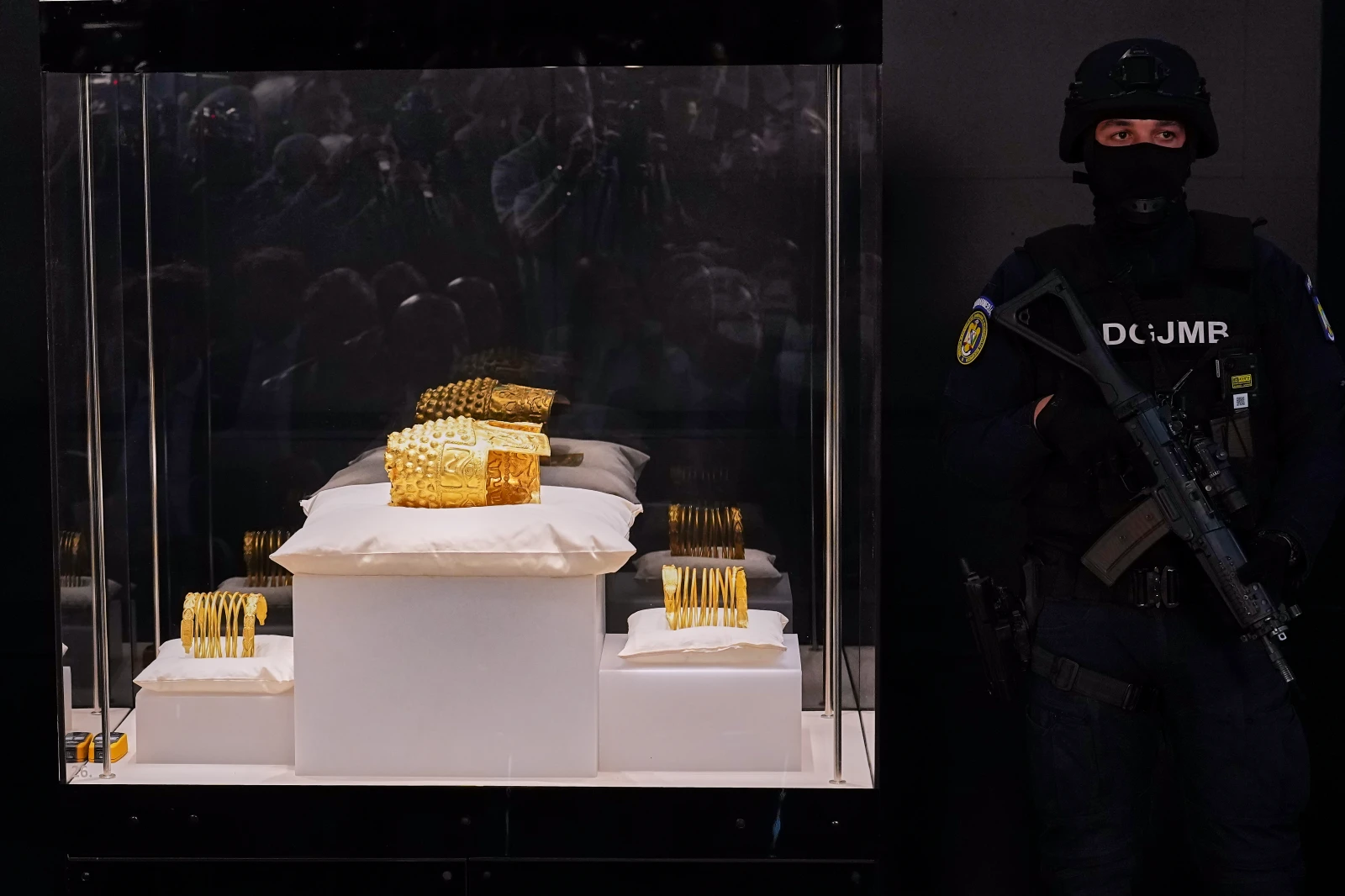
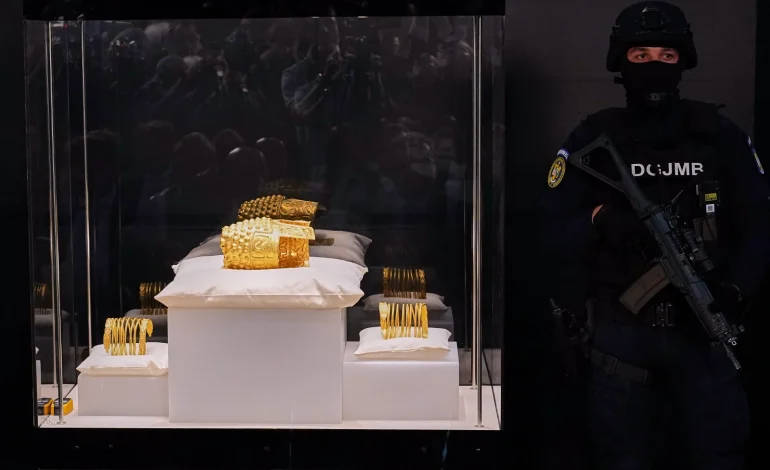
Their return was handled with visible caution. The items were transported under guard from Bucharest’s airport to the National History Museum, where they were placed on display behind glass, watched over by armed gendarmes — a reminder that their journey back is only part of the story.
For Romanian officials, the significance goes beyond material value. Cornel Constantin Ilie, the museum’s interim director, framed the artifacts as something closer to identity than property. They have been returned “not as simple patrimony items, but as relics of our historical memory, as the legacy of a civilization that continues to define us,” he said.
The emotional weight of the loss — and the recovery — is evident in how the episode is being described. “For us, this is a moment of joy, but also of contemplation,” Ilie added. “For months, we have lived with the fear that part of our past could be lost forever. Today we can say that an essential part of this treasure has returned.”
The theft itself had all the hallmarks of a high-risk operation. Security footage showed individuals forcing entry into the museum and triggering an explosion, after which the artifacts vanished. Their distinctive appearance made them difficult to sell, raising fears they might be melted down — a scenario that would have erased not just their form but their historical meaning.
That outcome was avoided, though not without cost. The helmet was slightly damaged during its disappearance, while the recovered bracelets remained intact. One bracelet is still missing, and Dutch authorities say the search continues as the legal process moves forward.
The case also tested cooperation between institutions. Robert van Langh, director of the Drents Museum, described the return as “an emotional moment for all involved,” acknowledging that “the grief, the anger and now the relief have naturally been even greater” in Romania. He emphasized the scale of the effort behind the recovery, noting that “the police and judicial authorities of both countries have done extraordinary work.”
For Romania, the episode has reinforced a broader concern: how exposed cultural heritage remains, even under institutional care. Culture Minister Demeter Andras Istvan pointed to that vulnerability directly, saying the case shows “how strong the connection between heritage and collective consciousness can be,” but also how easily such heritage can be threatened — “exposed to violence, illegal trafficking, negligence, oblivion.”
The artifacts will now be exhibited publicly before undergoing restoration, a final phase that quietly acknowledges the damage — physical and symbolic — left by their absence.



The latest news in your social feeds
Subscribe to our social media platforms to stay tuned