


Oil Keeps Climbing as US-Iran Talks Stall and Strait Tensions Linger

The New York Times, CBS News, BBC, the Guardian contributed to this report.
Oil prices are back on the move. Again.
Crude climbed Tuesday as negotiations between United States and Iran hit another wall, with both sides stuck on two key issues: reopening the Strait of Hormuz and limiting Tehran’s nuclear program.
No deal, no relief. Traders are reacting accordingly.
Brent crude – the global benchmark – is hovering around $110 a barrel, a sharp jump from roughly $73 before the war began. Prices have swung wildly over the past few weeks, briefly flirting with $120 before dipping again as rumors of a breakthrough came and went.
The problem is simple. The Strait of Hormuz, a narrow but critical artery for global energy flows, is still effectively choked off. Normally, about a fifth of the world’s oil and liquefied natural gas passes through it. Right now, that flow is anything but normal.
That volatility is turning into a goldmine for some.
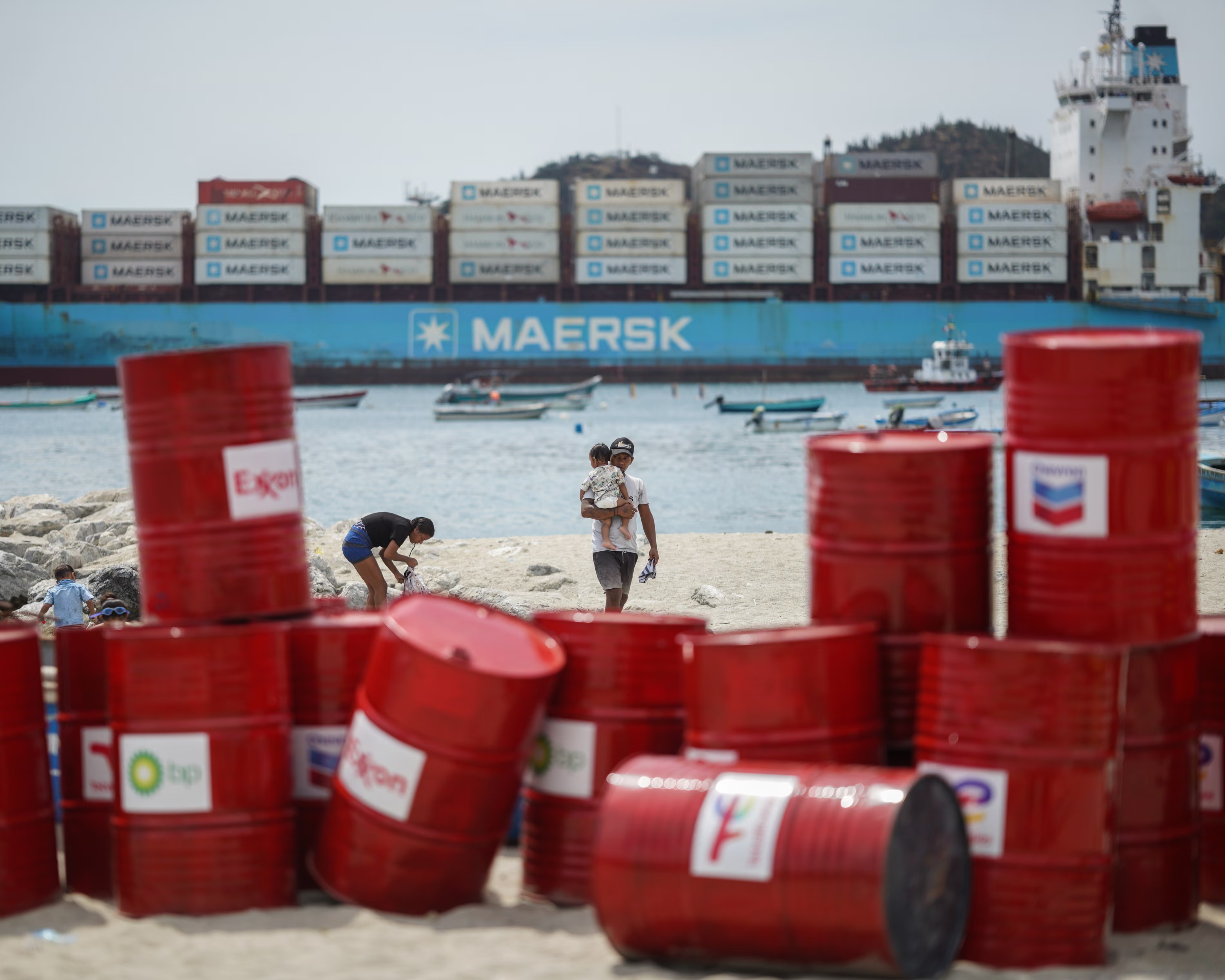
BP just posted a blowout quarter, with profits more than doubling to $3.2 billion. Its trading desk did the heavy lifting, capitalizing on the sharp price swings and widening gaps between buy and sell prices. That division alone pulled in $2.5 billion, up from just over $100 million a year ago.
It’s a different story upstream. Production has barely budged and could slip in the current quarter, with disruptions across the Middle East starting to bite.
New CEO Meg O’Neill stepped into the role at a turbulent moment. She’s already warning that the industry is operating under “conflict and complexity,” while trying to keep fuel moving where it’s needed.
Markets are taking notice. BP shares climbed about 3% on Tuesday and have surged roughly 20% since the conflict kicked off.
Still, not everyone is cheering.
Critics argue the surge in profits highlights a familiar pattern – energy companies cash in while consumers brace for higher bills. Analysts warn the ripple effects could hit everything from transport costs to household energy prices if the standoff drags on.
For now, the oil market is stuck in a loop: headlines drive prices, prices drive volatility, and volatility feeds profits – at least for traders.
Until there’s real movement on talks, don’t expect that cycle to break.



The latest news in your social feeds
Subscribe to our social media platforms to stay tuned