



With input from Reuters, OpenAI, Bloomberg, CNBC, the Financial Times, Business Insider.
OpenAI is rewriting the rules of its biggest partnership – and opening the door to rivals in the process.
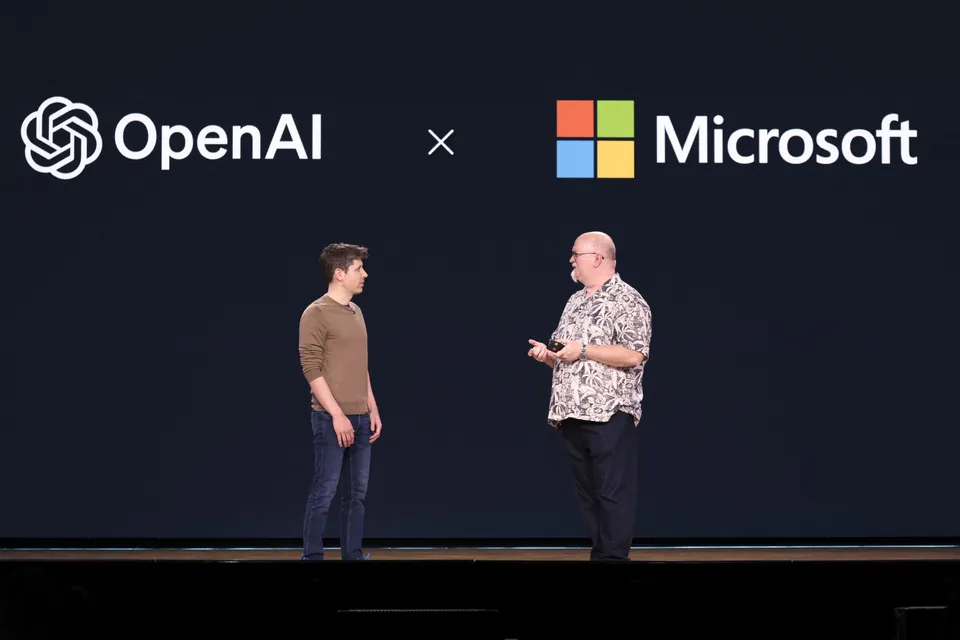
In a fresh shake-up with Microsoft, the AI firm is dropping the exclusivity that once tied its technology tightly to Azure. The new deal keeps the relationship intact, but with far more flexibility – and fewer strings.
Start with the big one: Microsoft’s license to OpenAI’s tech is no longer exclusive. That means OpenAI can now take its models pretty much anywhere, including competitors like Amazon and Google. And it’s moving fast – CEO Andy Jassy says OpenAI models will start showing up on AWS in the coming weeks via its Bedrock platform.
Money flows are shifting too. OpenAI will keep paying Microsoft a 20% cut of revenue through 2030, though those payments now come with a cap. Flip the direction, though, and the stream dries up – Microsoft will no longer pay OpenAI a share when customers access models through its cloud.
It’s a notable reset for a partnership that’s defined the AI boom. Microsoft has poured more than $13 billion into OpenAI since 2019, helping fuel the rise of tools like ChatGPT. Azure remains the “primary” home for OpenAI products, and new releases are still expected to land there first – unless Microsoft can’t support them.
But the grip has clearly loosened.
Internally, OpenAI has been pushing for this kind of freedom. The old setup made it harder to meet enterprise customers where they already operate, especially those locked into other cloud ecosystems. Now, the company can spread its tech across multiple platforms without breaching its agreement.
The timing isn’t random. OpenAI has been expanding aggressively beyond Microsoft’s orbit, including a massive cloud deal with Amazon and growing competition across the industry. Rivals are scaling up fast, and customers are increasingly mixing and matching models depending on the task.
There’s also a subtle shift in how risk is handled. The updated agreement removes some of the earlier tension around artificial general intelligence – the point where AI reaches or surpasses human-level capability. Previously, hitting that milestone could have triggered major contractual changes. Now, the financial terms carry on regardless.
For Microsoft, the new terms still lock in long-term access to OpenAI’s tech through 2032 and keep it firmly in the game. For OpenAI, it’s a chance to break out of a single-cloud lane and chase a much broader market.


The latest news in your social feeds
Subscribe to our social media platforms to stay tuned