




The Financial Times, Bloomberg, and CNBC contributed to this report.
China just reminded everyone who’s really in charge when it comes to tech deals – and it’s not the flashy startups or Silicon Valley giants. It’s a decades-old state agency with roots in the Mao era, now flexing serious muscle over the future of artificial intelligence.
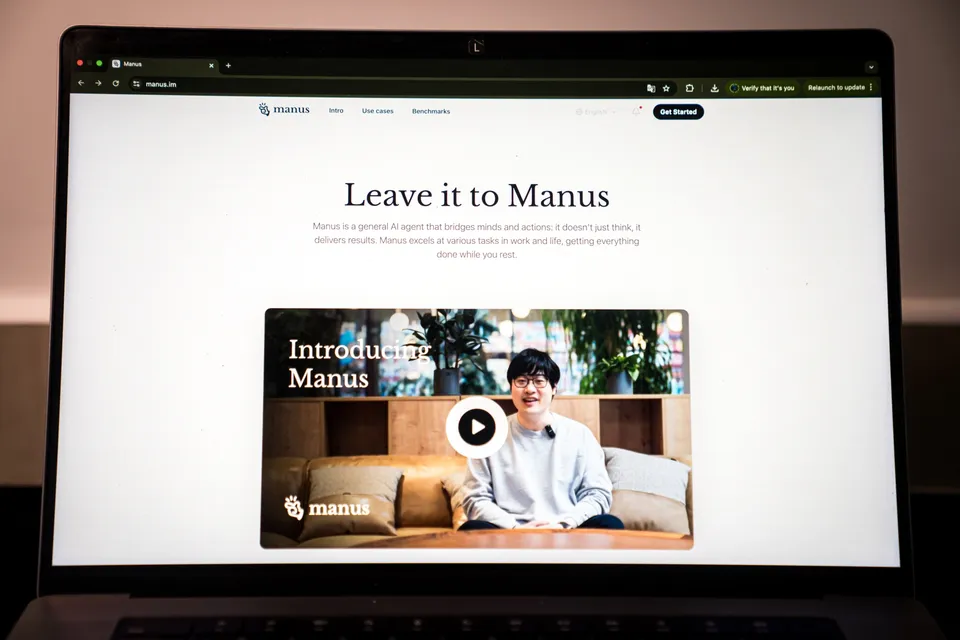
At the center of the clash is Meta, which has been told to walk away from a $2 billion acquisition of AI startup Manus. The order didn’t come from a tech regulator or a niche security office. It came from China’s National Development and Reform Commission (NDRC) – an institution once known mainly for central planning, now stepping into the role of top enforcer in Beijing’s tech strategy.
The message landed hard. Deals involving sensitive technology, especially AI, aren’t just business anymore. They’re geopolitical.
The NDRC has been around for more than 70 years, originally built to steer China’s planned economy. These days, it’s doing something else entirely – acting like China’s version of Washington’s foreign investment watchdog. Think less bureaucracy, more gatekeeper.
Its influence has grown quickly. What used to be fragmented across multiple agencies – commerce, securities, industrial policy – is now increasingly consolidated. The NDRC is calling shots on everything from chip procurement to global infrastructure deals, and now, high-stakes AI acquisitions.
Meta’s blocked deal makes that shift impossible to ignore.
The timing isn’t random either. The decision comes just weeks before a planned meeting between Donald Trump and Xi Jinping, where trade tensions are expected to dominate the agenda. In that context, stopping a major US tech company from snapping up an AI asset tied to China looks less like regulation and more like strategy.
And Manus isn’t just any startup. Even though it had moved its headquarters to Singapore, its roots remain deeply Chinese – early R&D, engineering talent, and data pipelines all trace back to the mainland. That’s exactly the kind of thing Beijing doesn’t want slipping beyond its reach.
State media didn’t mince words. The deal was framed as an attempt to move assets “offshore through washing,” a phrase that signals suspicion about companies trying to sidestep domestic controls. In plain terms: you can’t just rebrand yourself abroad and expect China to let critical tech walk out the door.
For Meta, the implications go beyond a single deal. China still matters to its business, even without direct access to the country’s social media market. Chinese advertisers contribute a significant slice of its global revenue. Its hardware ambitions, including AI-powered glasses, depend on Chinese supply chains. That gives Beijing leverage – and it knows it.
Behind the scenes, the NDRC’s growing authority is tied to He Lifeng, a key economic figure and a close ally of Xi. Having previously run the agency, he’s now leading trade negotiations with the US, and the NDRC’s expanding reach reflects that alignment. Economic policy, national security, and geopolitics are being bundled together.
That’s a big shift. Traditionally, the NDRC focused on long-term planning – energy projects, infrastructure, industrial strategy. Now it’s stepping into real-time enforcement, making judgment calls on who can buy what, and under what conditions.
The comparison to the US Committee on Foreign Investment (CFIUS) keeps coming up, and for good reason. Both bodies are increasingly focused on controlling access to critical technologies. The difference is speed and scope. China’s system is moving fast, and it’s not shy about making bold, public interventions.
Meta’s situation shows how far that approach can go. The company didn’t just face quiet regulatory friction – it was told outright to unwind a deal that had already been announced. That’s rare, even in tightly controlled markets.
It’s also a warning shot.
Other companies, especially those eyeing Chinese AI firms or considering overseas exits, are likely paying close attention. The rules are tightening, and they’re being enforced more aggressively. Deals that might have slipped through a few years ago are now getting stopped in their tracks.
There’s a broader pattern here. The NDRC has been active across sectors, not just AI. It has weighed in on semiconductor strategy, nudging companies like ByteDance and Alibaba to cut back on advanced chip purchases from Nvidia and support domestic players instead. It’s also intervened in global logistics, including port operations tied to the Panama Canal.
All of it points in the same direction: tighter control over supply chains, critical technologies, and anything with national security implications.
From Beijing’s perspective, this isn’t unusual. Other countries are doing similar things. The US has ramped up restrictions on tech exports and foreign investments. Europe is building its own regulatory toolkit. Everyone’s drawing lines around what they consider too important to lose.
Still, the Meta-Manus case stands out for how blunt it was.
For startups, it adds a layer of uncertainty that wasn’t there before. Founders now have to think not just about funding and growth, but about whether their exit options will even be allowed. Selling to a foreign buyer? That’s no longer a straightforward path.
Some may look elsewhere – jurisdictions with lighter rules and fewer geopolitical complications. Others may double down on staying within China’s orbit, aligning with state priorities to avoid friction.
Either way, the environment is shifting.
What used to be a relatively open playing field for global tech deals is becoming more fragmented. Governments are stepping in more often, and with greater authority. The lines between business and national interest are blurring fast.
Meta walked straight into that reality – and hit a wall.
The bigger story isn’t just about one blocked acquisition. It’s about who gets to shape the future of AI, and under what rules. Right now, China is making it clear that it intends to keep a tight grip on anything it sees as strategically vital.
And the NDRC, once a relic of centralized planning, is leading the charge.



The latest news in your social feeds
Subscribe to our social media platforms to stay tuned