

With six weeks to go before the World Cup kicks off, FIFA is facing a familiar problem — how to position football as a neutral global force while making decisions that look anything but neutral.
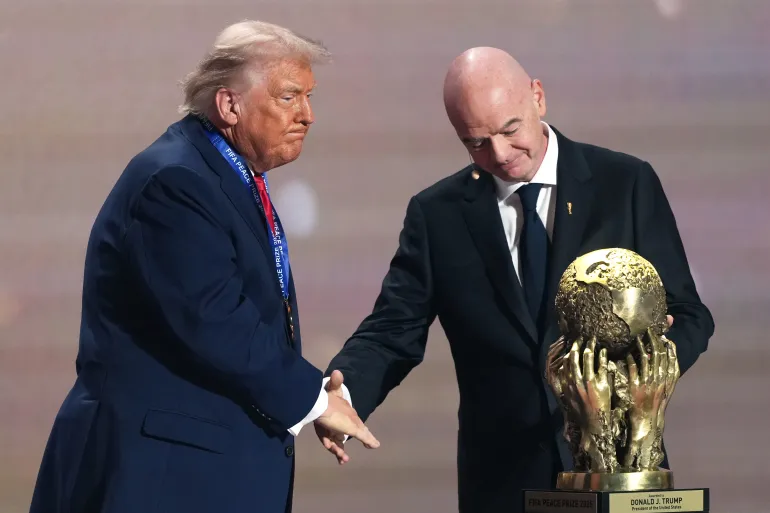
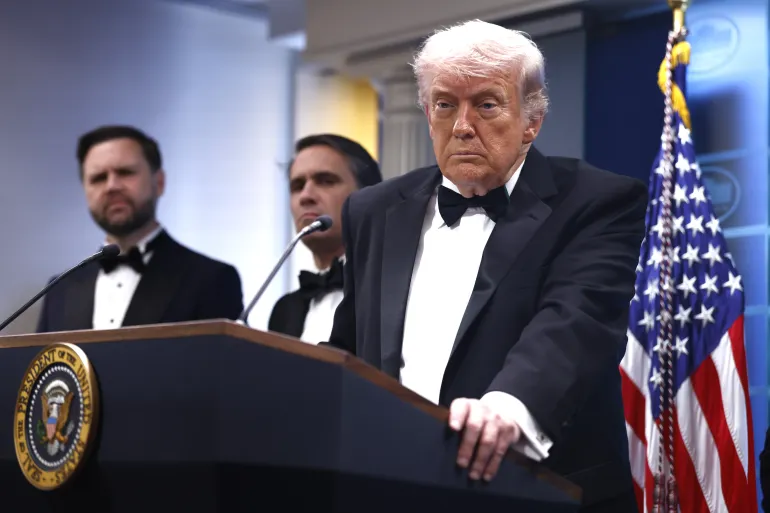
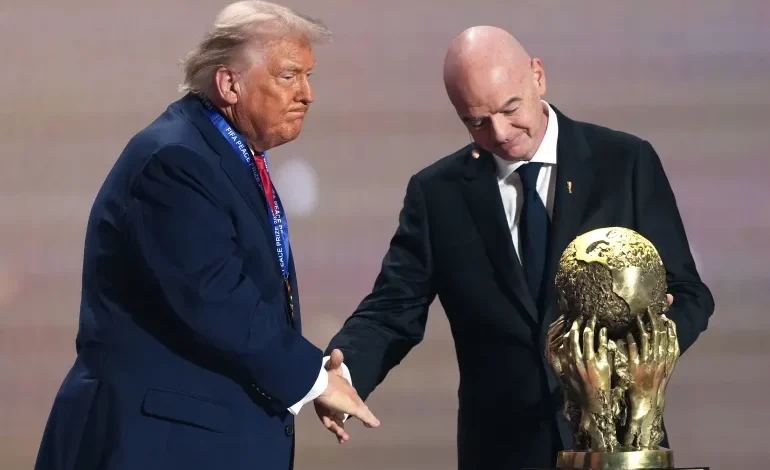
The latest flashpoint is the organisation’s decision to award its inaugural peace prize to US President Donald Trump, a move that has drawn criticism from football officials, players and rights advocates who argue it blurs the line between sport and politics rather than keeping them apart.
At the centre of that pushback is Norway’s football leadership. Lise Klaveness, president of the Norwegian Football Association, is calling for the prize itself to be scrapped, not reformed.
“We [the NFF] want to see it [the FIFA peace prize] abolished. We don’t think it’s part of FIFA’s mandate to give such a prize; we think we have a Nobel Institute that does that job independently already,” Klaveness told an online news briefing.
Her argument is less about one decision and more about structure. FIFA, she suggests, lacks both the mandate and the institutional safeguards to hand out politically sensitive awards without compromising its own neutrality.
“We think it’s important for football federations, confederations and also FIFA to try to avoid situations where this arm’s-length distance to state leaders is challenged, and these prizes will typically be very political if you don’t have really good instruments and experience to make them independent, with juries and criteria, et cetera.”
“That is full-time work; it’s so sensitive. I think from a resource angle, from a mandate angle, but most importantly from a governance angle, I think it should be avoided also in the future,” she said.
That concern is already spilling into formal action. The Norwegian federation plans to support a call for an investigation into how the prize was awarded, following a complaint from nonprofit group FairSquare. For Klaveness, the issue is not just the outcome, but the process.
“There should be checks and balances on these issues, and this complaint from FairSquare should be treated with a transparent timeline, and the reasoning and the conclusion should be transparent,” she said.
The criticism is not limited to administrators. Players are increasingly vocal about what they see as a disconnect between FIFA’s messaging and its decisions.
Australian international Jackson Irvine framed the issue more bluntly, linking the award directly to broader questions about credibility.
“As an organisation, you would have to say decisions like the one that we saw awarding this peace prize make a mockery of what they’re trying to do with the human rights charter and trying to use football as a global driving force for good and positive change in the world,” Irvine told Reuters.
“Decisions like that feel like they just set us back in the perceived market of what football currently is, especially at the top level, where it’s becoming so disconnected from society and the grassroots of what the game actually is and means in our communities and in the world.”
The timing amplifies the tension. The award was given in December at the World Cup draw, just weeks before a series of geopolitical developments — including US military actions abroad — that critics say sit uneasily with the idea of a “peace prize”.
At the same time, FIFA has been trying to position the 2026 World Cup as a platform for inclusion and rights, building on its Human Rights Policy introduced in 2017. Its framework for the upcoming tournament includes commitments around non-discrimination, freedom of expression and protections for fans and workers.
But that framework is now under scrutiny as well. Rights groups have warned that the broader political environment in the United States — including a hardline immigration crackdown — could undermine those commitments in practice.
That leaves FIFA in a difficult position. On one hand, it wants to present football as a unifying global force. On the other, its decisions are increasingly interpreted through a political lens, whether intended or not.

The latest news in your social feeds
Subscribe to our social media platforms to stay tuned