




The Girl Who Saw It All: A 14-Year-Old’s Escape From the Johnson County War

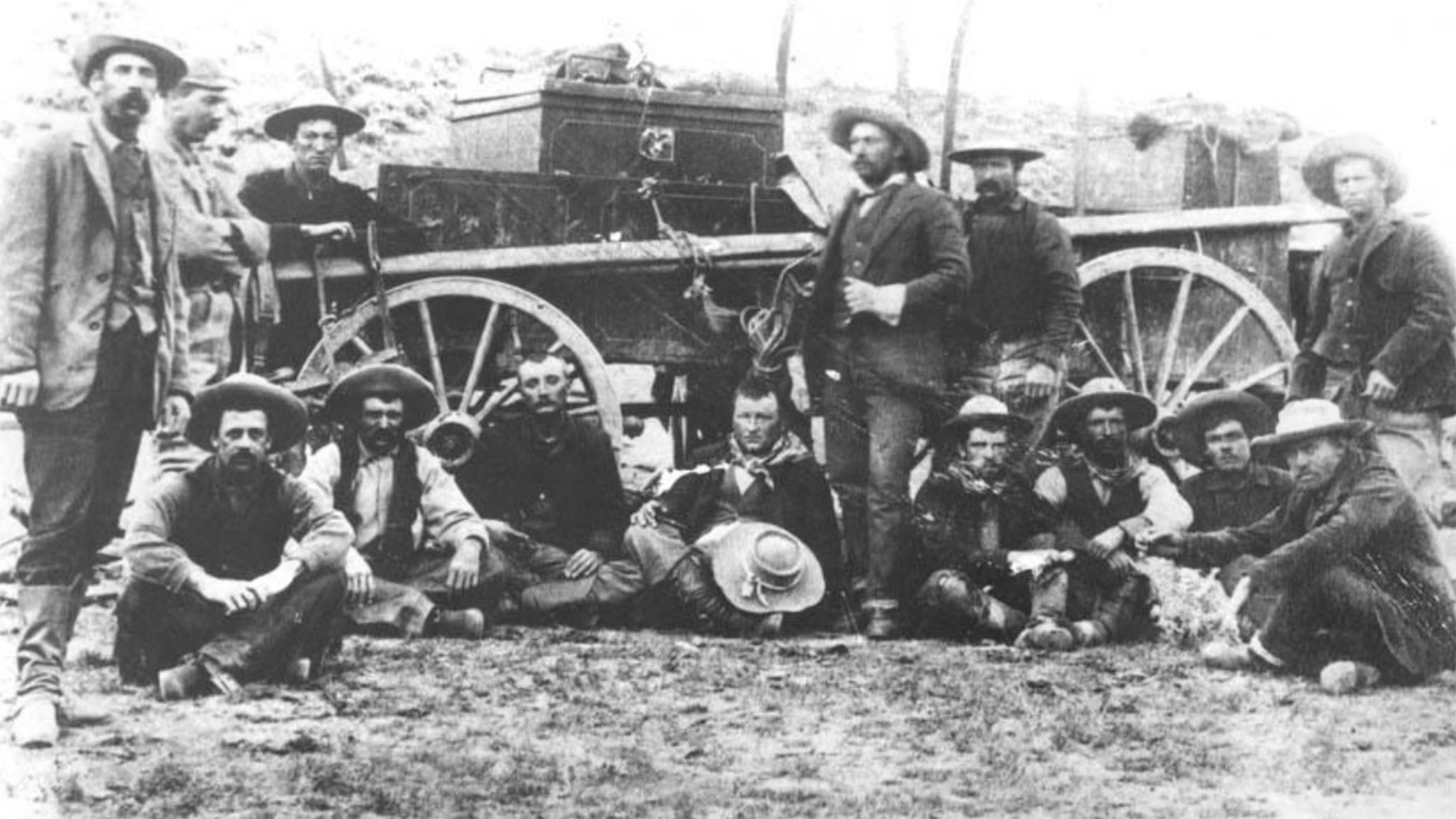
In 1959, an elderly woman named Mary Taylor Cash sat down with her granddaughter and began to speak about a childhood she had never forgotten. She was just 14 years old in 1892 when the Johnson County War exploded around her family’s homestead on the Middle Fork of the Powder River in Wyoming. Her testimony offers a rare, first-hand window into one of the most violent range wars in American history.
Cash had come to the Wyoming Territory as a 5-year-old in 1883. By 1890, her father had died, and her mother remarried a rancher named Oscar “Jack” Flagg. Flagg had been labeled a rustler by the powerful Wyoming Stock Growers Association—a death sentence in the eyes of the big cattle barons who were waging war against small homesteaders. At night, Cash watched the men clean guns and mold bullets around the kitchen table. Trouble, she knew, was coming.
On the morning of April 9, 1892, her 17-year-old brother Alonzo and stepfather Flagg left the ranch for Kaycee. They had no idea that a group of hired gunmen had already surrounded the nearby cabin of Nick Ray and Nate Champion. As Flagg and Alonzo approached, the invaders opened fire. Flagg later wrote that he called out cheerfully, “Don’t shoot me, boys, I’m all right.” The bullets that answered proved otherwise.
Alonzo threw Flagg a gun. Although Flagg never fired a shot—he had only three bullets—he held the attackers at bay long enough for Alonzo to cut free a horse and escape. The gunmen then used the family’s wagon to set Champion’s cabin on fire, burning Champion alive. The family later found their horse alive with a bullet scar under its ear.
For two days and two nights, Cash and her mother did not know if Flagg and Alonzo were alive. On the third day, a boy arrived on horseback with word that both had survived and had joined the makeshift army of ranchers and cowboys that besieged the invaders at the TA Ranch. The war was over.
Afterwards, Flagg moved the family to Buffalo, where Cash traded the brutal life of homestead chores for town dresses and a newspaper office. She never forgot the friends she lost or the sight of her brother riding into gunfire. Her story, preserved across generations, is a reminder that in Wyoming’s bloodiest conflict, even the children had to be brave.


The latest news in your social feeds
Subscribe to our social media platforms to stay tuned